The 1980s were a glorious time to be obsessed with gadgets. Technology was becoming affordable enough to creep into ordinary British homes, but it was still strange, chunky and exciting enough to feel genuinely futuristic.
There were computers that took several minutes to load a game from a cassette. Portable music players that required you to physically turn the tape over. Electronic toys with glowing red displays. Telephones that stayed firmly attached to the wall. Televisions that sometimes needed a carefully positioned indoor aerial and a little gentle persuasion.
And we loved them.
The best 1980s gadgets were not necessarily elegant, convenient or even particularly reliable. That was part of their charm. You had to learn how they worked. You developed rituals around them. You knew exactly how far to wind a cassette with a Bic pen and which particular angle produced the clearest picture on the portable telly.
Here are 25 iconic pieces of 1980s technology that helped define the decade.
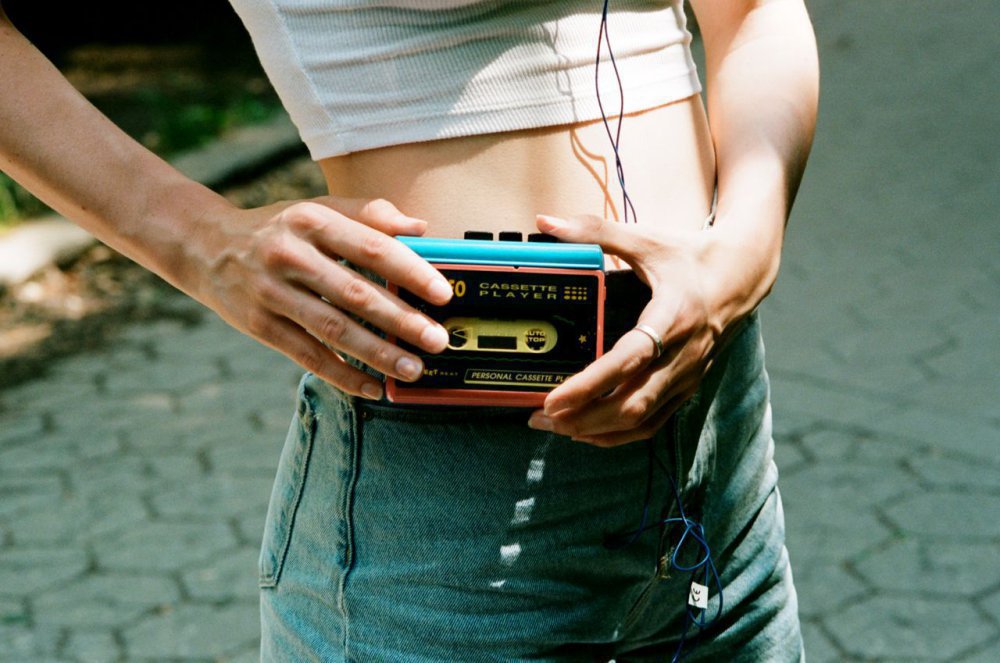
1. Sony Walkman
Few gadgets represent the 1980s quite as perfectly as the Sony Walkman.
Portable cassette players existed in numerous forms, but "Walkman" became the name everybody knew. Suddenly your music did not have to stay in the bedroom, lounge or family car. You could put on a pair of lightweight foam-covered headphones, press play and disappear into your own soundtrack.
There was something wonderfully mechanical about it too. The solid click of the buttons. The cassette door snapping shut. The inevitable moment when the batteries started dying and your favourite singer gradually developed the voice of a depressed giant.
Making tapes specifically for your Walkman became an art form. A C90 could become a personally curated greatest hits collection long before anybody had heard the word "playlist".
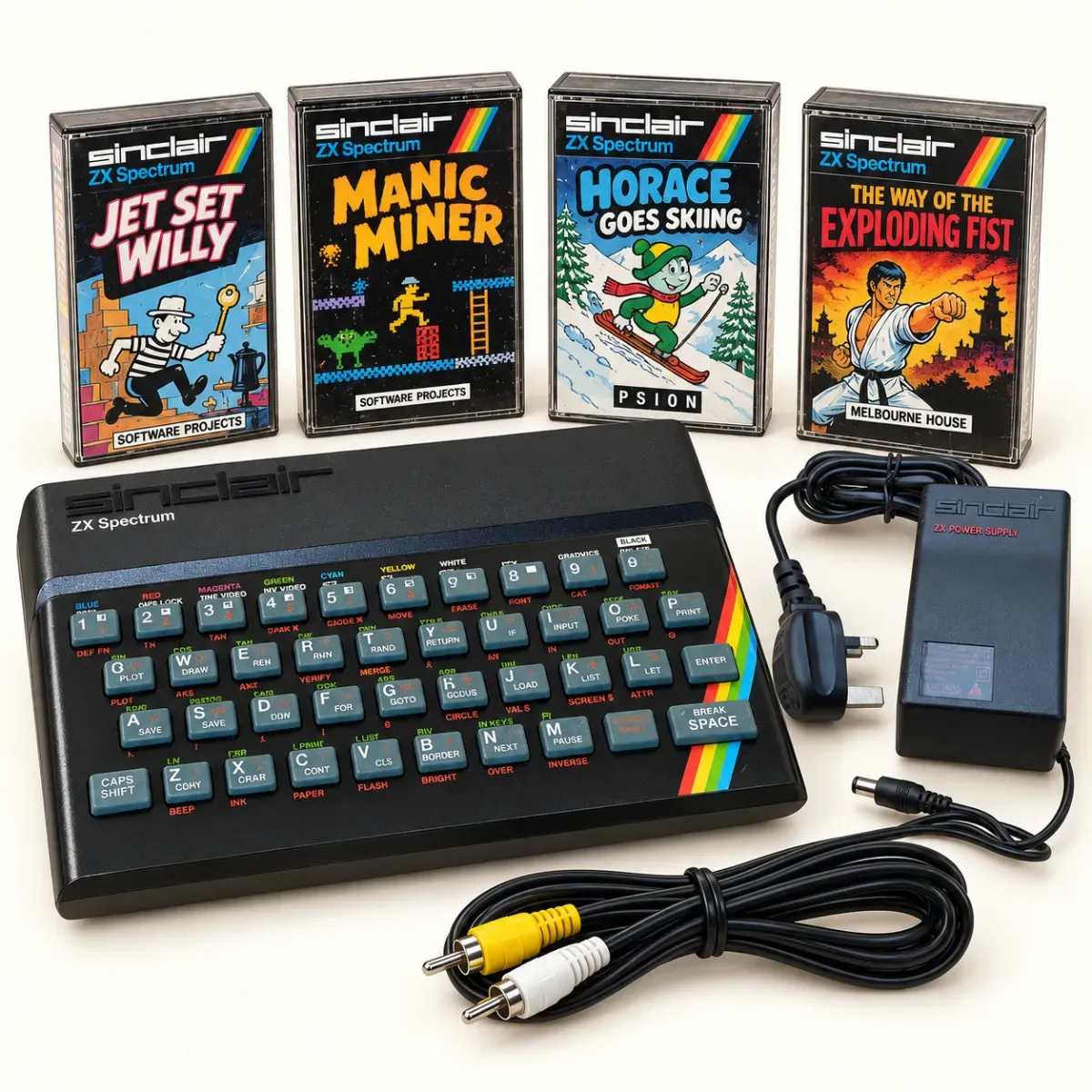
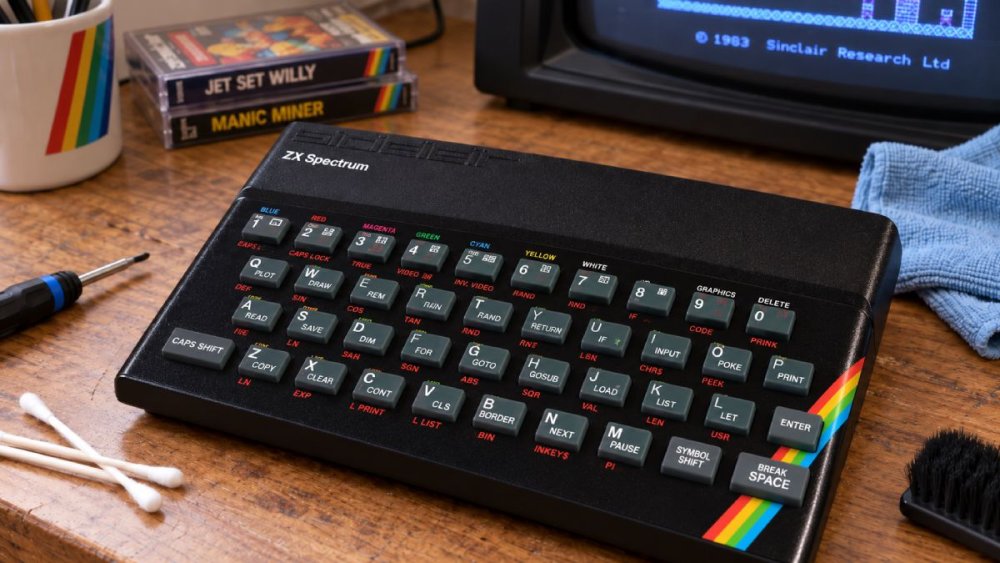
2. Sinclair ZX Spectrum
For thousands of British children, the ZX Spectrum was the machine that turned a television into something considerably more interesting.
Its rubber-keyed keyboard is instantly recognisable, as is the rainbow stripe running across the corner. The Spectrum was affordable home computing at a time when owning a computer still felt remarkably futuristic.
Of course, getting a game running required patience.
You put the cassette into a tape recorder, typed the loading command, pressed play and listened to several minutes of electronic screeching while coloured lines flashed around the edge of the screen.
If everything went well, a game appeared.
If everything did not go well, you adjusted the volume and started again.
Modern children would probably consider this a violation of their human rights. Spectrum owners simply accepted it as part of the experience.
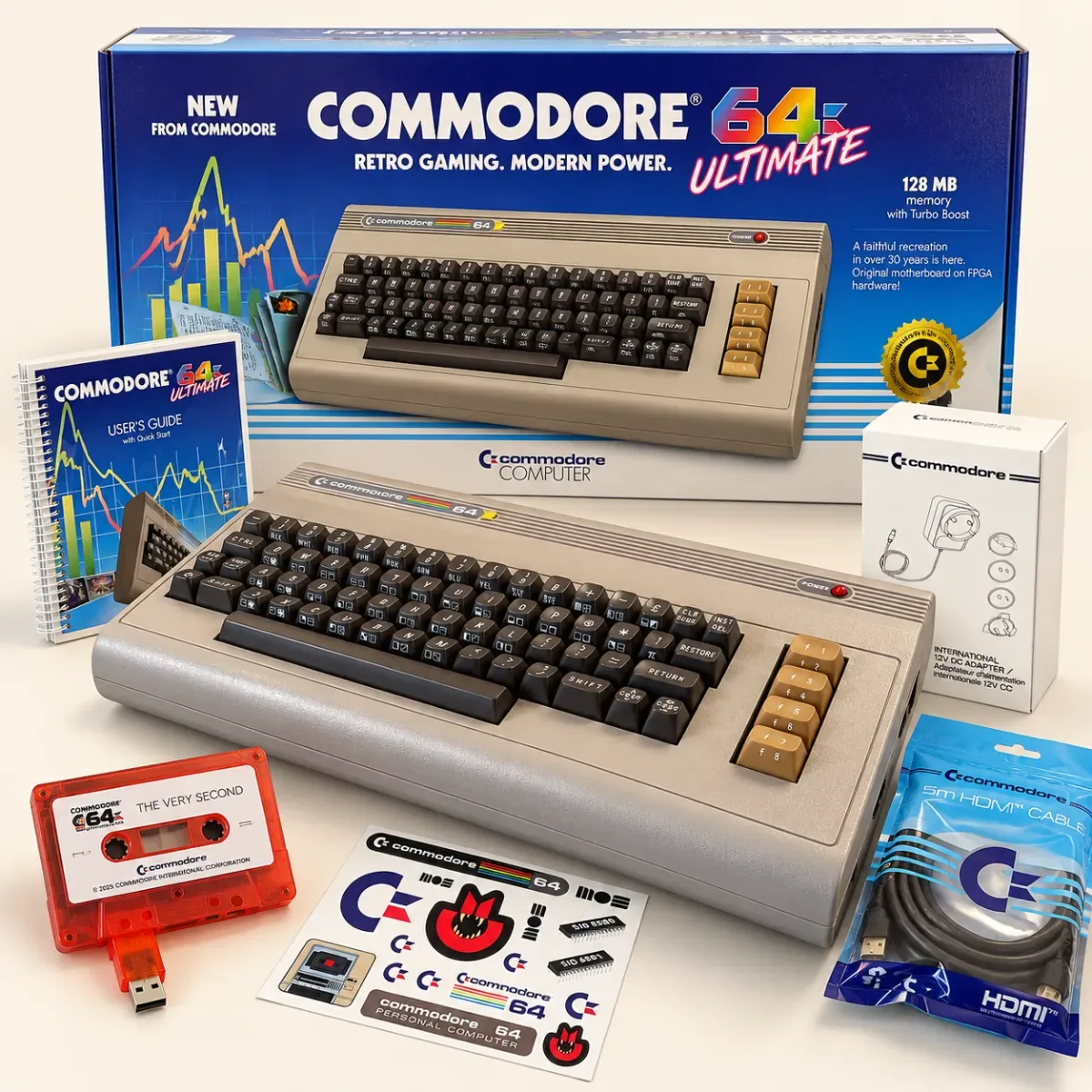
3. Commodore 64
If the Spectrum was one great tribe of 1980s home computing, the Commodore 64 was another.
The C64 had a proper keyboard, distinctive beige casing and impressive sound capabilities that helped give its games enormous personality. Its SID sound chip became legendary among enthusiasts, and tunes from Commodore games are still being remixed and performed decades later.
Games arrived primarily on cassette in the UK, although disk drives were available for those fortunate enough to have them.
Like most home computers of the period, the C64 also carried the vague promise that you were buying something educational. Parents could therefore convince themselves that their child would soon be programming payroll software rather than spending five consecutive hours playing Impossible Mission.
Sometimes you even typed a BASIC programme from a magazine, which technically proved them right.
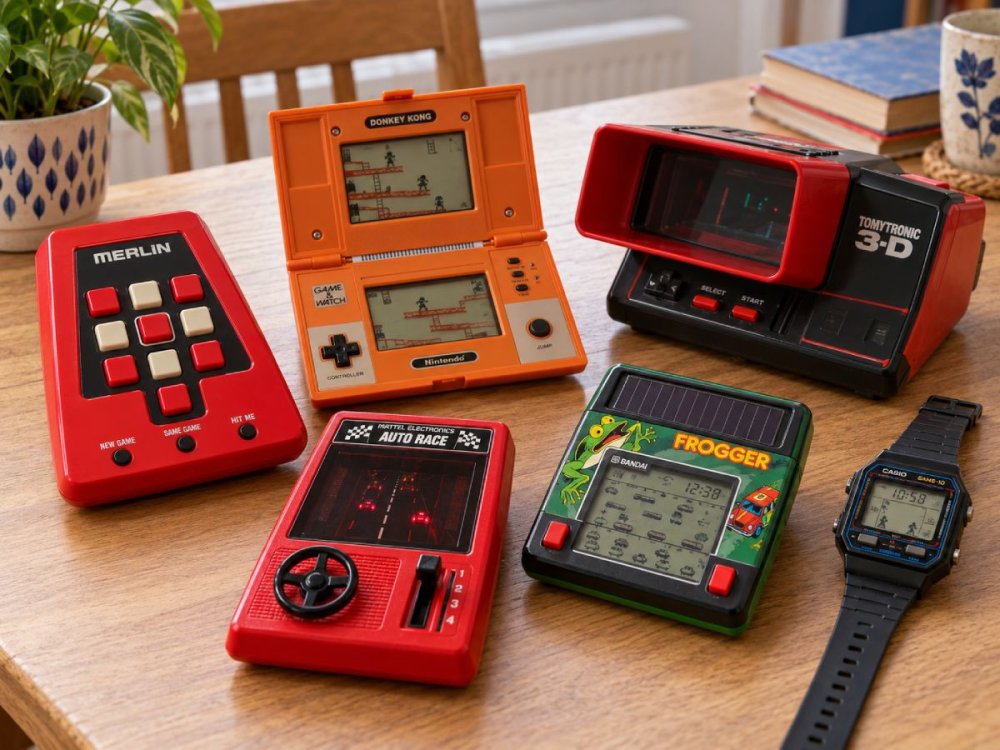
4. Nintendo Game & Watch
Before the Game Boy took over playgrounds, Nintendo's Game & Watch machines gave us pocket-sized electronic gaming.
Each unit contained a specific game displayed on an LCD screen, often with wonderfully simple controls and beautifully illustrated backgrounds. Donkey Kong, Mario Bros. and other titles became treasured possessions.
The clever part was how quickly you became obsessed with improving your score despite the games being incredibly simple by modern standards.
There were no downloads, updates or additional levels arriving later. You bought the thing, and that was the game.
Somehow, it was enough.
Original Game & Watch units have since become highly collectable, particularly examples in excellent condition with their boxes.
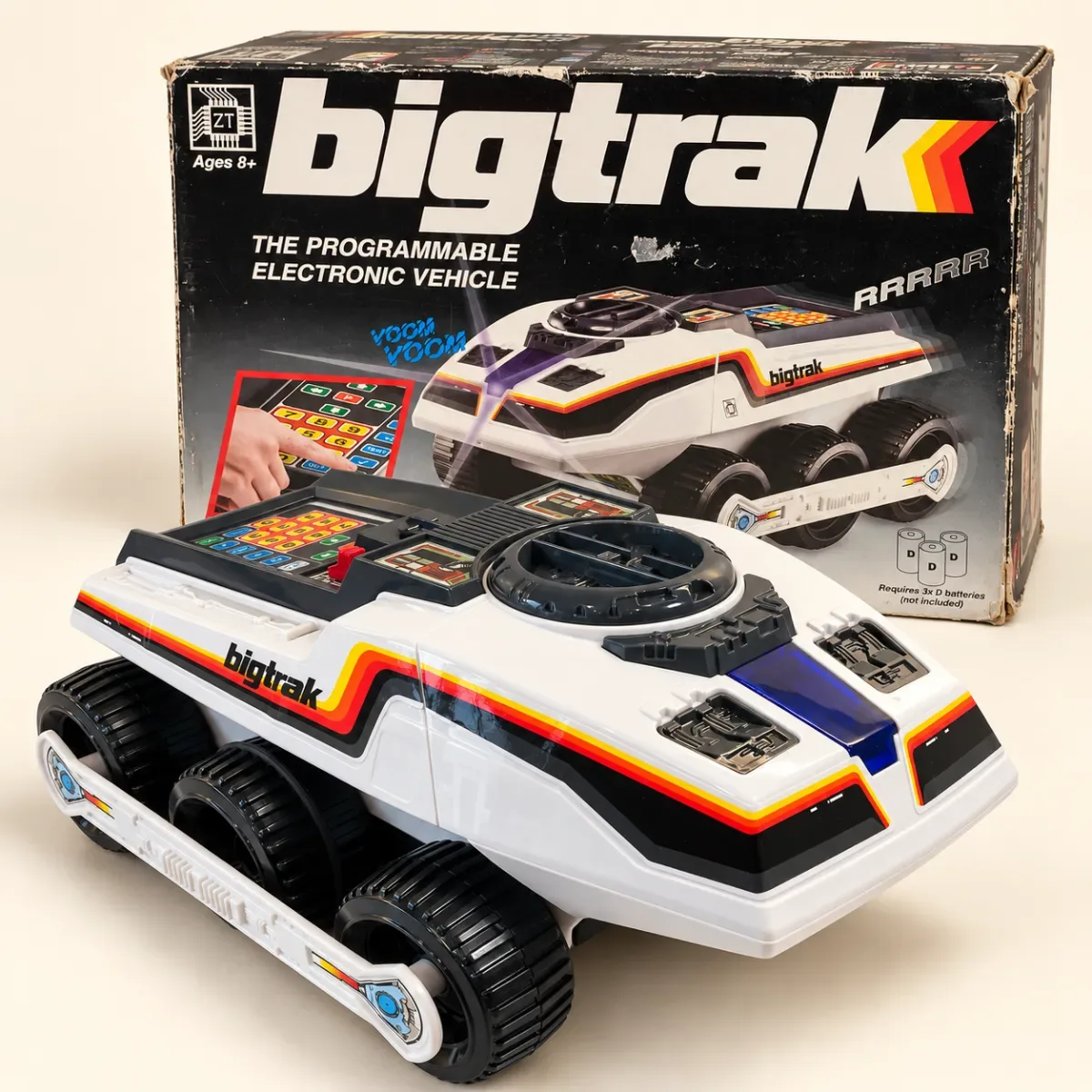
5. BigTrak
BigTrak looked like somebody had driven a futuristic military vehicle straight out of a science-fiction programme and parked it on the living-room carpet.
Made by Milton Bradley, this six-wheeled programmable electronic vehicle allowed you to enter a sequence of movements using the keypad on top. You could tell it to move forward, turn and fire its front-mounted light.
In theory, you could carefully programme an elaborate route around the furniture.
In practice, BigTrak often seemed determined to collide with the sofa.
That hardly mattered. Entering instructions into a toy and then watching it execute them felt astonishingly advanced in the early 1980s.
It remains one of the most distinctive electronic toys of the era.
6. Speak & Spell
Texas Instruments' Speak & Spell managed the unusual achievement of being both educational and genuinely desirable.
The brightly coloured device spoke words electronically and asked children to spell them using its keyboard. Its synthetic voice was unmistakable, sitting somewhere between helpful teacher and tiny robot attempting first contact with humanity.
It was clever technology for its time, but children mostly remember the sound.
Even people who have not seen a Speak & Spell for decades can often recognise its peculiar electronic voice immediately.
That distinctive appearance helped too. Put one beside a pile of modern tablets and it still has more personality than almost everything else on the table.
7. Atari 2600
The Atari 2600 arrived before the 1980s began, but its enormous influence continued well into the decade.
For many families, it provided their first experience of playing video games at home. The console itself was wonderfully simple, complete with chunky switches and, on earlier models, wood-effect styling that somehow made futuristic technology look like a piece of lounge furniture.
Then there was the joystick.
One stick. One button.
That was apparently all we needed.
Games such as Space Invaders, Asteroids and Pitfall! delivered hours of entertainment despite visuals that now require a generous application of imagination.
You were not looking at a collection of coloured blocks. That was clearly a spaceship.
8. Grandstand Astro Wars
Before handheld gaming meant staring at a high-resolution screen, there were tabletop electronic games such as Grandstand Astro Wars.
Astro Wars had the appearance of a tiny arcade cabinet, complete with its own controls, colourful graphics and glowing display. For a child in the early 1980s, it was magnificent.
These games turned bedrooms into miniature amusement arcades. The sounds were basic, the displays limited and the gameplay repetitive, yet that barely registered at the time.
What mattered was having your own electronic game that lit up and made noises.
Astro Wars has become a particularly strong nostalgia trigger because it is so unmistakably of its era. One glance at the shape of the cabinet and you can practically hear it.
9. Casio Calculator Watch
Nothing said "the future has arrived" quite like having a calculator strapped to your wrist.
Casio's calculator watches were tiny technological marvels, even if actually pressing the miniature buttons required the fingertip precision of a brain surgeon.
You could perform calculations without reaching for an actual calculator, which seemed incredibly useful until you realised you rarely needed to perform calculations unexpectedly while walking around town.
That was beside the point.
The watch was the attraction.
Digital watches in general became hugely popular, but adding extra functions made them irresistible. Alarms, stopwatches, multiple buttons and mysterious modes were all welcome.
The more your watch could do, the better.
10. Rubik's Cube
Strictly speaking, a Rubik's Cube is more puzzle than electronic gadget, but no list of iconic 1980s objects feels complete without one.
The Cube became an extraordinary craze in the early part of the decade. Millions of people twisted its coloured sides in the optimistic belief that the next turn would somehow solve everything.
It rarely did.
Most households seemed to contain at least one abandoned Rubik's Cube with two completed sides and a family member insisting they had once solved it.
There were books explaining solutions, competitions and countless imitators.
It was beautifully simple, incredibly frustrating and almost impossible to resist picking up when you saw one sitting on a table.
11. Ghetto Blaster
Before Bluetooth speakers, there was the mighty portable stereo.
Often referred to as a ghetto blaster or boombox, these machines combined radio and cassette playback with the sort of physical presence modern audio equipment simply does not possess.
Some were enormous.
Twin cassette decks were particularly impressive because they allowed tape-to-tape recording. Suddenly you could copy a friend's album or produce your own compilation without waiting for individual songs to appear on the radio.
And yes, recording music from the radio was a national pastime.
The challenge was hitting record at precisely the right moment and desperately hoping the DJ would keep quiet during the intro.
They rarely did.
12. Ferguson Videostar VHS Recorder
The video recorder transformed British television viewing.
Machines such as the Ferguson Videostar meant programmes no longer had to be watched when broadcasters decided to show them. You could record something and watch it later, an idea so ordinary today that it is difficult to appreciate how liberating it once felt.
Programming the timer was another matter.
Video recorders acquired a reputation for flashing "12:00" indefinitely because nobody had successfully persuaded them to acknowledge the current time.
Then came the VHS collection itself. Films taped from television, shop-bought videos, rentals and mysterious unlabelled cassettes filled cabinets across the country.
Finding out what was on one involved putting it into the machine and hoping.
13. Polaroid Instant Camera
Long before anybody could take a photograph and see it immediately on a phone screen, instant photography genuinely felt magical.
Take a picture with a Polaroid camera and the photograph emerged from the machine. Then came the wait as an image slowly appeared.
The temptation to stare at it during the process was almost irresistible.
Every photograph also mattered because film cost money. You did not take 47 nearly identical pictures and choose one later.
Someone blinked?
Tough. That's Christmas 1986 permanently documented.
Instant cameras remain popular today, but in the 1980s the experience seemed particularly futuristic.
14. Casio VL-Tone
The Casio VL-1, commonly known as the VL-Tone, was a tiny electronic keyboard packed with more fun than something that size had any right to contain.
It offered simple sounds, rhythms and the ability to create basic music. It was inexpensive, portable and wonderfully accessible.
Electronic keyboards became a major feature of 1980s bedrooms. Even people with no musical training could switch one on, select a rhythm and immediately produce something that sounded vaguely like the introduction to a television game show.
For children, that was enough to inspire dreams of synthesiser stardom.
For parents hearing the demo tune for the 400th time, perhaps less so.
15. Stylophone
The Stylophone originally appeared well before the 1980s, but examples remained familiar in British homes and the instrument retained strong retro appeal throughout the era.
Instead of conventional keys, you played it by touching a metal keyboard with a stylus. The result was a distinctive buzzing electronic sound unlike almost anything else.
It was simple, odd and strangely compelling.
The Stylophone represents something that many 1980s gadgets did brilliantly: it made electronic technology feel approachable. You did not need to understand synthesisers. You just touched the little pen to the keyboard and made noises.
Sometimes technology does not need to be more complicated than that.
16. Rotary Dial Telephone
By the 1980s, push-button telephones were becoming increasingly common, but plenty of British homes still had rotary dial phones.
Using one required commitment.
You put your finger into the correct numbered hole, dragged the dial around and waited for it to return. Then you repeated the process for every digit.
Get the final digit wrong and there was no backspace button. You started again.
The phone itself usually lived in the hallway or lounge, meaning teenage conversations took place within convenient listening distance of the entire family.
Privacy involved stretching the cable as far as physically possible and hoping nobody walked past.
17. Sony Discman
The arrival of the compact disc promised perfect digital sound without tape hiss, rewinding or chewed cassettes.
The Sony Discman made that technology portable.
Well, portable-ish.
Early portable CD players did not appreciate vigorous movement, so walking with one could occasionally produce skipping. Running was more ambitious still.
But none of that diminished the appeal. CDs looked futuristic. Their rainbow-reflective surfaces seemed impossibly sophisticated compared with brown magnetic tape.
Opening a Discman and placing a shiny CD inside felt like loading precision equipment.
The fact we later ended up carrying thousands of songs inside a telephone would have sounded absurd.
18. Kodak Disc Camera
The Kodak Disc camera was unmistakably 1980s.
Instead of conventional roll film, it used a flat circular disc containing multiple tiny negatives. The camera itself could therefore be made relatively slim and easy to carry.
Its image quality did not ultimately make the format a long-term success, but the design certainly made an impression.
This was an era when companies were trying all sorts of ideas to make photography smaller and simpler. The Disc system looked futuristic, arrived in distinctive packaging and briefly seemed like it might be the next big thing.
It was not.
That somehow makes it even more appealing now.
19. Nintendo Entertainment System
The Nintendo Entertainment System arrived in Europe during the latter half of the 1980s and helped establish the style of console gaming that would dominate the following decades.
Its controllers were beautifully straightforward: directional pad, Start, Select, A and B.
Those rectangular controllers also possessed corners capable of reminding your palms exactly how long you had been playing.
Super Mario Bros. became one of the defining games of the era, while the console introduced many British players to characters and franchises that remain familiar today.
Compared with modern consoles, the NES is extraordinarily simple. Switch it on, insert a cartridge and play.
Assuming, of course, the cartridge cooperated.
20. Sega Master System
The Master System was Sega's answer to Nintendo and became another important fixture of late-1980s gaming.
With its black and red styling, cards and cartridges, angular controllers and colourful games, it had a distinctive identity of its own.
Alex Kidd became particularly memorable because versions of the game were built directly into some Master System consoles. No cartridge required.
That felt almost suspiciously generous.
The Nintendo versus Sega rivalry would become much bigger during the 1990s, but its foundations were already being laid as children compared machines, games and graphics with the seriousness of international diplomats discussing nuclear treaties.
21. Amstrad CPC 464
Alan Sugar's Amstrad CPC 464 was a particularly appealing proposition because it could be purchased as a more complete computer system.
The cassette deck was built directly into the keyboard unit, so there was no need to find a separate tape recorder and persuade it to cooperate. Systems were commonly sold with their own monitor too.
It made the whole thing look satisfyingly serious.
The CPC became popular in British homes and built up an extensive game library, while also offering genuine computing and programming capabilities.
Naturally, many children assured their parents this would help with schoolwork.
Occasionally they might even have meant it.
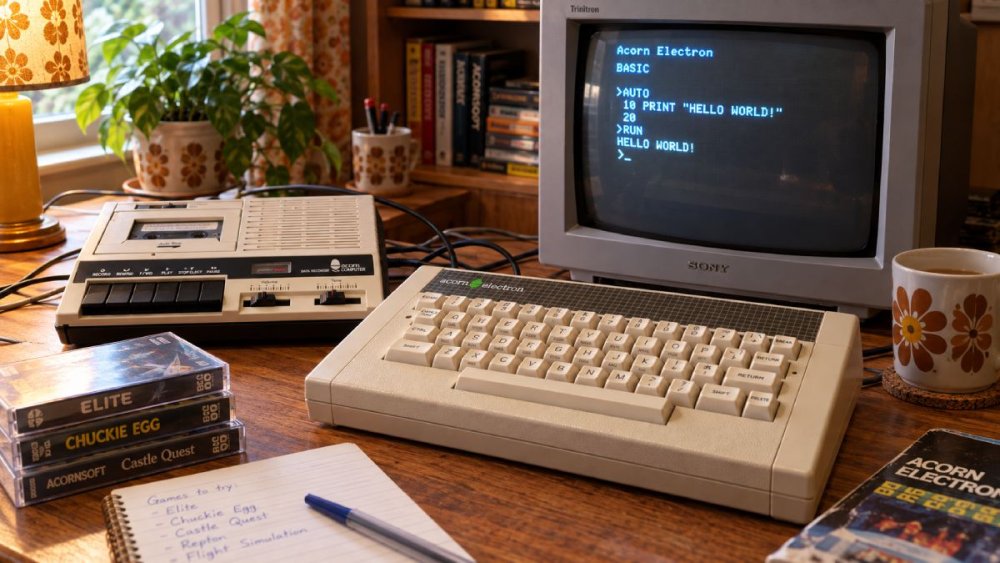
22. BBC Micro
For many British children, the BBC Micro was not the computer at home. It was the computer at school.
That gave it a completely different sort of nostalgia.
Developed by Acorn and closely associated with the BBC's Computer Literacy Project, the BBC Micro became a familiar sight in classrooms throughout the decade.
For countless pupils, it provided their first experience of programming.
There was something exciting about being allowed near it, particularly when computers were still unusual enough for a school to own only a handful.
Of course, educational intentions inevitably collided with children's ingenuity, and any opportunity to play a game instead was enthusiastically investigated.
23. Merlin Electronic Game
Merlin was another wonderfully distinctive electronic toy.
Shaped rather like an oversized red telephone handset from a future designed in the 1970s, it used illuminated buttons for several different games and activities.
The combination of lights, electronic tones and button sequences made it surprisingly addictive.
Electronic toys of this period often had incredibly limited hardware compared with anything sold today, but designers squeezed remarkable amounts of entertainment from them.
There were no animated screens or downloadable extras.
Just lights, beeps and your imagination.
And somehow, several decades later, people still remember exactly what these toys looked like.
24. Pocket Television
A television you could carry around sounded impossibly futuristic.
Portable televisions from companies such as Casio and Sinclair shrank TV technology to a size that could genuinely be held in your hand or carried in a bag.
The actual experience depended heavily on reception.
Watching one often involved extending the aerial, slowly rotating it and trying not to move once you had found the one position where the picture was reasonably stable.
Even so, it was astonishing.
Television had escaped the lounge.
Today we casually stream live television onto phones while travelling at motorway speeds. In the 1980s, getting a tiny fuzzy picture while sitting in the garden felt like sorcery.
25. Personal Stereo Headphones
It would be easy to overlook the humble foam-covered headphones that accompanied so many portable stereos, but they were part of the entire experience.
They were light, usually connected by an extremely thin metal headband and had small foam pads that gradually deteriorated with age.
More importantly, they represented something new.
Private entertainment.
Before portable music, listening was largely communal. The family stereo played into the room. The radio played into the kitchen. The record player announced your musical choices to everybody nearby.
Put headphones on, however, and suddenly the world disappeared.
That seemingly small change has shaped personal technology ever since.
Why These 1980s Gadgets Still Mean So Much
Looking back at the most memorable 1980s gadgets, it is tempting to laugh at how limited some of them were.
A Walkman could play perhaps 45 minutes of music before you had to turn the cassette over. A home computer might take several minutes to load one game. A calculator watch performed tasks your phone now completes without you even opening an app.
But judging them purely by capability misses the point.
These things arrived when electronic technology still had the power to astonish.
A toy that followed programmed instructions was extraordinary. Hearing a computer speak was extraordinary. Carrying your music around was extraordinary. Taking a game out of an arcade and playing something similar at home was extraordinary.
Technology also felt wonderfully physical.
You pressed switches. Turned knobs. Inserted cartridges. Rewound tapes. Changed batteries. Adjusted aerials. Typed commands. Cleaned cassette heads. Untangled cables.
Even the limitations created memories.
Anyone who used cassette-based computers remembers that loading noise. Anyone who recorded songs from Radio 1 remembers hovering over the pause button. Anyone who rented videos remembers the shelves of oversized plastic cases. Anyone who owned a portable cassette player probably remembers discovering several feet of magnetic tape emerging from it at some particularly inconvenient moment.
Modern gadgets are undeniably better in almost every measurable way.
But they are also increasingly invisible. One glass rectangle can be your camera, television, stereo, games console, map, calculator, telephone and computer.
Useful? Absolutely.
As much fun to look at on a shelf? Not even close.
The Lasting Appeal of 1980s Technology
Perhaps that is why old technology has become so fascinating again.
Vintage computers are being restored. Old consoles are connected to modern displays. Cassette players, electronic games and early digital watches have enthusiastic collectors. People who once gave these things away are now searching online trying to find the exact model they owned as children.
It is not simply nostalgia for the objects themselves.
It is nostalgia for what they represented.
That first computer in the bedroom. The Walkman carried on a family holiday. The electronic game opened on Christmas morning. The VHS recorder that finally meant you did not have to miss something because it was on after bedtime.
The best 1980s gadgets became attached to moments, rooms, people and experiences. Seeing one again can unlock memories that have apparently been sitting untouched somewhere in your brain for 40 years.
And that is what makes this stuff so much fun.
If you enjoy rediscovering forgotten technology, legendary gadgets and the wonderfully strange electronics of the past, join RetroWins and sign up to stay in the loop. There are plenty more memories hiding in cupboards, lofts and cassette cases, and we're only just getting started.