
Long before a smartphone could remind you about a dentist appointment, store every phone number you had ever collected and tell you the time in Tokyo while simultaneously distracting you with cat videos, there were electronic organisers.
For a few glorious years, these little plastic slabs felt impossibly futuristic.
They were usually black, grey or something suspiciously close to beige. They had tiny LCD screens, even tinier keyboards and buttons labelled with wonderfully serious words such as MEMO, TEL, SCHEDULE and SECRET. Some folded shut like miniature laptops. Others looked like calculators that had somehow been promoted into management.
And if you owned one in the late 1980s or early 1990s, there was a reasonable chance you spent considerably more time entering information into it than actually using that information.
That was beside the point.
An electronic organiser was not merely somewhere to store Auntie Brenda's telephone number. It was a pocket-sized glimpse of a future in which paper diaries would disappear, computers would become genuinely personal and everything important in your life would travel around with you.
Rather remarkably, that future arrived.
It just took a slightly different shape.
What Exactly Was an Electronic Organiser?
The basic idea was beautifully simple.
Take the things normally found in a Filofax, address book, diary and calculator, squeeze them into an electronic device and make the owner feel as though they had just been appointed managing director of something important.
Typical electronic organisers included an address book, calendar, appointment scheduler, memo function, calculator and alarm. More sophisticated models added world clocks, currency conversion, password-protected areas and expandable software.
Casio was experimenting with the idea remarkably early. Its PF-3000 Digital Diary appeared in 1983 with telephone book, schedule and memo functions, years before most people had any reason to imagine carrying personal data around electronically.
Sharp also became a major force in the category, developing increasingly sophisticated organisers through the second half of the decade.
These were not yet smartphones, obviously. They could not browse the web because there was essentially no web to browse. They could not receive WhatsApp messages because neither WhatsApp nor the phones capable of running it existed.
What they could do was store a phone number without requiring a biro.
In 1985, that felt like progress.
Electronic Organisers Made Ordinary Information Feel Exciting
This is perhaps the hardest part to explain if you grew up after the smartphone.
Putting someone's telephone number into a gadget felt exciting.
Not calling them. Not messaging them. Just entering the number.
NAME:
DAVID
TEL:
01...
Excellent. David was now digital.
There was something immensely satisfying about gradually building your electronic address book. Friends, relatives, work numbers, takeaway numbers, the local taxi company, perhaps the number of somebody you hadn't spoken to in three years but whose continued presence made your database appear impressively comprehensive.
Before mobile phones became commonplace, telephone numbers mattered in a way they no longer do.
You actually knew some of them.
Your house number. Your grandparents' number. Your best friend's number. Possibly several relatives and whichever mate's parents were least bothered by you ringing at nine o'clock at night.
An electronic organiser promised to relieve your brain of this burden.
The machine remembered things for you.
That idea now seems completely ordinary. At the time, it was one of those small technological shifts that quietly changed expectations.
The Tiny Keyboard Was Part of the Experience
Most electronic organisers came with some form of miniature QWERTY keyboard.
Calling it a keyboard could sometimes be generous.
The keys were often small enough to require either one-finger typing or the careful use of thumbnails. Entering a long memo could turn into something approaching precision engineering.
This was not the environment for writing your autobiography.
Even typing something as simple as:
MEET JOHN 7.30 PUB
could become an unexpectedly deliberate operation.
M...
E...
E...
T...
There was none of the effortless correction we expect today. You watched that tiny LCD carefully because correcting an error could involve cursor buttons, delete keys and several moments of quiet irritation.
Yet somehow that awkwardness made the information feel more significant.
You had entered it.
It was stored.
It existed inside the machine.
The physical act of pressing those little rubber or plastic buttons was part of the appeal, particularly on organisers that opened like miniature computers. You could place one on a desk, lean over it and conduct extremely serious administrative work involving tomorrow's swimming lesson.
Casio Digital Diaries: The Pocket Office Arrives
Casio understood the appeal of squeezing more and more functions into small electronic devices better than almost anybody.
The company had already produced calculators, calculator watches, electronic dictionaries and increasingly elaborate digital watches. An electronic diary was a natural extension of the same philosophy.
Casio's PF-3000, released in 1983, combined a telephone directory with schedule and memo functions. Casio itself describes the device as an important step towards later personal digital assistants.
The idea developed rapidly.
Electronic organisers gained larger memories, better displays and additional functions. Some Casio models included calculators, calendars, world time, alarms and protected storage areas.
That last feature deserves special recognition.
The Mysterious SECRET Function
If your organiser had password-protected memory, congratulations. You possessed classified technology.
The SECRET area was supposedly intended for genuinely private information.
Business contacts, perhaps.
Confidential notes.
Important financial information.
Naturally, plenty of owners used it for things such as crushes, PIN numbers they probably should not have stored there, or a list of people they fancied at school.
The existence of protected digital information was itself exciting.
A paper diary could be opened.
An electronic organiser could demand a password.
Suddenly your mundane collection of telephone numbers felt as though it ought to be guarded by MI5.
This naturally introduced another problem.
Forgetting the password.
Nothing teaches the importance of password recovery quite like locking yourself out of your own list of school friends in 1991.
Sharp Took the Idea Even Further
Sharp's electronic organisers pushed particularly hard towards what we would later recognise as the PDA.
The company had been developing electronic organiser concepts during the 1980s and produced machines that combined calendars, schedules, memos, phone books and calculators.
One particularly interesting development was expandable functionality through IC cards.
Instead of treating the organiser as a completely fixed device, Sharp experimented with the idea that additional functions could be installed using physical cards.
That concept became especially visible in the Sharp Wizard family, launched around the end of the 1980s.
The European version of Sharp's early Wizard was known as the IQ-7000. These were proper executive-looking machines, larger and more sophisticated than the cheapest pocket organisers and packed with the sort of technology that looked tremendous sitting beside a fax machine.
Expansion cards could provide additional applications and reference material.
Today we download an app in seconds without thinking about it.
Back then, adding new software to a pocket device using a physical card felt spectacularly advanced.
It also made the organiser itself seem less like an electronic diary and more like a miniature computer platform.
That distinction became increasingly important.
They Sat Somewhere Between Calculators and Computers
Electronic organisers occupied a fascinating moment in the development of personal technology.
A calculator was a tool.
A home computer was a machine you sat in front of.
An electronic organiser belonged to you.
It contained your information and travelled with you.
That sounds obvious now because almost everyone carries an intensely personal computer in their pocket. But during the 1980s, computing was still mostly tied to desks, televisions and workplaces.
Your ZX Spectrum might contain your games.
Your electronic organiser contained your life.
Admittedly, your "life" might consist of six telephone numbers, your mum's birthday and a reminder reading "RETURN VIDEO", but the principle was there.
This was personal computing becoming genuinely personal.
The Executive Gadget Effect
Electronic organisers also benefited enormously from what might be called the executive gadget effect.
Certain technologies made you look approximately 47 per cent more important simply by owning them.
A Filofax did it.
A briefcase did it.
A mobile phone the size of a paving slab definitely did it.
And an electronic organiser did it beautifully.
Open one during a conversation and it appeared you had Things To Do.
You did not merely remember appointments. You scheduled them electronically.
Even fairly inexpensive organisers borrowed visual language from business equipment. Dark plastic. Small displays. Serious typefaces. Protective covers. Buttons labelled BUSINESS, EXPENSE or SCHEDULE.
A teenager could own one and suddenly appear equipped to negotiate an international merger between homework and watching Knight Rider.
This was particularly powerful during an era when computers themselves still carried a certain aura of seriousness and complexity.
Electronic information looked professional.
Paper looked old-fashioned.
Then There Were the Calculator Organisers
At the cheaper end of the market were countless devices that sat somewhere between calculator, address book and digital diary.
These were often available from high street electrical shops, catalogues and places selling the sort of gadgets that appeared particularly tempting around Christmas.
Some had folding covers.
Some resembled oversized calculators.
Some boasted impressive-sounding memory capacities that, in practice, allowed you to store enough contacts to become far more socially successful than you actually were.
The LCD displays were frequently basic. A couple of lines of dot-matrix text could constitute luxury.
Yet even inexpensive models delivered the core experience.
Press TEL.
Enter a name.
Enter a number.
Save.
You had a database.
There was an oddly pleasing permanence to it, at least until the batteries went flat or somebody pressed the wrong combination of reset buttons.
The Battery Problem Nobody Misses
Modern technology has trained us to worry about battery percentage.
Electronic organisers created a different anxiety.
Data retention.
Depending on the device, replacing batteries could become a procedure requiring the concentration normally associated with bomb disposal.
Some models used backup batteries to preserve memory while the main batteries were changed. Owners quickly learned that instructions concerning battery replacement were not merely polite suggestions.
The possibility of losing everything added tension.
You had spent months painstakingly entering contacts and appointments. The device now contained information that no longer existed anywhere else because, naturally, you had stopped updating the paper address book.
Then the display began looking faint.
Excellent.
Time to locate the manual.
There was no cloud backup quietly rescuing you in the background. No automatic synchronisation with another device. Your data lived inside that little plastic box.
If the box forgot, everybody forgot.
Entering Data Was Half the Hobby
This brings us to one of the great truths of vintage electronic organisers.
Many of us enjoyed organising the organiser far more than we enjoyed being organised by it.
A new electronic organiser demanded data.
Immediately.
You could not possibly leave all those functions empty.
Telephone directory? Fill it.
Birthdays? Fill it.
Memo section? Better put something in there.
Schedule? You suddenly needed appointments.
This could result in desperate attempts to digitise information that had functioned perfectly well on paper five minutes earlier.
You might enter everyone's birthdays.
Create reminders for television programmes.
Store the phone numbers of shops.
Add notes whose only purpose was to demonstrate that the memo function worked.
There was enormous satisfaction in filling the machine.
It was the same instinct that later had people installing dozens of PalmPilot applications, customising Nokia phone menus and arranging smartphone home screens.
New technology invites administration.
Casio Databank Watches Took the Idea Onto Your Wrist
The same hunger for portable information also appeared on watches.
Casio's Databank range pushed beyond simply displaying the time by allowing wearers to store useful information such as telephone numbers.
The CD-40, released in 1984, could store groups of letters or numbers, bringing the electronic address book concept directly onto the wrist.
Again, the capability seems modest today.
At the time, it felt like something from science fiction.
A watch that remembered telephone numbers?
This was exactly the sort of future people had been promised.
Of course, entering information on a watch brought its own challenges. Tiny buttons and compact displays were not ideally suited to data entry unless you possessed the fingertips of a particularly dexterous Borrower.
But usability was only part of the equation.
The machine could do it.
That was enough.
The PDA Was Waiting Around the Corner
By the early 1990s, the humble electronic organiser was evolving.
The term PDA, personal digital assistant, became increasingly common as devices became more capable.
Machines such as the Psion organisers demonstrated just how far pocket computing could go.
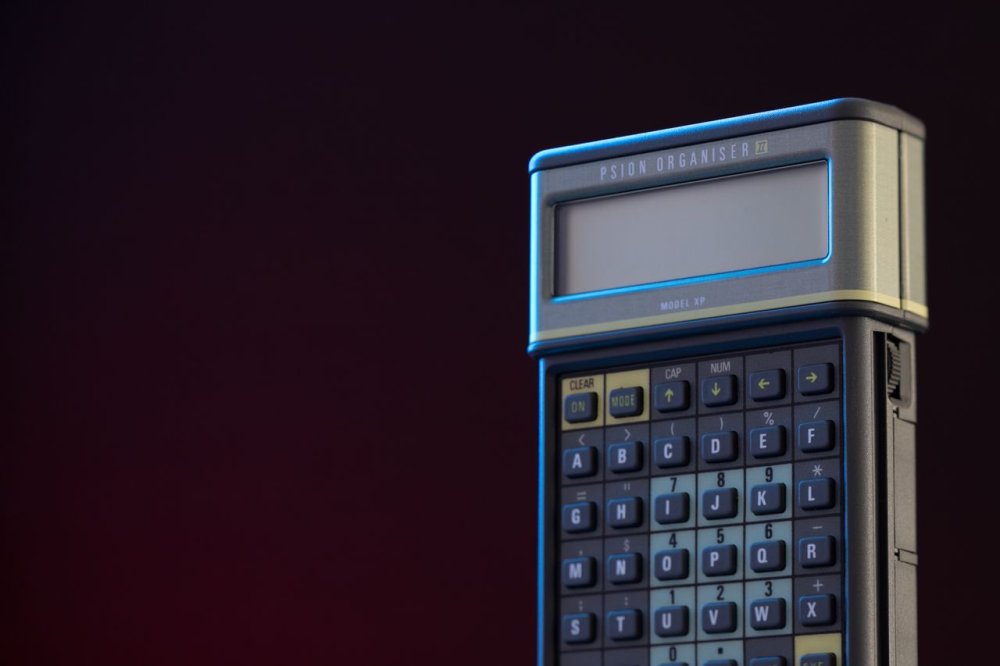
The Psion Organiser II, introduced in the mid-1980s, looked somewhat different from the typical Casio electronic diary. It was rugged, programmable and expandable, and found both personal and professional uses.
Later Psion machines became far more computer-like, particularly the clamshell models many UK technology fans still remember extremely fondly.
Sharp continued developing increasingly advanced organisers. Casio eventually moved into full PDAs and handheld PCs too.
The dividing line between organiser and computer was disappearing.
Then came another device that changed the entire equation.
The mobile phone.
When the Phone Started Stealing Everybody Else's Jobs
Early mobile phones were just phones.
That sounds almost strange now.
They called people.
Some stored numbers.
Eventually they gained calendars, alarms, calculators and notes.
Then texting became hugely important.
Displays improved.
Phone books expanded.
Games appeared.
The mobile slowly began absorbing the functions of all the separate gadgets people had previously carried.
Your watch had already been threatened.
Now the electronic organiser was next.
Why carry a phone and a digital diary when the phone could store your contacts?
Why maintain two calendars?
Why type somebody's number into an organiser and then manually type the same number into your mobile?
By the time feature phones became commonplace, the traditional electronic organiser was beginning to look less essential.
Then smartphones finished the job.
Your Smartphone Is an Electronic Organiser With Delusions of Grandeur
Strip away social media, cameras, streaming video and the internet, and much of what sits at the heart of a modern smartphone is remarkably familiar.
Contacts.
Calendar.
Reminders.
Notes.
Calculator.
Clock.
Alarms.
Those are classic electronic organiser functions.
The difference is that today's versions synchronise across devices, recognise your voice, understand locations, communicate with other people and contain effectively unlimited storage.
Typing "dentist Thursday 3pm" into an electronic organiser once felt sophisticated.
Now you can tell your phone verbally and have it remind you when you leave the house.
Technologically, the difference is enormous.
Conceptually, it is surprisingly small.
The dream was already there.
One pocket device containing the information needed to organise your life.
What Modern Devices Lost Along the Way
Nobody sensible would argue that a 1980s digital diary is more useful than a smartphone.
It isn't.
But electronic organisers had one advantage that increasingly feels luxurious.
They did almost nothing else.
Open your Casio organiser to check Saturday's appointment and you checked Saturday's appointment.
That was it.
The machine did not immediately show you three messages, two emails, a news alert and a notification informing you that somebody you barely remember has uploaded a photograph.
There was no algorithm waiting behind the calendar.
No feed.
No endless scroll.
No red notification badge demanding attention.
These machines were limited, and those limitations gave them focus.
An electronic diary was boring in exactly the right way.
Why Electronic Organisers Are So Collectible Now
Vintage electronic organisers have become fascinating little time capsules.
Unlike many retro gadgets, they frequently survive in excellent cosmetic condition because they were protected by folding cases and spent much of their lives inside drawers, briefcases or desk cupboards.
Finding one complete with its original packaging is particularly evocative.
The boxes often promised a wonderfully streamlined electronic future, usually illustrated with immaculate product photography and lists of productivity features.
Look for examples today and you will find everything from straightforward Casio Digital Diaries to elaborate Sharp organisers and Psion machines.
Collectors are attracted by several things.
There is the industrial design, particularly the wonderful combination of grey plastic, tiny LCD displays and physical buttons.
There is the history. These devices sit directly on the evolutionary path towards PDAs and smartphones.
There is also the simple pleasure of using technology that has a clear beginning and end.
You switch it on.
You perform a task.
You switch it off.
Radical stuff.
Battery leakage is one thing to watch for when buying older examples. Decades-old batteries can cause considerable internal damage, so a clean battery compartment is worth checking whenever possible.
The displays, hinges and keyboards also deserve attention on folding models.
And if you find one with somebody else's ancient address book still stored inside, perhaps resist the temptation to ring Alan from Accounts and tell him his 11am meeting has been moved.
The Forgotten Future in Your Desk Drawer
Electronic organisers deserve more credit than they usually receive.
They were never as glamorous as home computers, never as culturally dominant as the Walkman and never inspired playground arguments quite like the Spectrum and Commodore 64.
But they helped introduce an enormously important idea.
Your personal information could live inside a portable computer.
A telephone number did not have to be written down.
A diary did not have to be made from paper.
A machine could remember appointments, birthdays, notes and contacts on your behalf.
The electronic organisers of the 1980s and early 1990s now look charmingly limited beside the devices in our pockets, but the future they imagined was surprisingly accurate.
They simply failed to predict that the same pocket organiser would eventually contain a television, camera, stereo, map, newspaper, games console, bank, encyclopaedia and an apparently inexhaustible supply of videos of dogs falling off sofas.
Perhaps that was for the best.
There is something wonderfully optimistic about opening an old Casio or Sharp organiser today and seeing those little labels: TEL, MEMO, SCHEDULE, CALENDAR.
No feeds. No followers. No notifications.
Just your appointments.
And David's phone number.
If forgotten gadgets like these bring back memories, join RetroWins or sign up to stay in the loop for more stories celebrating the computers, electronics, toys and technology we somehow still cannot stop thinking about.






