
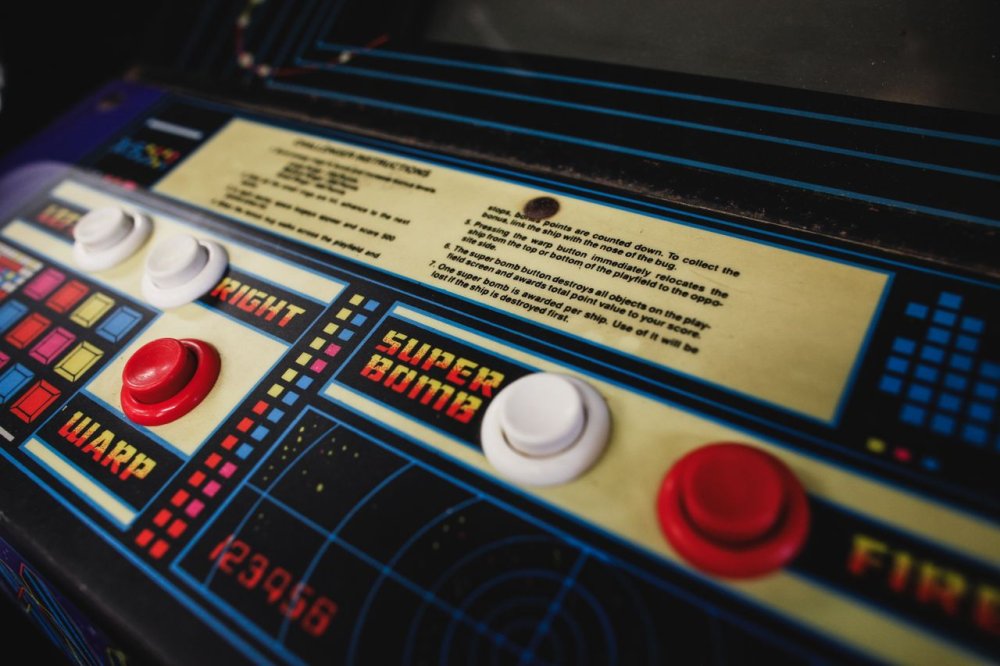
Before the Game Boy arrived, portable gaming was a much stranger business.
There were no cartridges to swap, no save files, no rechargeable batteries and absolutely no chance of downloading another game because you were bored with the one you had. Instead, you bought an electronic game that usually played exactly one thing, made a collection of increasingly frantic beeps and required enough batteries to keep a small torch factory in business.
And we loved them.
The electronic games before the Game Boy occupied a wonderfully odd period between traditional toys and proper video game consoles. Some had glowing red LEDs. Others used LCD characters that were permanently printed into the screen and simply appeared or disappeared at the appropriate moment. The really posh ones had colourful vacuum fluorescent displays that made a dark bedroom look like the bridge of a tiny spaceship.
Then there were the tabletop machines, chunky plastic contraptions that promised to bring the arcade into your home provided you were willing to use quite a lot of imagination.
For a generation growing up in Britain during the late 1970s and 1980s, these things were everywhere. Bedrooms, Christmas mornings, Argos catalogues, toy shops, jumble sales and the backs of cars on long journeys all played host to them.
Some became famous. Many disappeared almost completely.
So before Nintendo gave us a grey brick, a greenish screen and Tetris, this is what portable electronic gaming looked like.
Before Handheld Gaming Meant a Console
The important thing to remember about early electronic games is that we did not necessarily think of them as miniature video game consoles.
They were toys.
That distinction mattered.
A Spectrum or Commodore 64 was a serious purchase that occupied a permanent position somewhere in the house, usually attached to the family television and surrounded by cassette tapes. An electronic game could be picked up, played for ten minutes and abandoned on the bedroom carpet next to a Rubik's Cube and half a packet of Opal Fruits.
There was also something wonderfully direct about them.
Switch it on.
BEEP.
Play.
Lose.
BEEP BEEP BEEP.
Play again.
No loading screen. No software update. No account creation. No 47-page privacy agreement asking whether the manufacturer could analyse your behaviour for "product improvement purposes".
The machine already knew everything it needed to know about you.
You had just crashed the little red dot again.
The Red LED Years
Some of the earliest handheld electronic games barely looked like games at all.
Mattel's Auto Race helped establish the format in the 1970s. Instead of graphical cars, roads and scenery, it presented the player with glowing red LED dots. The game used solid-state electronics rather than mechanical gameplay, with the car represented by a light moving between lanes. Mattel followed it with Football and other sporting games.
Looking at one now, it is almost comically primitive.
To a child encountering electronic entertainment at the time, though, the important word was not "primitive".
It was electronic.
Lights moved because a computer inside the toy was making them move. The machine responded to buttons. It kept score. It made noises when things happened.
That was enough.
The imagination supplied everything else.
A glowing dash could be a racing car. Another glowing dot could be a defender. A row of lights could become an alien invasion fleet if the plastic artwork surrounding the display told you that was what you were looking at.
Modern games spend millions creating convincing virtual worlds.
Electronic games in the late 1970s gave you six LEDs and essentially said, "There you go. Use your imagination."
And somehow, we did.
Galaxy Invader 1000 and the Art of Shooting Red Dots
For many British children, one of the most recognisable early space games was the Galaxy Invader 1000.
Released in the UK by CGL around 1980, it offered a simplified take on the Space Invaders idea. The player moved left and right, fired upwards at descending enemies and tried desperately to stop them reaching the bottom of the display. It included three skill levels and a wonderfully substantial fire button that felt entirely appropriate for saving civilisation.
Visually, there was not exactly a lot going on.
The aliens were lights.
Your weapon was a light.
Most of space appeared to consist of black plastic.
But none of that mattered once the game started speeding up.
The sound was a large part of the experience. Early electronic games knew how to turn a handful of electronic tones into surprisingly effective psychological warfare. The faster the action became, the more urgent those bleeps seemed.
You could begin perfectly calmly.
Then something would get too close to the bottom.
Suddenly you were hammering the fire button as though your parents' house genuinely depended on it.
These machines were particularly effective at creating "one more go" behaviour long before anybody had invented daily rewards, battle passes or loot boxes.
You simply knew you could beat your previous score.
And you were almost certainly wrong.
Grandstand Astro Wars: The Bedroom Arcade Machine
Then there were the tabletop games.
These were different.
A handheld electronic game felt like a toy. A tabletop machine looked like equipment.
Grandstand Astro Wars is probably one of the finest examples.
Released in 1981, Astro Wars was based on Epoch's Super Galaxian hardware and sold in Britain under the Grandstand name. It used a vacuum fluorescent display, or VFD, which produced wonderfully vivid glowing graphics. Gameplay involved several phases of shooting attacking spacecraft, avoiding incoming fire and eventually attempting a docking sequence.
To anyone accustomed to LCD screens, it is difficult to explain quite how special a VFD game looked.
The colours glowed.
Not brightly in the modern high-resolution sense, but with that distinctive electric blue, green and red light that seemed to come from somewhere deep inside the machine.
Play Astro Wars in a dim room and suddenly the plastic cabinet around it disappeared.
You were flying the spacecraft.
Well, obviously you were sitting cross-legged on the carpet wearing pyjamas, but emotionally you were defending Earth.
Astro Wars also demonstrated how important cabinet design was to these machines. The display was relatively small, but the case surrounding it made the whole thing feel much larger and more substantial.
This was common with tabletop electronic games. They borrowed the visual language of arcade cabinets, dashboards and control panels. The hardware might have been modest, but the casing told a much more exciting story.
It was theatre.
And children are extremely good at theatre.
Grandstand Was Everywhere
The Grandstand name has become particularly tangled up with British memories of electronic games.
Grandstand sold numerous machines produced by overseas manufacturers under licence or rebadged for the UK market. Epoch was one important source, which is why machines remembered in Britain as Grandstand products can sometimes be found elsewhere under completely different names.
At the time, of course, nobody cared about any of this.
You did not sit there wondering about international licensing arrangements.
You wanted to know whether your mate had Astro Wars.
Grandstand machines had exactly the right look for the period. Black plastic. Futuristic logos. Coloured graphics surrounding small displays. Buttons labelled FIRE, START or ATTACK.
They looked like things that might genuinely have fallen out of the control room of a low-budget science-fiction programme.
Other memorable Grandstand releases included Scramble, Munchman and Firefox F-7, among a much larger catalogue.
Firefox F-7 arrived in 1983 and offered six stages and multiple skill levels, squeezing a surprising amount of action into its VFD display.
These were not toys that apologised for being toys.
They were magnificently dramatic.
Nintendo Game & Watch Changed Everything Quietly
Long before the Game Boy, Nintendo was already quietly teaching the world what good portable gaming could look like.
The first Game & Watch, Ball, appeared in Japan in 1980. The idea made clever use of technology related to calculator displays, producing slim battery-efficient games that could genuinely be carried around rather than requiring the pockets of a mountaineering jacket.
Game & Watch machines were beautifully simple.
Each unit generally contained a single game. The LCD display already contained the possible positions of characters and objects, with segments appearing and disappearing as you played.
Technically, this meant animation was incredibly restricted.
In practice, your brain filled in the gaps.
A character might exist in only three or four possible positions, but once the game started moving quickly, it felt perfectly natural.
The machines also tended to offer Game A and Game B modes, giving you at least some variation in difficulty. And, as the name rather helpfully suggested, they displayed the time when you were not playing them.
This was useful because apparently nobody owned watches in 1981.
The design was where Nintendo really began to show its genius.
Game & Watch units looked refined compared with many electronic toys. Buttons felt deliberate. Cases were slim. Displays were crisp. Artwork was colourful without making the whole device resemble a dashboard salvaged from Buck Rogers.
And then came the Multi Screen games.
Donkey Kong and the Birth of the D-Pad
The 1982 Game & Watch version of Donkey Kong used two screens in a folding clamshell design.
Even today, it looks remarkably modern.
Open it and you have two vertically arranged displays. Close it and the screens are protected. It is a design idea Nintendo would return to decades later with the Nintendo DS.
More importantly, Donkey Kong introduced Nintendo's familiar cross-shaped directional control pad.
The D-pad became one of those pieces of design so obvious that it is difficult to imagine someone having to invent it.
Yet there it was, on a little electronic game in the early 1980s.
Game & Watch machines are among the forgotten electronic games before the Game Boy that are not entirely forgotten, partly because Nintendo kept many of their ideas alive.
Mr Game & Watch became a character in his own right. The dual-screen format returned. The D-pad became standard.
The DNA survived even when the original machines disappeared into drawers.
The Strange Genius of Tomy
If Grandstand specialised in making electronic games look like arcade machines, Tomy often seemed determined to make them look like objects recovered from the future.
Take the Tomytronic 3D range.
Released in 1983, these machines resembled futuristic binoculars. You held the unit up to your eyes and played while looking through two displays. Light entered through a window in the top of the casing and illuminated the LCDs, creating the impression of depth.
It was completely ridiculous.
It was also fantastic.
Anyone seeing one for the first time immediately wanted to put it on.
You could even wear it around your neck using a strap, which presumably allowed you to wander around looking like the least convincing fighter pilot in Britain.
Games included Thundering Turbo, Skyfighters, Shark Attack and others.
The illusion was limited, naturally. Nobody was going to mistake a Tomytronic for virtual reality.
But that misses the point.
The machine looked exciting before you even switched it on.
That counted for a lot.
Half the attraction of 1980s electronic toys was the promise embodied in the object itself. Buttons, lenses, joysticks and glowing displays suggested that something extraordinary might happen.
Sometimes the anticipation was actually better than the game.
Tomy Blip: Digital Gaming That Was Barely Digital
Tomy's Blip deserves a special mention because it beautifully represents the strange transitional world these games occupied.
Released in the late 1970s, Blip advertised itself as a digital game and recreated a Pong-like tennis match.
Except the actual game mechanism was largely mechanical.
A wind-up mechanism moved the "ball", while batteries powered the light representing it.
This is glorious.
It looks electronic.
It feels electronic.
It has a glowing dot.
But internally it is doing something much closer to a clockwork toy.
That mixture of mechanical ingenuity and emerging electronics is exactly what makes forgotten games of this period so interesting.
Manufacturers were trying to work out what an electronic game even was.
There were no established rules.
So they tried everything.
Simon Turned Memory Into a Competitive Sport
Not every electronic game needed a screen.
Simon proved that extremely effectively.
Launched in 1978 by Milton Bradley, Simon used four large illuminated coloured buttons and challenged players to repeat increasingly long sequences of lights and sounds.
The concept could hardly be simpler.
Watch.
Remember.
Repeat.
Fail.
Blame someone for talking.
Simon had that rare quality possessed by the best electronic toys: anybody could understand it within seconds.
It also worked socially.
Someone would inevitably gather around while another person played, waiting for the sequence to become impossible.
Then came the smug comments.
"You pressed blue."
"I KNOW."
"You definitely pressed blue."
"I KNOW."
It did not matter that Simon lacked spaceships, monsters or racing cars. The machine created tension using four lights and four tones.
That is impressive design by any standard.
Merlin Was the Mysterious One
Parker Brothers' Merlin, also from 1978, took another approach.
Its long red case contained a grid of illuminated buttons and offered several different games rather than dedicating the whole machine to one activity. It could handle six games, which made it unusually versatile for the period.
Merlin looked strange.
That helped.
Good electronic toys often benefited from not immediately revealing what they did. A football game looked like football. A racing game had a track printed on it.
Merlin looked like a control panel for something.
You had to investigate.
There was always something appealing about a toy that required instructions before anybody could work out what was going on.
It felt sophisticated.
Possibly because reading instructions was the closest many of us got to technical training.
The Built-In Game Was Both Brilliant and Terrible
One of the defining characteristics of these old electronic games was their lack of software.
The game was the machine.
Buy Donkey Kong and you had Donkey Kong.
Forever.
You were not getting Zelda next month.
This sounds absurdly restrictive today, but it created a surprisingly strong relationship between player and game.
Because you only had one thing to play, you learned every detail.
You recognised the rhythms.
You knew where things became difficult.
You developed techniques that would be completely pointless anywhere else on Earth.
High scores actually meant something because everyone playing that particular machine was facing exactly the same limitations.
There was also no escape from a bad game.
If Auntie Barbara had bought you Electronic Submarine Attack for Christmas and it turned out to be dreadful, congratulations.
That was your game now.
Try to enjoy it.
Batteries Were the Hidden Economy of Childhood
Of course, none of this electronic entertainment worked without batteries.
So many batteries.
AA batteries.
C batteries.
9-volt batteries.
Tiny button cells.
A new electronic game could trigger immediate negotiations with whichever parent controlled the household battery supply.
"Does it come with batteries?"
The most terrifying sentence in toy ownership was:
"Batteries not included."
Some tabletop games could use mains adaptors, although finding the correct adaptor often seemed to require qualifications in electrical engineering.
Every household eventually accumulated a drawer containing mysterious black power supplies.
Nobody knew what they powered.
Nobody dared throw them away.
They may still be there.
Why These Games Felt More Special Than They Should Have
Looking back at the electronic games before the Game Boy, their technical limitations are obvious.
Tiny displays.
Repetitive sounds.
One game per machine.
Simple controls.
Basic artificial opponents.
Yet their limitations were also part of their character.
Every manufacturer had to find clever ways of creating excitement from almost nothing.
Plastic artwork expanded the world beyond the screen.
Sound effects made simple movement feel dramatic.
Cabinet design created atmosphere.
Increasing speed generated difficulty without requiring complicated software.
Most importantly, they demanded imagination from the player.
A glowing shape was not trying to convince you it genuinely looked like an alien.
It simply represented an alien.
The rest happened in your head.
Modern games are capable of astonishing realism, but there is something lovely about remembering a time when four coloured lights could ruin an entire family's concentration for twenty minutes.
Then the Game Boy Arrived
By the end of the 1980s, dedicated electronic games were about to lose one of their biggest advantages.
Nintendo released the Game Boy in 1989.
Suddenly one portable machine could play many different games using interchangeable cartridges.
That changed the value proposition completely.
Instead of buying another piece of hardware every time you wanted another game, you kept the console and changed the software.
The Game Boy was hardly luxurious. Its display was monochrome, its hardware was modest and it required batteries too.
But it provided something most earlier handheld electronic games could not.
A library.
Tetris today.
Super Mario Land tomorrow.
Something completely different next month.
The dedicated electronic game did not vanish overnight, but its position had changed permanently.
Why Forgotten Electronic Games Are Collectible Again
Today these machines have become wonderfully evocative pieces of design.
Collectors hunt down Game & Watch units, Grandstand tabletop games, Tomy machines, Mattel handhelds and dozens of more obscure examples.
Condition matters, particularly with battery compartments. Forgotten batteries have destroyed plenty of otherwise beautiful electronic games over the decades.
Packaging can make examples particularly desirable too, partly because the boxes captured the period so perfectly.
The artwork rarely showed what the game actually looked like.
Instead, it showed what playing the game was supposed to feel like.
Spaceships exploded.
Cars screamed around futuristic circuits.
Pilots stared heroically into the distance.
Then you opened the box and discovered seven red lights.
Brilliant.
Working examples also preserve sounds that are almost impossible to separate from the memory of the machines themselves.
One particular electronic chirp can transport somebody back forty years faster than any photograph.
That is why these devices are more than obsolete games.
They are memory machines.
We Didn't Need Many Pixels
There is a temptation to look at early electronic gaming as merely a stepping stone towards something better.
LED games led to LCD games.
LCD games led to the Game Boy.
The Game Boy led to increasingly powerful handheld consoles.
Technologically, that progression makes sense.
Emotionally, it misses something.
The forgotten electronic games we played before the Game Boy had identities precisely because they were limited.
Astro Wars could only be Astro Wars.
Simon could only be Simon.
A Game & Watch machine was built physically around the game it contained.
The hardware, artwork, buttons and display were all part of one object.
They were not interchangeable platforms.
They were toys with personalities.
And that is probably why finding one today can produce such an immediate reaction.
You recognise the shape before you remember the name.
Then you see the screen.
Then suddenly you remember the sound.
And before long you are thinking about the bedroom it sat in, the Christmas you received it, the friend who always beat your score or the afternoon you spent desperately trying to reach the next level.
For machines capable of storing remarkably little information, they somehow ended up storing an enormous amount of ours.
If memories of glowing LEDs, frantic bleeps and plastic spaceships have sent you rummaging mentally through your childhood toy box, join RetroWins or sign up to stay in the loop for more retro technology stories, forgotten gadgets and gloriously unnecessary nostalgia.






