
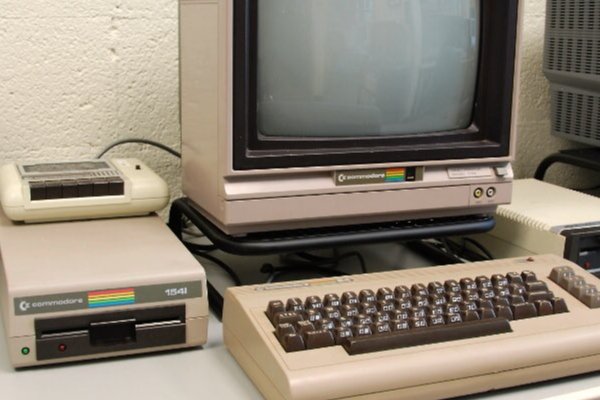
There are old computers you remember owning, and then there is the Commodore 64.
For millions of people who grew up during the 1980s, the C64 was not simply a beige box connected to the family television. It was a games machine, a programming experiment, a source of arguments, an occasional homework tool and, on particularly frustrating evenings, a device apparently designed to make you stare at flashing borders while wondering whether a cassette was ever going to load.
The funny thing about things every Commodore 64 owner will remember is that many of them have very little to do with specifications. Nobody lies awake feeling nostalgic about 64KB of RAM. You remember the noises, the colours, the slightly peculiar keyboard, the games passed around at school and the strange rituals involved in persuading software to actually appear on the screen.
For British children in particular, the Commodore 64 became part of the furniture of the 1980s. It sat under televisions in bedrooms and living rooms, surrounded by cassette cases, joysticks, magazines and handwritten scraps of paper containing mysterious loading instructions.
And if you owned one, at least some of the following will be permanently lodged somewhere in your brain.
That Blue Screen
Before Windows had its infamous blue screen, Commodore 64 owners had a much friendlier one.
Switch the computer on and you were greeted by that unmistakable blue display, lighter blue border and chunky white text:
COMMODORE 64 BASIC V2
Then came the wonderfully optimistic:
38911 BASIC BYTES FREE
And underneath it:
READY.
That screen was strangely inviting. There were no icons, menus, notifications or setup wizards. The computer simply sat there waiting for you to tell it what to do.
Unfortunately, if you were eight years old, what you usually wanted it to do was play Ghosts 'n Goblins, which meant the next thing you typed probably wasn't an elegant BASIC program.
It was:
LOAD
Or, more commonly:
LOAD""
Then you pressed RETURN and began the real ceremony.
PRESS PLAY ON TAPE
Four words capable of instantly transporting a generation back to childhood.
For many UK Commodore 64 owners, software came on ordinary audio cassettes and was loaded using the Commodore Datasette. You put the cassette in, rewound it to approximately the right place, typed your loading command and received:
PRESS PLAY ON TAPE
So you did.
Then the computer responded:
OK
And now you waited.
And waited.
And perhaps went downstairs for a drink.
Modern technology has trained us to become irritated if a web page takes three seconds to appear. Commodore 64 owners willingly spent several minutes loading a game from tape, often while watching flickering colours and listening to electronic squeals that sounded like a furious modem trapped inside a biscuit tin.
The extraordinary part is that this didn't seem especially unreasonable at the time.
That was simply how computers worked.
The Loading Screen Was Part of the Game
Because loading took so long, developers became surprisingly inventive about keeping you entertained while you waited.
Loading screens turned into miniature works of pixel art. Some games even played music during the loading process, thanks to clever software loaders that made much better use of those otherwise dead minutes.
You could sit there studying the artwork, imagining how incredible the game was going to be once it finally appeared.
Sometimes the loading screen looked better than the game.
Nobody mentioned that on the box.
There was a particular magic in watching an image gradually appear and realising that everything seemed to be working. The computer had found the data. The tape was behaving itself. The azimuth gods were smiling.
You might actually get to play something.
Then Came LOAD ERROR
And suddenly the evening took a darker turn.
Few messages could produce disappointment quite like a failed cassette load.
Perhaps the tape had stretched. Perhaps the heads were dirty. Perhaps the volume settings on whatever third-party cassette system you were using weren't quite right. Perhaps you had simply looked at the computer in the wrong way.
Whatever the reason, you had just spent several minutes waiting for absolutely nothing.
Try again.
Rewind.
Press play.
Watch the flashing screen.
Wait.
There was a level of patience involved in 1980s computing that modern life has almost completely eliminated.
And, somehow, we kept coming back.
The Tiny Screwdriver That Became a Technical Instrument
Anyone who spent enough time with cassette-based home computers eventually encountered one of the strangest rituals in retro computing: adjusting the tape head alignment.
This often involved a tiny screwdriver and the small adjustment screw inside the Datasette.
There were commercial alignment programs designed to help, and magazines regularly discussed tape alignment problems. But plenty of children simply learned through experimentation, folklore or advice from whichever friend at school was considered "good with computers".
You would turn the screw slightly.
Try the game.
No.
Turn it back.
Try again.
Eventually something loaded and you treated the new position as though you had calibrated equipment at NASA.
Nobody was allowed to touch that screw again.
The Commodore 64 Keyboard
The C64 keyboard was an object with character.
Quite literally, in fact, because the keycaps were covered in little symbols that suggested the computer knew secrets you didn't.
Alongside the familiar letters and numbers were graphical characters, Commodore symbols and keys labelled things like RUN/STOP and RESTORE.
There were only four function keys physically labelled F1, F3, F5 and F7, with the even-numbered functions accessed using SHIFT.
It looked like a serious piece of machinery.
This was particularly true of the original "breadbin" Commodore 64, whose tall brownish-grey case and dark keys made it look considerably more substantial than many later home computers.
And that keyboard had a distinctive feel. It wasn't elegant or subtle. You knew when you had pressed something.
Anyone who spent hours typing listings from computer magazines probably remembers it even more vividly.
Typing Pages of BASIC From a Magazine
There was a time when buying software could mean purchasing a magazine and typing it yourself.
Pages and pages of code.
Lines like:
10 PRINT "HELLO"
were easy enough.
Unfortunately, the program rarely remained that friendly.
Soon you were entering endless DATA statements, POKEs, variables and numbers while desperately trying not to mistype a single character.
The magazine promised something exciting at the end. Maybe a game. Maybe a graphical demo. Maybe a utility.
You spent an hour entering it.
Typed RUN.
And got:
SYNTAX ERROR
Wonderful.
Now you had to find the mistake.
This was frustrating, but it accidentally taught an enormous number of children that computers were not sealed appliances. You could instruct them. Change things. Break things. Fix things. Experiment.
For plenty of future programmers, that blinking READY prompt was the beginning.
POKEing Things Without Really Knowing Why
Speaking of programming, Commodore 64 owners became very familiar with the word POKE.
Did everyone understand precisely what the command was doing?
Absolutely not.
Did that stop us typing sequences of numbers printed in magazines?
Absolutely not.
POKE commands could directly alter values in the C64's memory and were used for everything from changing colours to modifying games.
Game magazines frequently published POKEs that promised infinite lives, immunity or some other useful cheat.
To a child, this felt enormously sophisticated.
You weren't cheating.
You were hacking.
Admittedly, you were hacking by carefully copying a number from page 43 of ZZAP! 64, but the feeling still counted.
Joysticks That Took a Beating
The Commodore 64 was theoretically capable of all sorts of serious computing tasks.
In practice, many machines spent most of their existence being assaulted through joystick port 2.
The classic joystick experience involved a chunky stick, a base you tried to hold still with one hand and a large red fire button.
Competition Pro joysticks became particularly associated with home computers of the era, but countless other designs appeared in bedrooms across Britain.
Some were excellent.
Some felt as though they had been assembled from spare parts in a shed.
Nearly all were subjected to treatment that no electrical device deserved.
Games involving rapid left-to-right movement were particularly brutal. Sporting titles could turn a perfectly civilised child into someone violently shaking a joystick across a coffee table.
Then, eventually, something inside stopped clicking.
The joystick had died in service.
A replacement would be required.
The Great Joystick Port Confusion
The C64 had two joystick ports.
This sounds straightforward.
It wasn't always.
Some games expected the joystick in port 1.
Many expected port 2.
Others seemed determined to make you swap them around until something happened.
So there was a familiar pre-game sequence:
Load game.
Game appears.
Move joystick.
Nothing.
Press fire.
Nothing.
Look suspiciously at computer.
Move joystick to other port.
Suddenly it works.
Technology conquered.
Multi-Load Games
You might assume that once a cassette game had loaded, the waiting was over.
That was adorable.
Larger games sometimes used multiple loads, meaning additional sections had to be pulled from the cassette as you progressed.
You might finish a level and be rewarded not with the next level, but with another request to press play.
Occasionally you had to find a particular position on the tape.
Some releases used both sides of the cassette.
There were games where getting further meant waiting longer.
It sounds intolerable now, but there was an odd benefit. Games had rhythm. You stopped. Talked. Got something to eat. Read the manual again.
Gaming wasn't yet a seamless torrent of stimulation.
Sometimes it involved sitting quietly while a cassette player made noises.
Fast Loaders Felt Like Witchcraft
Eventually, clever loading systems dramatically reduced cassette loading times.
Products and software such as Novaload and Turbo Tape became familiar names, while many commercial games incorporated fast-loading routines of their own.
The difference could feel astonishing.
A game that would normally require an age to load suddenly appeared much more quickly.
This was genuine technological magic.
Of course, fast loaders could also produce spectacular flashing borders, strange sounds and displays that looked as though the television was having some form of episode.
Parents walking through the room had absolutely no idea what was happening.
"It's loading."
Apparently that explained everything.
The SID Sound
You don't have to see a Commodore 64 to recognise one.
Sometimes a few seconds of music is enough.
The C64's SID sound chip helped give the machine one of the most distinctive audio identities of the 8-bit era. Programmers and musicians learned how to squeeze extraordinary results from it, creating music that still has a huge following today.
For Commodore owners, those sounds became inseparable from the games.
Rob Hubbard's music became legendary on the machine, along with work from composers such as Martin Galway and Ben Daglish.
These weren't merely little jingles before a game began. Some were elaborate compositions that pushed the hardware far beyond what most owners imagined their beige home computer could produce.
You could load a game, hear the title music and simply leave it playing.
Sometimes for quite a while.
The SID sound is crunchy, electronic and unmistakably artificial. That should make it feel dated.
Instead, it gives the Commodore 64 enormous personality.
Ocean Loaders and Music You Never Forgot
For many British players, the Ocean name is particularly tangled up with Commodore 64 memories.
Ocean Software released a huge number of games during the 1980s, often based on films, television programmes or arcade properties.
Their loading sequences became memorable in their own right.
The famous Ocean Loader music, composed in several versions by different musicians over the years, transformed the tedious wait for a cassette game into something approaching an event.
That is one of the oddities of things every Commodore 64 owner will remember. We became nostalgic for systems designed to make waiting less boring.
Today, loading is something developers try to hide.
Back then, somebody wrote you a soundtrack for it.
Games Bought Because the Cover Looked Brilliant
Choosing a game in the 1980s could be an act of almost pure faith.
You might see a cassette in WHSmith, Boots or an independent computer shop with dramatic painted artwork showing spaceships, warriors, explosions or enormous monsters.
The actual game consisted of sixteen pixels shooting another twelve pixels.
Nobody complained too much.
The artwork was part of the fantasy.
Budget software made the gamble even easier. Companies such as Mastertronic became famous for selling inexpensive cassette games, meaning pocket money could occasionally stretch to something new without requiring a birthday or several weeks of negotiation with your parents.
Of course, buying games based on packaging produced mixed results.
Sometimes you discovered a classic.
Sometimes you discovered why the game was cheap.
The Games Everyone Seemed to Have
Every Commodore 64 owner had their own collection, but certain titles seemed to circulate everywhere.
Impossible Mission with its memorable speech.
The Last Ninja with its atmospheric presentation and superb music.
International Karate+.
Boulder Dash.
Paradroid.
Bubble Bobble.
Uridium.
Wizball.
California Games.
Summer Games.
The Great Giana Sisters, if someone had managed to get hold of it.
Then there were conversions of arcade hits and licensed games based on films and television shows, ranging from brilliant to deeply questionable.
Your favourite C64 game often depended less on reviews and more on what happened to be available in your particular circle of friends.
Which brings us to another enormous part of Commodore ownership.
The Mysterious C90 Full of Games
Software piracy was widespread on home computers in the 1980s, and the cassette made copying particularly accessible.
For many children, software collections mysteriously expanded when a friend produced a C90 cassette covered in handwritten game names.
Exactly where these tapes came from was rarely discussed.
Someone's brother knew someone.
That was usually enough explanation.
You might receive a cassette containing multiple games, each supposedly positioned according to numbers scribbled on the case.
Finding one involved winding the tape forwards while watching the counter.
"Game starts at 124."
You stopped at 121 because the counter was probably lying anyway.
Then you tried loading.
Wrong game.
Rewind slightly.
Try again.
The entire system was ridiculous and somehow completely normal.
The Tape Counter Was Your File System
Modern computers give us searchable folders, databases and cloud storage.
The cassette-era Commodore owner had a three-digit tape counter and a Bic biro.
A cassette insert might contain notes such as:
Bruce Lee 028
Commando 112
Ghostbusters 237
Those numbers were valuable information.
If somebody pressed the reset button on the Datasette counter, civilisation briefly collapsed.
You had lost the map.
There was no metadata. No thumbnails. No recently opened list.
Just numbers and hope.
Saving Your Own Programs to Tape
Of course, cassettes were not just for commercial games.
If you wrote your own BASIC masterpiece, you could save it.
Type SAVE, press RECORD and PLAY together on the Datasette, and your creation could be stored for later retrieval.
This produced a different kind of anxiety.
Had it saved correctly?
Was that definitely the right tape?
Had you just recorded over something important?
Saving data to physical media made the act feel oddly significant. The computer itself forgot everything when switched off, so that little cassette was now responsible for preserving your work.
Cloud autosave it was not.
The Television Was Also the Monitor
Dedicated computer monitors existed, but plenty of British Commodore 64s spent their lives attached to an ordinary household television.
This created logistical problems.
The television was simultaneously required for:
Your computer.
Your parents.
EastEnders.
The news.
Whatever your sibling wanted to watch.
Computer time could therefore end abruptly because somebody had decided television programmes were somehow more important than finishing The Last Ninja.
If the C64 lived permanently in your bedroom, you had achieved an enviable level of technological independence.
Everyone else negotiated.
Tuning the Television
Connecting an old home computer to a television wasn't always the clean HDMI experience we take for granted now.
If you were using RF, the television needed to be tuned to the computer's signal.
This could involve knobs, buttons or little tuning controls depending on the television.
You moved through static until suddenly there it was:
The blue screen.
Success.
Sometimes the picture wasn't quite right.
Sometimes it shimmered.
Sometimes colours bled into one another.
Nobody cared.
You could read READY.
The computer worked.
Reset Buttons That Weren't Always There
The original Commodore 64 famously lacked a dedicated reset button on the machine itself.
This was inconvenient enough that third-party reset switches and cartridges became popular accessories.
Otherwise, there was always the blunt solution.
Turn it off.
Turn it back on.
Of course, anything in memory vanished.
But when a game crashed, your options were limited.
Modern computing gives us task managers, recovery modes and graceful application restarts.
The C64 gave you a power switch.
Effective.
The Cartridge Port Looked Important Even If You Rarely Used It
At the back of the C64 was an assortment of ports that gave the machine a wonderfully technical appearance.
Video.
Serial.
Cassette.
User port.
Joystick ports on the side.
And the cartridge expansion port.
Some owners used cartridges extensively, including utility and fast-loading cartridges. Others barely touched the port at all.
But knowing it was there made the machine feel expandable.
The C64 wasn't merely a games console. It was a proper computer.
You could add things to it.
Exactly what those things did was sometimes less clear.
The 1541 Disk Drive Was an Object of Envy
In Britain, where cassette software remained extremely popular, owning a Commodore 1541 disk drive could make you seem almost impossibly advanced.
It was large, substantial and not cheap.
Compared with cassette loading, disks offered far more convenient access to software and data, although Commodore's serial disk system had its own notorious speed limitations unless accelerated by software or cartridges.
For a child accustomed to rewinding tapes, though, inserting a floppy disk still felt like serious computing.
Someone with a disk drive clearly had a more professional operation going on.
Possibly they also had a printer.
At that point they were practically running IBM.
Computer Magazines Were Essential
Owning a Commodore 64 wasn't just about the computer.
It was about the ecosystem around it.
British newsagents were packed with home computer magazines, and C64 owners had plenty to choose from over the years, including ZZAP! 64, Commodore Format and Commodore User.
These magazines were enormous parts of the hobby.
You got reviews, previews, tips, cheats, programming advice, letters and occasionally cover-mounted cassettes containing games, demos or utilities.
A good cover tape could make the magazine irresistible.
You didn't browse a website to find out what was coming next.
You waited a month and went to the newsagent.
There was excitement in that delay.
Screenshots That You Studied for Weeks
Before online video, streaming and social media, screenshots mattered.
A few tiny images in a magazine might be everything you knew about an upcoming game.
You studied them.
Repeatedly.
You imagined how the game moved, sounded and played.
By the time you finally got hold of it, you had already created an entire version in your head.
Sometimes the real game lived up to it.
Sometimes those three screenshots had rather oversold the experience.
Schoolyard Computer Rivalries
The C64 wasn't just a computer.
It was a tribe.
Across British playgrounds, children aligned themselves with machines in debates that were conducted with tremendous confidence and almost no reliable evidence.
Commodore 64.
ZX Spectrum.
Amstrad CPC.
Occasionally an Atari owner appeared and complicated matters.
Arguments usually involved graphics, sound, games and completely unverifiable claims about what somebody's cousin had seen another machine do.
Spectrum owners mocked the C64.
C64 owners mocked the Spectrum.
Then everyone went home and desperately wanted to play the games that were only available on the other machine.
The rivalry seems wonderfully quaint now.
At the time, it was geopolitics.
Sprite Flicker, Colour Clash and Other Things Nobody Called "Retro"
Today we admire pixel art.
Back then, pixels were simply graphics.
Games had technical limitations. Sprites could flicker. Scrolling wasn't always smooth. Arcade conversions could be radically different from the machines they were attempting to recreate.
Yet developers became extraordinarily good at working within those restrictions.
Some late Commodore 64 games looked and sounded astonishing compared with early releases.
Owners watched the machine improve without the hardware itself changing.
Programmers simply learned more tricks.
That is one reason C64 software remains fascinating. The limitations didn't merely restrict creativity. They shaped it.
You Knew the Sound of a Game Crashing
Old computers had ways of telling you things had gone wrong without actually telling you.
The screen froze.
The music locked on one note.
Sprites stopped moving.
The keyboard ceased to respond.
You waited for a moment just in case.
Nothing.
It had gone.
If you had spent ten minutes loading from cassette to reach that point, you experienced a very specific form of 1980s despair.
Power off.
Power on.
Blue screen.
LOAD"".
Again.
The Computer Smell
This one is almost impossible to describe without sounding slightly strange.
Old computers had a smell.
Warm plastic. Electronics. Dust. Cassette cases. Printed manuals. The cardboard box everything originally came in.
Switching on a computer that had been sitting unused for a while could produce that warm electronic scent that instantly made the room feel like a computer room.
People restoring old machines today often mention how powerful these sensory memories are.
Nostalgia isn't just visual.
Sometimes it smells faintly of warm plastic.
Why We Still Remember the Commodore 64
Modern computers are astonishing.
A cheap smartphone can perform tasks that would have seemed like science fiction when the Commodore 64 was new. Games download in minutes, save automatically, fill huge high-resolution screens and connect us instantly with millions of other players.
Almost everything is easier.
Yet ease isn't always what creates memories.
The C64 demanded rituals.
You had to load things.
Wait for things.
Type things.
Label things.
Tune things.
Occasionally adjust things with a screwdriver.
Software felt physical because it was physical. Games lived on shelves. Magazines arrived once a month. Programs could be typed by hand. Friends swapped tips face-to-face.
The machine was limited enough that you could begin to understand it.
That is perhaps the strongest thread running through all the things every Commodore 64 owner will remember. The computer invited participation.
You didn't simply consume whatever appeared on the screen.
You were involved in getting it there.
The C64 Is Still Very Much Alive
The Commodore 64 remains one of the most enthusiastically collected and preserved home computers of its era.
Original machines are restored. SID music is still celebrated. New games continue to appear from hobbyist developers. Emulation makes the enormous software library accessible without owning original hardware, while modern replacement components and video solutions can make real machines easier to use with current displays.
Collectors still hunt down boxed systems, disk drives, Datasette units, joysticks, cartridges, magazines and original games.
Some people are recreating the childhood setup they once had.
Others are finally buying the setup they wanted but couldn't afford in 1987.
And plenty simply want to see that blue screen again.
Because once it appears, something happens.
You aren't looking at an obsolete computer.
For a second, you're looking at the television in your childhood bedroom.
There is a cassette beside you.
A joystick on the floor.
Somebody downstairs is telling you dinner is ready.
And you've just typed LOAD"".
PRESS PLAY ON TAPE.
There are few computers capable of making four little words carry quite that much history.
If this has brought back memories you'd completely forgotten, join RetroWins or sign up to stay in the loop for more stories about the computers, gadgets, toys and technology that made the 1980s such a brilliant time to be curious about electronics.






