
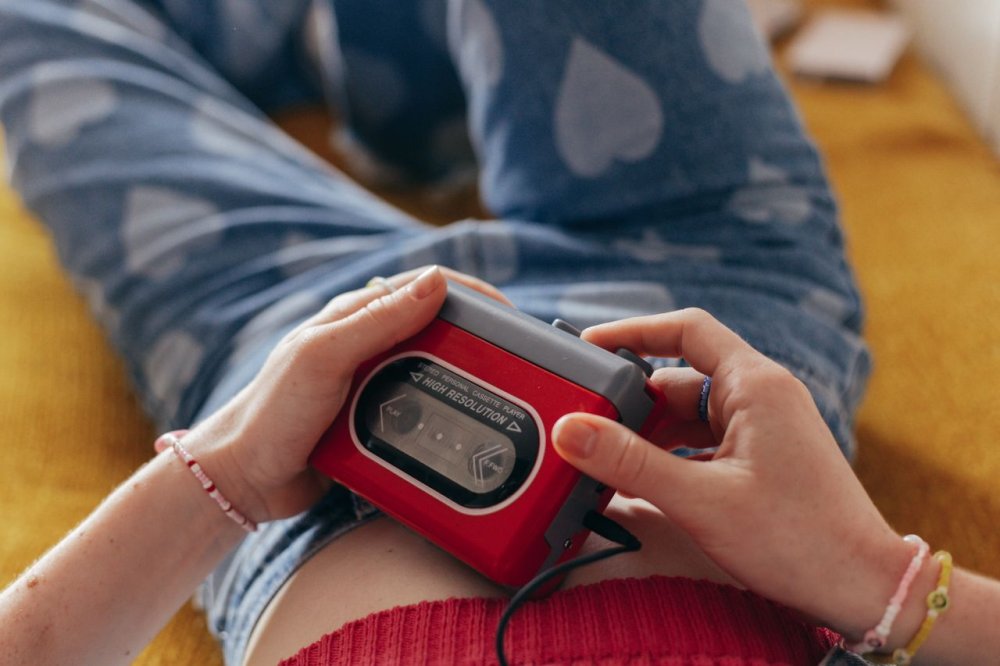
Listening to music in the 1980s involved considerably more effort than it does now.
You could not summon almost any song ever recorded by tapping a rectangle in your pocket. There was no algorithm quietly deciding that because you once listened to The Human League, you would probably enjoy 47 hours of vaguely similar synth-pop. There was no skipping through an album after eight seconds because the intro had failed to provide immediate gratification.
Instead, you bought records. You recorded songs from the radio. You swapped tapes with friends. You made mixtapes. You studied album sleeves. You carried spare batteries. You rewound cassettes with pencils because wasting Walkman battery power on something your wrist could accomplish seemed financially reckless.
It was slower, less convenient and frequently annoying.
And somehow, listening to music in the 1980s often felt much more exciting.
That is not because cassette tape offered miraculous sound quality. It did not. Nor because every record released during the decade was brilliant. The 1980s produced more than its fair share of musical crimes.
What made the experience special was everything surrounding the music. Choosing it, finding it, buying it, recording it, carrying it and sharing it all required a little commitment.
Music was not simply available. It was something you collected.
Music Was Something You Actually Owned
One of the biggest differences between listening to music in the 1980s and listening today was physical ownership.
If you loved an album, there was a decent chance you owned an object containing it.
That object might be a vinyl LP, a seven-inch single or, increasingly as the decade progressed, a cassette. CDs arrived in Britain during the 1980s too, but for much of the decade they remained expensive, aspirational pieces of futuristic technology rather than something every teenager had piled next to the stereo.
Records and tapes were tangible.
You could hold them. You could lend them. You could lose them. You could accidentally leave them in direct sunlight and discover that heat and plastic were not natural allies.
More importantly, your music collection became part of your identity.
A row of records in a bedroom told visitors something about you before you had even opened your mouth. It might reveal excellent taste, questionable taste or an unexplained period in which you apparently bought every novelty single released between 1982 and 1985.
There was no hiding behind a private streaming history.
The record shop was part of the experience
Buying music meant going somewhere.
For many people that meant Woolworths, WHSmith, Our Price, HMV or an independent record shop where somebody behind the counter appeared to know everything about music and occasionally made you feel slightly inadequate for not knowing it too.
You browsed racks.
You flipped through albums one after another, looking at artwork, reading stickers and trying to decide whether something deserved several pounds of your limited disposable income.
Singles mattered enormously because buying an entire album was a commitment. If you loved one particular song, the seven-inch single was often the obvious purchase.
Then there were twelve-inch singles, picture discs, coloured vinyl and special editions, all offering additional opportunities to spend money you did not have.
The physical act of browsing created discovery in a completely different way from modern recommendations. You noticed strange covers. You recognised a producer's name. You bought something because your mate insisted it was brilliant.
Sometimes you got home and discovered your mate was wrong.
That was part of the system.
The Mixtape Was a Serious Piece of Work
Few objects represent 1980s music culture better than the homemade cassette.
A mixtape was technically just a collection of songs recorded onto tape.
In practice, it could be a carefully engineered emotional document requiring an absurd amount of planning.
You had C60s, C90s and other tape lengths to choose from. The number referred to the approximate total recording time, so the humble C90 gave you around 45 minutes on each side.
Forty-five minutes sounds restrictive now.
It was brilliant.
A finite amount of tape meant decisions had to be made.
Which song opened Side A? Which track followed it? Were two songs by the same band allowed? Was that eight-minute album track really worth using nearly a fifth of one side?
Most importantly, could you squeeze one final song into the remaining four minutes without the tape running out during the last chorus?
This was logistics.
Making someone a mixtape actually meant something
A mixtape made for another person carried more weight than sending somebody a playlist link.
You had spent time making it.
You had selected each track, located the relevant record or cassette, positioned it correctly, pressed record at the right moment and waited while the song played in real time.
Then you did it again.
And again.
For perhaps 90 minutes.
Often longer, because mistakes happened.
You might decide halfway through that two tracks did not work together. You might accidentally record over the opening second of a song. You might discover that the final track was too long.
And once the recording itself was finished, there was the packaging.
The cassette's little card insert provided just enough room for your handwritten track listing, assuming you possessed microscopic handwriting and did not make any spelling mistakes.
For particularly ambitious mixtapes there might be artwork, coloured pens, stickers or elaborate titles.
Receiving one told you somebody had invested actual time in choosing music for you.
That mattered.
Recording the Top 40 Was a National Sport
For British teenagers without unlimited record-buying funds, radio was essential.
And if you liked a song being played on the radio, there was an obvious solution.
Record it.
Sunday afternoons could involve sitting near a cassette recorder listening to the chart countdown, fingers hovering nervously over the record and pause buttons.
Timing was everything.
You wanted the song.
You did not want the DJ.
Unfortunately the DJ had other ideas.
The particular irritation of capturing almost the entire track perfectly only for the presenter to start talking several seconds before it ended will be instantly familiar to anyone who tried this.
After half an hour of waiting, your prized recording might finish with:
"And that was..."
Click.
You hit stop as quickly as human reflexes allowed.
Sometimes you got lucky. Sometimes the introduction was ruined. Sometimes somebody walked into the room and started talking during the recording.
At that point, family relationships could become strained.
Yet tapes assembled from radio recordings became treasured things. The sound quality might vary between tracks. The volume levels could be completely inconsistent. Fragments of jingles and DJs occasionally appeared.
Nobody cared.
That cassette was yours.
The Sony Walkman Changed Where Music Could Go
Then came the machine that changed personal listening forever.
Sony introduced the original Walkman in 1979, and during the 1980s the name became synonymous with portable cassette players.
There had been portable audio equipment before, of course. Radios and cassette recorders could travel.
The Walkman made music genuinely personal.
Put headphones on and suddenly the enormous stereo system sitting in the family living room was irrelevant. Your music came with you.
You could listen on the bus.
You could listen walking down the street.
You could listen in the back of the car while your parents played something completely unacceptable on the radio.
For a teenager, that was revolutionary.
The Walkman created a private world
There was something wonderfully antisocial about headphones in the 1980s.
Put them on and you effectively erected a small invisible wall around yourself.
The music became private.
You could stare dramatically through a rain-covered bus window while listening to a song that made your entirely ordinary journey through suburban Britain feel like the closing scene of a film.
Nobody else knew what was playing.
That was part of the appeal.
Portable music now seems completely ordinary because almost everyone carries access to millions of songs.
In the early Walkman era, carrying your own soundtrack around felt extraordinary.
The technology itself contributed to the experience too.
There were proper physical buttons.
Play.
Stop.
Fast forward.
Rewind.
Sometimes auto reverse if you were lucky enough to own a fancier model.
You could operate the thing by touch without looking at it. The mechanical click of the controls became part of using it.
Open the cassette door, drop in a tape, snap it shut and press play.
Simple.
Batteries became a strategic resource
Of course, portable music required power.
Usually AA batteries.
This introduced an entirely new concern into everyday life: how much music remained in those batteries?
Battery decline was rarely subtle.
The music gradually began sounding slightly wrong. The tempo dropped. Singers developed deeper voices. Eventually everything started resembling an experimental remix produced underwater.
Fresh batteries restored civilisation.
Rechargeable batteries existed, but many Walkman users became experts at squeezing the final scraps of energy from ordinary cells.
You might remove them, rotate them hopefully and put them back in.
Did this achieve anything meaningful?
Probably not.
Did we do it anyway?
Absolutely.
The Pencil Trick Was Real
Cassette tape was a wonderful format right up until it decided to stop cooperating.
Sometimes the tape became loose inside the shell.
Sometimes a cassette player tried to eat it.
And occasionally you pressed eject and discovered several horrifying inches of magnetic tape emerging from the machine like black spaghetti.
Every cassette owner knew the basic repair equipment.
A pencil.
Many cassette spools could be turned manually using a pencil inserted into one of the reel holes. This allowed loose tape to be wound back into the shell without using battery power.
The exact pencil mattered more than it reasonably should have. Some fitted beautifully. Others simply rotated uselessly.
There was always a pencil somewhere that seemed designed specifically for the job.
This small ritual is one of those strangely vivid details of listening to music in the 1980s. Modern audio rarely needs physical intervention.
A cassette occasionally demanded maintenance.
You became involved.
Albums Were Meant to Be Played as Albums
One of the biggest changes brought by digital music is the ease with which individual tracks can be separated from albums.
That is obviously convenient.
But inconvenience had an interesting side effect.
It encouraged patience.
Put an album on vinyl and you were likely to listen to an entire side before getting up.
Put a cassette into a Walkman and skipping several tracks was possible, but hardly elegant. Fast forwarding meant estimating how long to hold the button, stopping, pressing play, discovering you had gone too far, rewinding and trying again.
After doing this several times, you often concluded that listening to the song in between was easier.
As a result, obscure album tracks had a chance to grow on you.
Songs that seemed unremarkable on the first listen became favourites after the tenth because they happened to sit between two songs you already loved.
Albums developed geography.
You knew where songs lived.
You knew which track opened Side B. You knew the quiet song near the end. You recognised the little pause before the next track began.
Music became familiar through repetition rather than recommendation.
The Cassette Was Imperfect, Which Was Part of Its Charm
Nobody should pretend cassettes were technically flawless.
They hissed.
They stretched.
They tangled.
They wore out.
Cheap recordings could sound dreadful.
A tape copied from somebody else's copied tape could possess roughly the same relationship to the original recording as a photocopy of a photocopy of a photograph.
Yet cassettes had enormous advantages.
They were compact, relatively inexpensive, recordable and portable.
That combination made them perfect for everyday music.
Blank tapes became essential household items. Brands such as TDK, Maxell and BASF were familiar sights, and people often developed surprisingly strong preferences about which ones they trusted.
There was something appealing about opening a fresh blank cassette too.
Pristine shell.
Unused label.
Perfectly empty track list.
Possibilities.
Then somebody wrote "NOW 8 + RANDOM STUFF" on it in biro and ruined the aesthetic forever.
Boom Boxes Made Music Social Again
The Walkman made music private, but the 1980s also gave us plenty of machines designed to make it everybody else's problem.
The boom box was portable in the loosest possible interpretation of the word.
Some were genuinely compact.
Others looked as if removing them from the house ought to require planning permission.
Big speakers, twin cassette decks, graphic equalisers, chrome buttons and rows of controls turned the larger models into technological monuments.
The more complicated the front panel looked, the better.
These machines were not shy.
A substantial boom box sitting in a bedroom looked impressive even when it was switched off.
Twin cassette decks were especially desirable because they allowed tape-to-tape copying.
Suddenly music could reproduce.
Your friend's album could become your cassette. Their cassette could become somebody else's cassette. Every generation might lose a little fidelity, but teenage budgets were forgiving about such things.
Music spread physically through friendship groups.
Headphones Were Different Too
Modern headphones can provide active noise cancellation, wireless connectivity, touch controls and astonishing sound from tiny components.
Many 1980s portable headphones offered two bits of foam attached to a thin metal band.
Yet those flimsy headphones are deeply associated with the Walkman era.
The foam pads were often brightly coloured, frequently uncomfortable after prolonged use and remarkably good at disintegrating with age.
Sound leaked both ways.
People nearby could sometimes hear the faint metallic fizz of your music, while buses, traffic and conversations remained perfectly audible through it.
But those headphones looked futuristic at the time.
More importantly, they made the entire idea of personal portable stereo possible without requiring you to walk around wearing enormous hi-fi headphones.
The Walkman and its lightweight headphones became cultural shorthand for modernity, independence and youth.
Music Television Made Everything Bigger
Listening was only one part of 1980s music culture.
This was the decade in which the music video became extraordinarily important.
British television already had programmes such as Top of the Pops, while music videos transformed songs into complete visual identities.
Suddenly a hit was not merely something you heard.
It came with hairstyles, clothes, choreography, strange lighting, dramatic smoke and occasionally a baffling storyline involving absolutely nothing mentioned in the lyrics.
Artists became visually inseparable from their songs.
Adam Ant had the jacket.
Boy George had the hats.
A-ha had the pencil-drawn animation.
Robert Palmer somehow acquired an entire line of identical musicians.
Michael Jackson turned music videos into major events.
Watching these performances and then hearing the same songs on your cassette or Walkman reinforced the connection.
The song carried its imagery with it.
The Charts Actually Felt Important
The singles chart had enormous cultural weight in the 1980s.
People knew who was number one.
They discussed who might become number one.
The Christmas number one was treated as something approaching a national sporting event.
This happened partly because entertainment was less fragmented. Millions of people encountered many of the same songs through radio and television.
There was a collective element to pop music.
You might despise the current number one, but at least you knew what it was.
A big hit could seem almost unavoidable.
You heard it on Radio 1, saw it on Top of the Pops, encountered it in shops and eventually heard somebody playing it through an open car window.
Modern music offers vastly more choice, but that shared experience is harder to recreate.
Your Music Collection Grew Slowly
Streaming gives us access to more music than any human being could realistically listen to in a lifetime.
It is astonishing.
But abundance changes behaviour.
During the 1980s, most people's personal music collections grew comparatively slowly.
Albums cost money.
Singles cost money.
Blank tapes cost money.
Even recording things required access to the source.
This meant each new addition mattered.
Bring home a new LP and you might play it repeatedly because it was the new LP.
Buy a cassette for your Walkman and it could remain in heavy rotation for weeks.
There was less temptation to abandon something immediately because another 100 million tracks were waiting.
Scarcity gave music weight.
You remembered where albums came from too.
Birthday presents.
Christmas presents.
A Saturday shopping trip.
Something bought with saved pocket money.
Something borrowed from a friend and eventually, rather shamefully, never returned.
Music attached itself to events.
Making a Playlist Was Not Instant
Modern playlists are wonderfully flexible.
Change the order.
Delete a track.
Add another.
Done.
A cassette mixtape had none of these luxuries.
Once recorded, the sequence existed physically along a strip of magnetic tape.
Changing track three meant potentially rebuilding everything after it.
That permanence forced you to think beforehand.
The order mattered.
Opening tracks mattered.
Closing tracks mattered.
The transition between Side A and Side B mattered.
You were not merely collecting songs. You were arranging them.
There was an amateur DJ element to the whole process.
Some mixtapes were created for parties. Others for cars. Others for holidays.
And some were made for one specific person with song choices containing meanings so subtle that the recipient probably failed to notice any of them.
Still, you knew.
Even Finding a Song Could Be Exciting
One thing streaming has almost completely removed is the hunt.
Hear a song today and you can often identify it within seconds.
In the 1980s, you could hear something once and spend days trying to discover what it was.
Maybe you caught the artist's name incorrectly.
Maybe the DJ never said it.
Maybe a friend vaguely remembered seeing the video.
You gathered clues.
Then eventually you heard it again.
There it was.
That moment of recognition was disproportionately exciting because information was scarce.
The same applied to old records, imports, unusual versions and obscure artists. Finding something required effort, luck or somebody with better musical knowledge than you.
Discovery felt earned.
Why Listening to Music in the 1980s Felt More Personal
The strange thing about 1980s music technology is that it was simultaneously less capable and more involving.
A Walkman could play one cassette.
A cassette held a limited amount of music.
Your record collection occupied real physical space.
Your favourite songs could be temporarily inaccessible because somebody had borrowed the tape.
None of this sounds like progress.
Yet every limitation encouraged interaction.
You chose what to carry.
You chose what to record.
You chose what deserved space on a mixtape.
You listened long enough for unfamiliar songs to become familiar.
Music had friction.
And friction can create attachment.
Modern streaming is exceptionally good at removing obstacles. That is precisely what good technology is supposed to do.
But sometimes the obstacle was where the memory formed.
The Sound of the 1980s Was More Than the Music
Think back to listening to a cassette and you may remember sounds that were not part of the recording at all.
The clunk of the play button.
The brief mechanical whirr before the music began.
The click when a tape reached the end.
The accelerated squeal of audio during fast forward.
The pop of opening a cassette case.
The faint hiss before the first track started.
These noises became part of listening.
So did the objects.
Cassette cases rattling in the glovebox.
Plastic racks full of tapes.
LP sleeves leaning beside the stereo.
Headphones wrapped hopelessly around a Walkman.
Blank cassette labels covered in increasingly cramped handwriting.
None of these improved the actual recording.
They improved the memory of using it.
So Was Music Really Better in the 1980s?
The technology certainly was not better in every respect.
Spotify, Apple Music and other modern services provide extraordinary convenience. Digital recordings do not get chewed by machinery. Wireless headphones do not require a pencil.
Nobody seriously needs cassette loading times back.
But saying that listening to music in the 1980s was better is really about the experience rather than the technical quality.
Music demanded attention.
Buying it felt significant.
Recording it required effort.
Sharing it involved handing somebody something physical.
Taking it outside required choosing which few tapes deserved space in your bag.
That gave songs a different kind of value.
Today we have almost unlimited access to music and spend remarkably large amounts of time deciding what to play.
In the 1980s, you had six tapes with you.
So you picked one.
Then you listened to it.
Perhaps that is what people really miss.
Not tape hiss.
Not tangled cassettes.
Not spending ten minutes trying to find the beginning of track four.
They miss the focus.
The Mixtape Never Really Disappeared
The technology changed, but the instinct survived.
We still make playlists for holidays, journeys, parties and particular people.
We still associate songs with relationships and periods of our lives.
We still enjoy discovering something and immediately wanting somebody else to hear it.
The mixtape became the burned CD, then the MP3 folder, then the streaming playlist.
The purpose remained remarkably similar.
What disappeared was the labour.
You can build and share a playlist containing 50 songs in minutes.
An old C90 mixtape asked for an evening.
That evening became part of the gift.
Why We Still Love Walkmans, Cassettes and 1980s Audio
There is a reason old portable cassette players, boom boxes and hi-fi equipment continue to attract collectors.
Partly it is design.
1980s audio equipment often looked unapologetically technological. Buttons were visible because you were supposed to press them. Speakers looked like speakers. Cassette doors displayed the mechanism inside.
There was little attempt to make technology disappear.
Quite the opposite.
Manufacturers wanted you to see it.
There is also the simple pleasure of using physical media again.
Choosing one cassette rather than browsing endlessly can feel oddly refreshing. Pressing a mechanical button provides satisfaction no touchscreen animation can quite reproduce.
And then there is nostalgia.
A Walkman is not merely an old cassette player if you once carried one everywhere.
It can instantly evoke school trips, bus journeys, holidays, bedrooms, record shops, batteries in coat pockets and tapes made by people you have not thought about for years.
That is an impressive amount of emotional baggage for a small plastic box containing a motor.
When Listening Took a Little More Effort
Listening to music in the 1980s was inconvenient in dozens of ways.
We waited for songs to appear on the radio.
We bought albums without hearing them first.
We recorded tapes in real time.
We carried physical music around.
We endured hiss, tangled tape, flat batteries and DJs talking over the endings of songs we desperately wanted to record.
And yet those inconveniences created rituals.
The record shop.
The Sunday chart.
The new album.
The homemade tape.
The Walkman in your pocket.
The click of play.
Music was not simply background content delivered instantly from somewhere invisible. It came attached to objects, places, people and moments.
Perhaps listening to music was not objectively better in the 1980s.
But it was certainly harder to take it for granted.
And that might be why, decades later, the sight of an old Walkman or a handwritten C90 can bring an entire period of your life rushing back before you have even pressed play.
If stories like this have you mentally searching the loft for your old cassette collection, join RetroWins or sign up to stay in the loop for more retro technology stories, forgotten gadgets and the memories attached to them.






