ZX Spectrum: Why Britain's Favourite Little Computer Still Matters
There are some pieces of technology you remember because they were impressive. Others you remember because they were useful. The ZX Spectrum is remembered because it somehow managed to be impressive, useful, frustrating, exciting, slightly ridiculous and completely brilliant, often within the same ten minutes.
For millions of people in Britain, the Spectrum was their first proper encounter with a computer at home. Not a computer in an office, guarded by somebody who knew what all the buttons did. Not some mysterious machine glimpsed on Tomorrow's World. Your computer. Sitting underneath the family television, connected by a collection of wires, possibly balanced on a coffee table, waiting for you to discover what it could do.
And what could it do?
Well, assuming the cassette loaded.
The ZX Spectrum helped turn computing from something remote and technical into something that could happen in an ordinary British bedroom. You could play games, learn BASIC, type in programs from magazines, make terrible noises, produce colourful graphics and, occasionally, spend 20 minutes loading something only for it to fail seconds before completion.
It was glorious.
More than four decades after the original machine appeared, the Spectrum still inspires new games, recreated hardware, emulators, collectors and an almost unreasonable amount of affection.
So why does Britain's favourite little computer still matter?
The computer that didn't look like a computer
The original Sinclair ZX Spectrum arrived in 1982, designed as an affordable home computer at a time when the idea of owning a computer was still relatively exotic.
It was small. Really small.
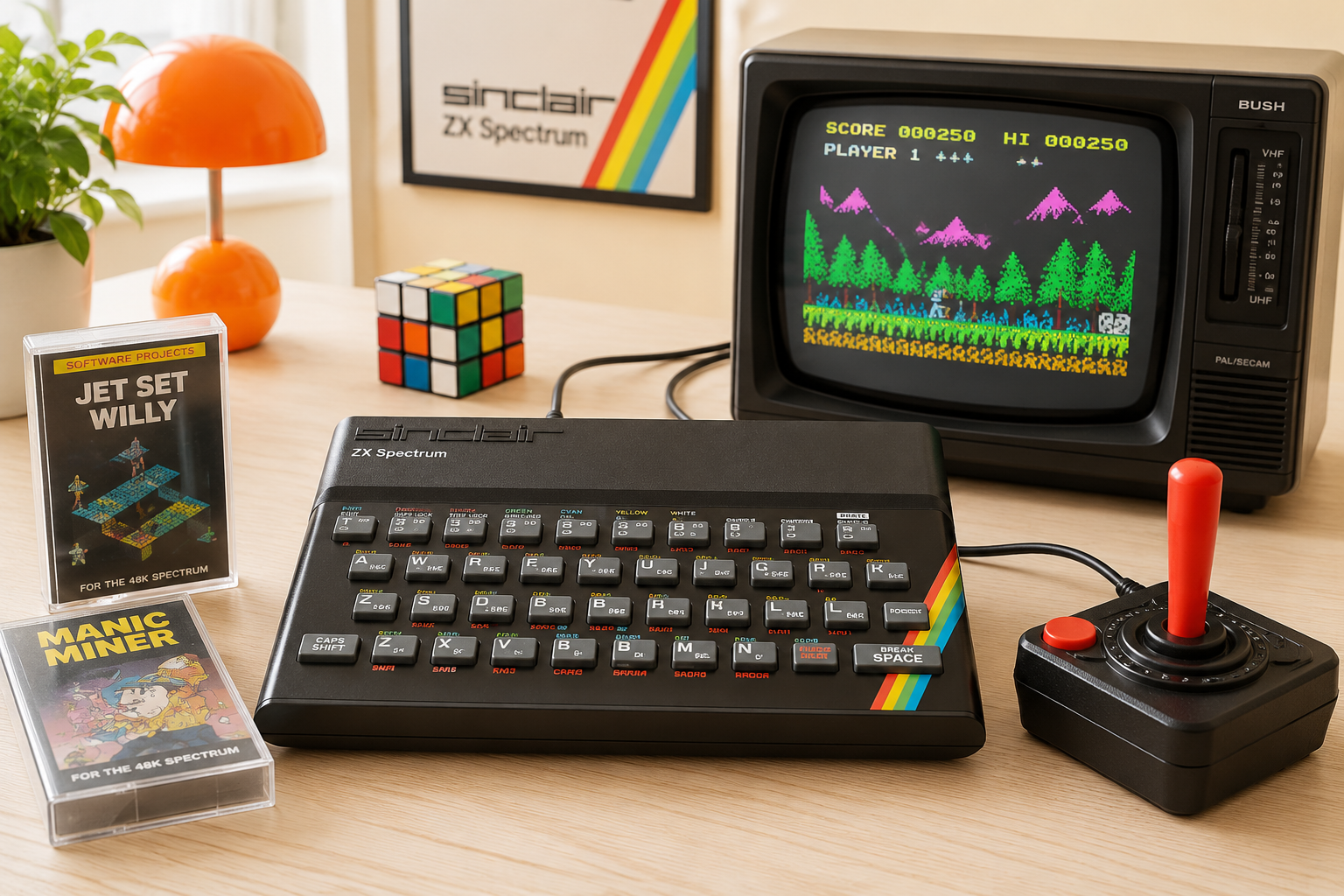
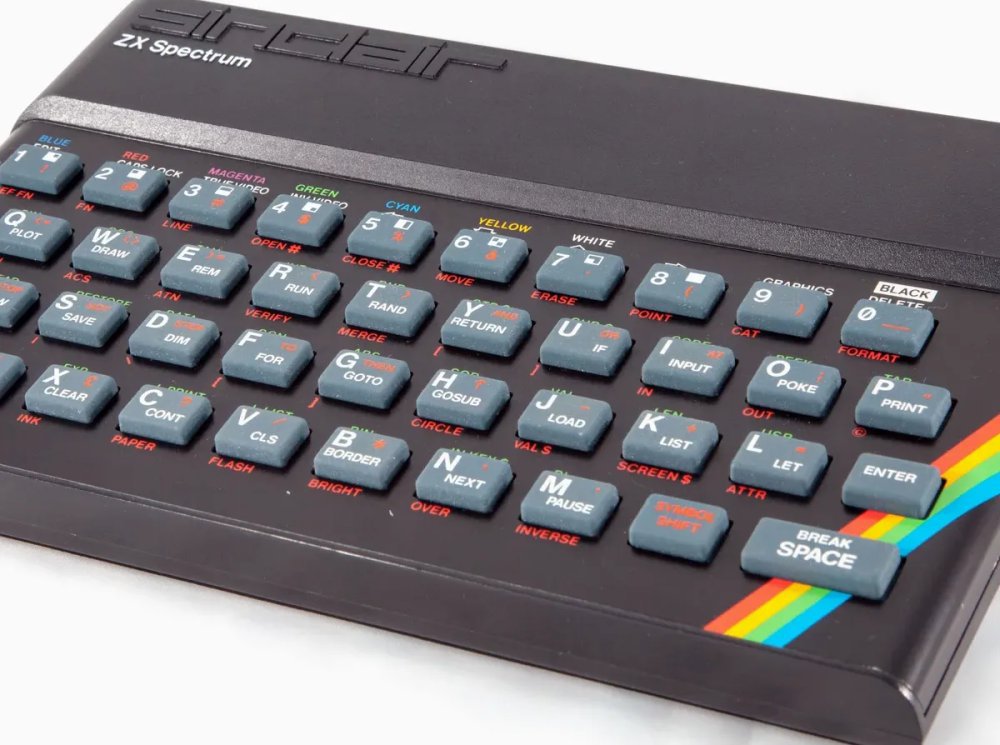
Anyone accustomed to modern desktop PCs might reasonably wonder where the rest of it had gone. The machine was essentially a compact black slab dominated by those unforgettable rubber keys, with a rainbow flash running diagonally across one corner.
That little rainbow became one of the most recognisable pieces of British technology branding ever created.
The original Spectrum was available with either 16K or 48K of memory. The 48K version became the model that many people associate most strongly with the Spectrum era.
Today, 48K sounds absurdly small.
A photograph taken on your phone can occupy many times that amount of storage. A modern web page might transfer thousands of times more data merely to display some adverts and ask whether you're happy about cookies.
Yet programmers squeezed entire games into the Spectrum's memory.
Not just little technical demonstrations either. Adventures, racing games, platformers, flight simulators, strategy games, arcade conversions and enormous fantasy worlds somehow emerged from this tiny black box.
That constraint became part of the Spectrum's character.
Those rubber keys
You cannot talk about the original ZX Spectrum for long without mentioning the keyboard.
Calling it a keyboard is technically correct, although anyone who used one might feel that description is slightly generous.
The keys were made from rubber and had a peculiar soft, squidgy feel. They were considerably less satisfying than the mechanical keyboards that computer enthusiasts now spend alarming amounts of money collecting.
But they were unmistakably Spectrum.
More importantly, the keyboard was covered in commands.
The Spectrum's version of BASIC used keywords such as PRINT, LOAD, RUN, GOTO and PLOT. Rather than typing many commands letter by letter, pressing combinations of keys could enter complete BASIC keywords.
As a result, the keyboard looked wonderfully intimidating.
Every key seemed to have several different functions printed around it. Different modes and combinations produced different commands. To somebody encountering the machine for the first time, it looked as though operating it might require qualifications from NASA.
Then somebody showed you:
LOAD ""
Suddenly the mystery began to disappear.
The ritual of loading a Spectrum game
Modern games can require enormous downloads, online accounts, updates, passwords and occasionally an agreement to seventeen pages of legal terms before they will let you drive a cartoon car around.
The ZX Spectrum had a different system.
You used a cassette tape.
Usually, this involved connecting a cassette recorder to the Spectrum, inserting the game, rewinding it, typing the load command and pressing PLAY.
Then you waited.
And listened.
Anyone who owned a Spectrum can probably hear the sound without assistance.
First came the relatively steady introductory tone. Then the aggressive electronic shrieking began, a strange combination of digital static, squeals and buzzing that sounded as though two robots were having an argument inside a fax machine.
For several minutes, the television filled with coloured loading borders while the program was transferred from tape into memory.
This was not background noise. It was suspense.
A game loading successfully felt like an event.
The loading screen
Many Spectrum games displayed a loading picture while the rest of the program crawled in from cassette.
These pictures deserve more appreciation than they usually receive.
The Spectrum had limited graphical capabilities, yet artists produced remarkably evocative loading screens that could build anticipation long before the game itself appeared.
You might stare at an elaborate image of a spaceship, racing car, warrior or action hero while imagining the spectacular game waiting behind it.
Sometimes the imagination was doing quite a lot of work.
But that was part of the fun.
And then: R Tape loading error
Of course, things did not always go according to plan.
You could sit through several minutes of screaming cassette data only to discover the computer had failed to load the program.
Perhaps the volume level was wrong.
Perhaps the tape had stretched.
Perhaps the cassette player was feeling vindictive.
Perhaps somebody walked past and looked at it funny.
Spectrum owners developed an almost mystical understanding of cassette volume controls. You learned that one game preferred the volume slightly higher while another seemed happiest two millimetres further down the dial.
There was often little scientific basis to any of this, but everyone had theories.
And when a troublesome game finally loaded?
Nobody touched anything.
The ZX Spectrum turned bedrooms into arcades
Gaming was the obvious attraction for many Spectrum owners, and the machine developed an enormous software library.
Some of the best remembered ZX Spectrum games include Manic Miner, Jet Set Willy, Knight Lore, Chuckie Egg, The Hobbit, Skool Daze, Saboteur!, Daley Thompson's Decathlon, Head Over Heels and countless others.
Ask ten Spectrum owners to name their favourite games and you could easily receive twenty answers.
British software companies became extraordinarily inventive during this period.
Games frequently arrived from relatively small teams, sometimes even individual programmers. There was a sense that almost anything could become a game.
Schools. Mines. Football management. Space exploration. Martial arts. Motorbike racing. Wizards. Detectives. Strange creatures wandering around surreal landscapes.
Ideas were everywhere.
When your imagination supplied the missing pixels
Spectrum graphics were colourful, but they came with limitations.
The machine's famous colour clash could cause blocks of colour to behave in ways that modern designers would consider rather inconvenient. Characters moving near each other could suddenly adopt unexpected colours.
Spectrum players simply accepted it.
Your footballer had turned purple?
Fine.
Keep playing.
In many cases, graphical limitations actually gave Spectrum games a distinctive visual identity. Developers created instantly recognisable characters using remarkably few pixels.
The imagination did the rest.
A modern game might model every scratch on a racing car and calculate accurate reflections across its polished bodywork.
A Spectrum racing game could present something roughly shaped like a car moving between two lines and your brain would happily decide you were Nigel Mansell.
The one-bit soundtrack to a generation
Early ZX Spectrum sound was equally modest.
The original machine used a simple internal beeper capable of one-channel sound.
That does not sound promising.
Yet programmers did extraordinary things with it.
Spectrum games became filled with squeaks, chirps, buzzes and bursts of electronic noise. Some developers discovered techniques for creating surprisingly complex effects and music from hardware that, on paper, had very little business attempting them.
Later Spectrum models introduced improved sound hardware, particularly the 128K machines with their AY sound chip.
But there is something especially nostalgic about the primitive noises of the earlier machines.
That little electronic beep could mean your character had jumped, collected something, crashed, been shot, opened a door or died horribly.
Context did a lot of heavy lifting.
The joystick problem
The Spectrum's keyboard was adequate for typing BASIC.
For frantic gaming, perhaps less so.
Many games could be controlled with keys, and certain combinations became familiar. The exact controls varied, but players became adept at adopting strange claw-like hand positions while desperately trying not to press the wrong rubber button.
Joysticks offered an obvious improvement.
Unfortunately, the early Spectrum did not simply give you a convenient joystick port and leave it at that.
Interfaces became part of the ecosystem. Kempston became one of the best known joystick interface standards, while Sinclair offered its own system.
This occasionally meant starting a game and being presented with a control selection screen containing words such as:
Keyboard
Kempston
Sinclair
To anyone under the age of about 35, this probably reads like the drinks list at an unusually niche pub.
To Spectrum owners, it was completely normal.
More than a games machine
It is easy to remember the ZX Spectrum primarily as a gaming machine because games became such an enormous part of its success.
But that overlooks something much more important.
The Spectrum encouraged people to program.
Switch on the machine and you were not presented with a glossy operating system filled with apps and icons.
You were confronted with BASIC.
The computer was effectively inviting you to tell it what to do.
Your first program
For many children, their earliest programming experience was something very simple.
Perhaps:
10 PRINT "HELLO"20 GOTO 10
Run it and the screen filled with HELLO.
That was enough.
You had given the computer instructions and it had followed them.
Once that connection clicked, possibilities opened up.
You could change the words.
Add colours.
Make noises.
Ask for keyboard input.
Draw things.
Build a rudimentary game.
Most attempts were terrible, obviously. Plenty of aspiring programmers created projects that barely qualified as software.
But that was not the point.
The computer did not hide how it worked.
It encouraged curiosity.
When magazines contained software
The Spectrum also belonged to an era when computer magazines were genuinely interactive.
Magazines printed program listings across pages and pages of tiny text.
You could sit at the computer and type them in manually.
Line after line.
Number after number.
One typo could break the entire thing.
People did this voluntarily.
It sounds completely deranged now, but it was one of the best ways to learn what software actually consisted of.
You might type in somebody else's simple game and then start changing it.
What happens if this number becomes 50?
Can I make the character move faster?
What if I change this colour?
Why has everything disappeared?
You learned by breaking things.
And because the programs were visible rather than locked behind polished interfaces, computers felt hackable in the best sense of the word.
The bedroom programmer revolution
The ZX Spectrum arrived at exactly the right moment for Britain's emerging home computer software industry.
A generation of young programmers discovered that they could create software at home and potentially sell it.
Some famous British game developers began their careers during this period, often working in bedrooms rather than large corporate studios.
Games could be duplicated onto cassette tapes and sold through mail order, small adverts or software publishers.
The barrier between player and developer felt remarkably thin.
You could buy a game written by somebody who was not dramatically different from you, then switch the machine off, open a programming manual and try making one yourself.
That mattered.
The Spectrum helped normalise the idea that computers were things ordinary people could understand and control.
A sizeable number of people who later entered programming, games development and technology industries trace some of that curiosity back to machines like the Spectrum.
Sir Clive Sinclair and the Britishness of the Spectrum
The ZX Spectrum was developed by Sinclair Research, led by Sir Clive Sinclair.
Sinclair had already produced affordable computing products including the ZX80 and ZX81, but the Spectrum became the defining machine.
There is something particularly British about the whole story.
It was ingenious, affordable, ambitious and slightly eccentric.
It did not attempt to look like an enormous American business computer shrunk for the home.
It was its own thing.
Small case. Rubber keyboard. Rainbow stripe. Cassette storage. Television display.
Somehow, the collection of compromises became the identity.
And because so many families could afford one compared with more expensive alternatives, it reached households where a computer might otherwise have remained an impossible luxury.
The great playground divide
Of course, Britain did not consist entirely of Spectrum owners.
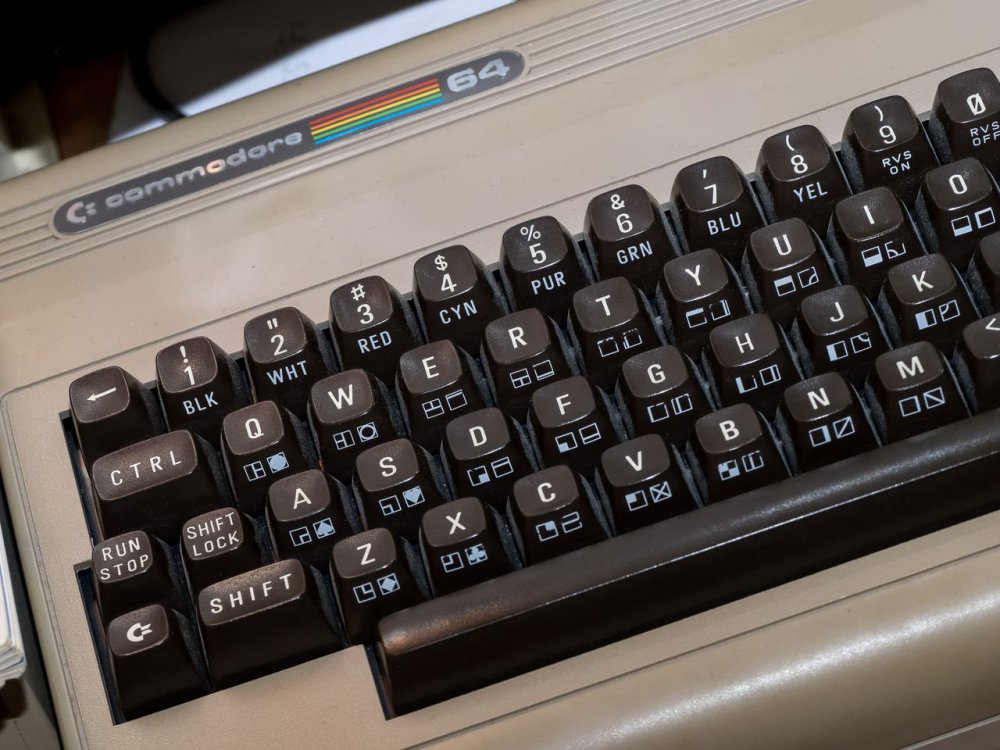
There were Commodore 64 households.
BBC Micro households.
Amstrad households.
And other brave souls representing various computers that could turn any playground conversation into a heated technical dispute.
Spectrum versus Commodore 64 became one of the defining rivalries of British home computing.
The Commodore had impressive graphics and sound capabilities. Spectrum owners responded with things like enormous software libraries and lower prices.
Nobody conducted these discussions calmly.
If your family owned a Spectrum, the Spectrum was obviously better.
If your mate owned a Commodore 64, he was tragically mistaken and needed to be informed of this immediately.
These arguments were part of the experience.
Computer ownership became tribal.
Much like games console arguments decades later, the technical differences mattered, but the emotional investment mattered much more.
Your machine was part of your identity.
The Spectrum in the family living room
One thing modern nostalgia can sometimes miss is just how communal home computing often was.
Not every child had a television in their bedroom.
The Spectrum might therefore live downstairs, plugged into the main family telly.
This created negotiations.
Someone wanted to watch television.
You wanted to use the computer.
These interests were not compatible.
Loading a game could occupy the television for several minutes before you even started playing it, after which you naturally intended to remain there for the rest of recorded human history.
Parents occasionally had other ideas.
The arrival of a second television in a household could transform the situation dramatically. A small portable colour set became the gateway to uninterrupted computing.
If you were especially fortunate, the Spectrum eventually migrated upstairs.
At that point, civilisation had peaked.
Games in plastic cases, cardboard boxes and corner shops
Spectrum software was everywhere.
Games appeared in specialist computer shops, high street chains, newsagents and other retailers. Budget labels later made older and simpler games available for pocket-money prices.
The cassette itself became part of the culture.
Artwork mattered.
Screenshots mattered.
The claims on the packaging definitely mattered.
A particularly dramatic painted cover could suggest an action experience roughly equivalent to starring in a blockbuster film.
The actual game might contain seven moving pixels and a beep.
Nobody seemed particularly offended.
We filled in the gaps ourselves.
There was also something satisfying about having a physical collection. Rows of cassette cases gradually accumulated on shelves and in drawers.
You could lend games to friends.
Borrow theirs.
Swap them.
Occasionally never receive them back.
This was an important lesson about both software distribution and friendship.
The Spectrum 128K and later machines
The Spectrum family did not remain frozen in its original rubber-keyed form.
Later models expanded the platform.
The ZX Spectrum+ introduced a more conventional keyboard, while the ZX Spectrum 128 brought additional memory and improved sound.
After Amstrad acquired Sinclair's computer business in 1986, further models appeared including the Spectrum +2, with a built-in cassette deck, and the +3, which used a built-in floppy disk drive.
For some users, these later machines are their Spectrum.
The +2 in particular became a familiar sight in British homes, removing one of the original setup's more awkward components by building the tape deck directly into the computer.
No more searching for the correct cassette lead.
Progress.
Still, the original rubber-keyed ZX Spectrum remains the visual shorthand for the whole era. Show somebody that black case with the rainbow corner and recognition is almost immediate.
Why the ZX Spectrum felt exciting
Part of the Spectrum's magic came from timing.
Home computers were new.
There was no expectation that technology should be invisible or effortless.
Loading a program was part of using a computer.
Typing commands was part of using a computer.
Making it work was part of using a computer.
That effort created a different relationship with the machine.
Modern devices usually try to hide complexity. Tap an icon and something happens.
The Spectrum showed you the complexity.
It practically encouraged you to poke it.
You learned what memory was because games talked about memory.
You learned what programs were because you could type programs.
You understood that software had to be loaded because you physically sat there listening to it happen.
For many users, this created technological confidence.
Computers stopped being mysterious boxes.
Why playing one today is so strange
Return to a ZX Spectrum after years of modern computing and the contrast can be brutal.
Your phone contains vastly more computing power.
Its display is incomparably sharper.
Modern games have orchestral soundtracks, huge 3D environments, online multiplayer and cinematic storytelling.
Then you load Manic Miner.
And ten minutes later you're still playing it.
That is the fascinating thing.
Good Spectrum games distilled gameplay down to simple mechanics because they had no alternative. There was little room for visual spectacle to disguise a boring idea.
A game needed a challenge, a hook or some personality.
The best ones still possess it.
Of course, nostalgia helps enormously.
A Spectrum game can transport somebody back to a particular room faster than almost anything else.
Suddenly you remember the television it was attached to.
The chair you sat in.
The cassette recorder.
The shelf where the games lived.
The friend who knew how to get past the level you couldn't finish.
Technology becomes attached to places and people.
That is why retro computing is rarely just about specifications.
Collecting ZX Spectrum computers today
The ZX Spectrum has become highly collectible, although it remains accessible enough that owning original hardware is still realistic for many enthusiasts.
Condition makes an enormous difference.
Collectors may look for machines with original boxes, manuals, power supplies and accessories. Complete games in good condition also appeal to people rebuilding the collections they once owned.
Original hardware can require maintenance.
After forty years, components age. Keyboards, power supplies, cassette equipment and internal electronics may need attention, depending on the machine.
For some enthusiasts, that is part of the appeal.
Restoring a Spectrum is almost an act of technological archaeology.
You open the box and discover how wonderfully uncomplicated the machine looks compared with modern electronics.
Others prefer modern recreations or emulation, which provide much of the Spectrum experience without relying on ageing cassette tapes and vintage televisions.
Both approaches are valid.
One preserves the physical ritual.
The other lets you actually play the games without spending half the evening adjusting the volume control on a cassette player.
A computer that refuses to disappear
Perhaps the most remarkable thing about the ZX Spectrum is that people still create software for it.
New games continue to appear.
Enthusiasts build modern hardware inspired by the original machine.
Developers experiment with techniques that squeeze effects from the Spectrum that would have seemed extraordinary during its commercial heyday.
Communities preserve software, magazines, artwork, documentation and knowledge.
This is not simply nostalgia frozen in 1982.
The Spectrum remains an active hobby.
People are still discovering what it can do.
That says something about the machine itself.
Limited hardware creates interesting challenges.
When you have almost unlimited computing resources, optimisation can become optional.
When you are working with a Spectrum, every byte matters.
The real reason the ZX Spectrum still matters
The importance of the ZX Spectrum was never really its processor speed, memory capacity or graphics.
Those things mattered at the time, but they are not why people still talk about it.
The Spectrum mattered because it put computing into ordinary homes.
It arrived at a moment when many British families were encountering computers for the first time and made the technology feel approachable.
Children played games on it, then discovered that they could write their own.
Parents wondered why the television was making horrible noises.
Friends swapped tapes.
Magazines provided programs.
Bedrooms became tiny software studios.
Some users simply had fun.
Others found careers.
And millions developed memories around this peculiar little black machine with the rubber keyboard.
Modern technology is objectively better in almost every measurable respect.
Yet very little of it feels quite as magical.
Perhaps that is because we now expect technology to work.
With the ZX Spectrum, simply getting something onto the screen could feel like an achievement.
You participated in the process.
You typed.
You experimented.
You waited.
Sometimes you swore at the cassette recorder.
And when everything finally worked, you had earned it.
Still loading after all these years
More than forty years after its arrival, the ZX Spectrum remains one of the defining machines of British home computing.
It was imperfect, limited and occasionally maddening.
It was also affordable, creative, distinctive and enormously influential.
For anyone who grew up with one, seeing that rainbow logo can unlock an extraordinary amount of forgotten detail: the rubber keyboard beneath your fingers, the striped loading border on the television, the screech of cassette data and the optimistic belief that this time, surely, the game was actually going to load.
That is why the ZX Spectrum still matters.
Not because it can compete with modern computers.
Because modern computers exist in a world that machines like the Spectrum helped create.
And somewhere, probably in a loft, there is still a cassette labelled Jet Set Willy waiting patiently to be rewound.
If that sort of thing brings back memories, join RetroWins or sign up to stay in the loop. There are plenty more forgotten computers, gadgets, electronic toys and gloriously unnecessary pieces of retro technology still to revisit.