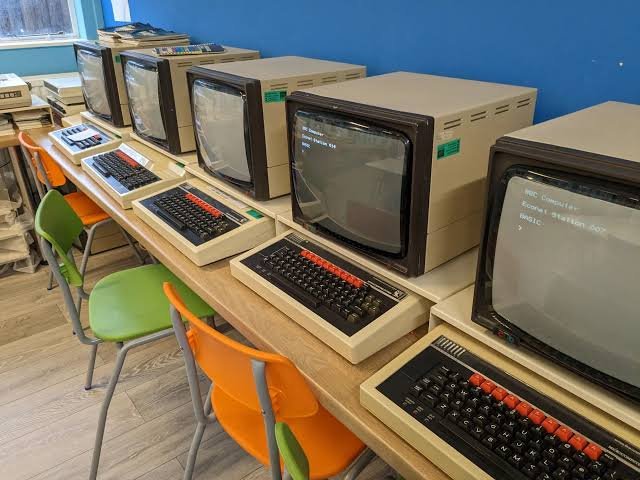
The BBC Micro did not arrive quietly on a shop shelf. It arrived with the weight of a national project behind it: a beige promise that Britain could understand the computer age rather than merely watch it happen. For many of us, BBC Micro history begins with a primary-school classroom, the soft clatter of keys, a green or amber monitor and the thrill of seeing a few lines of BASIC turn into something that moved.
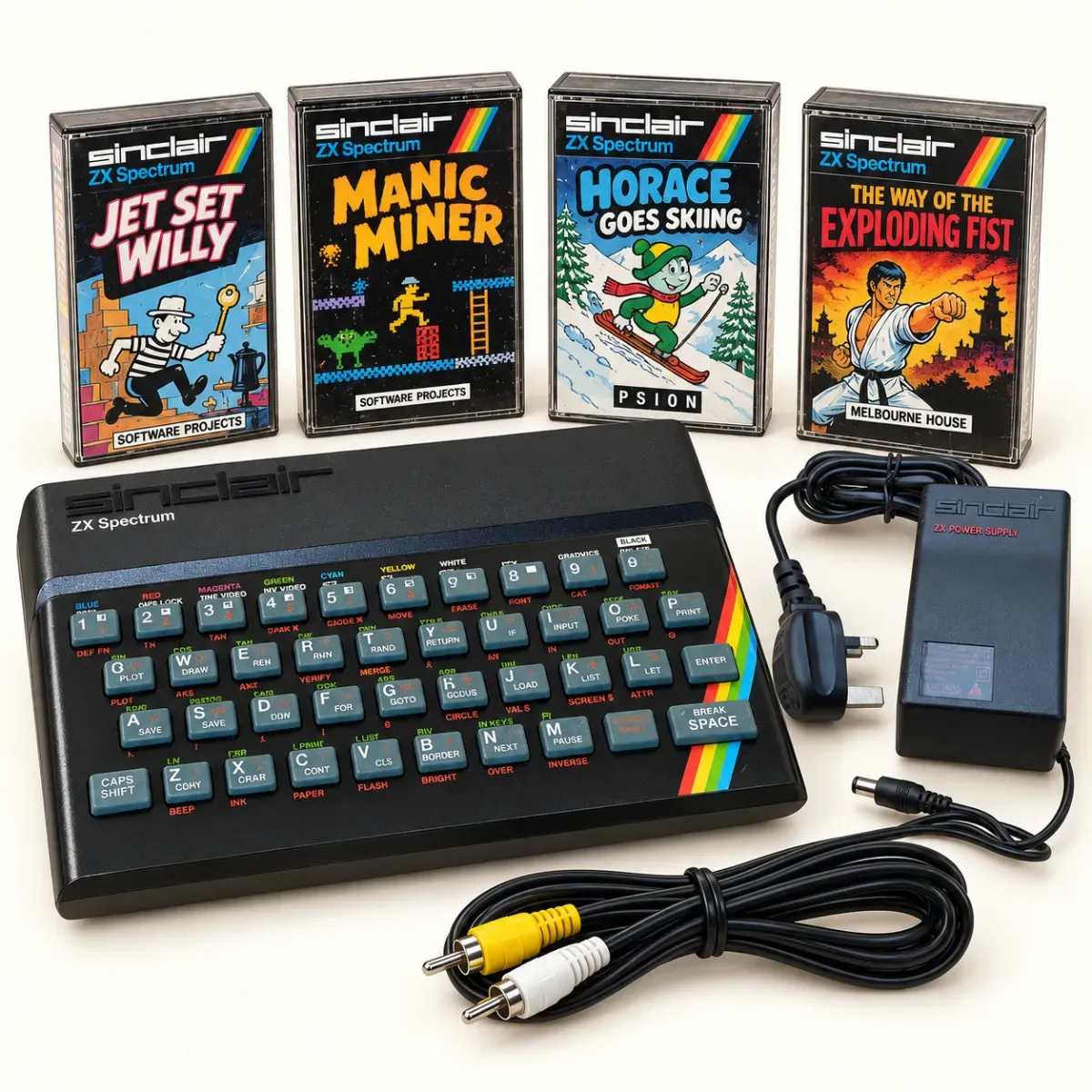
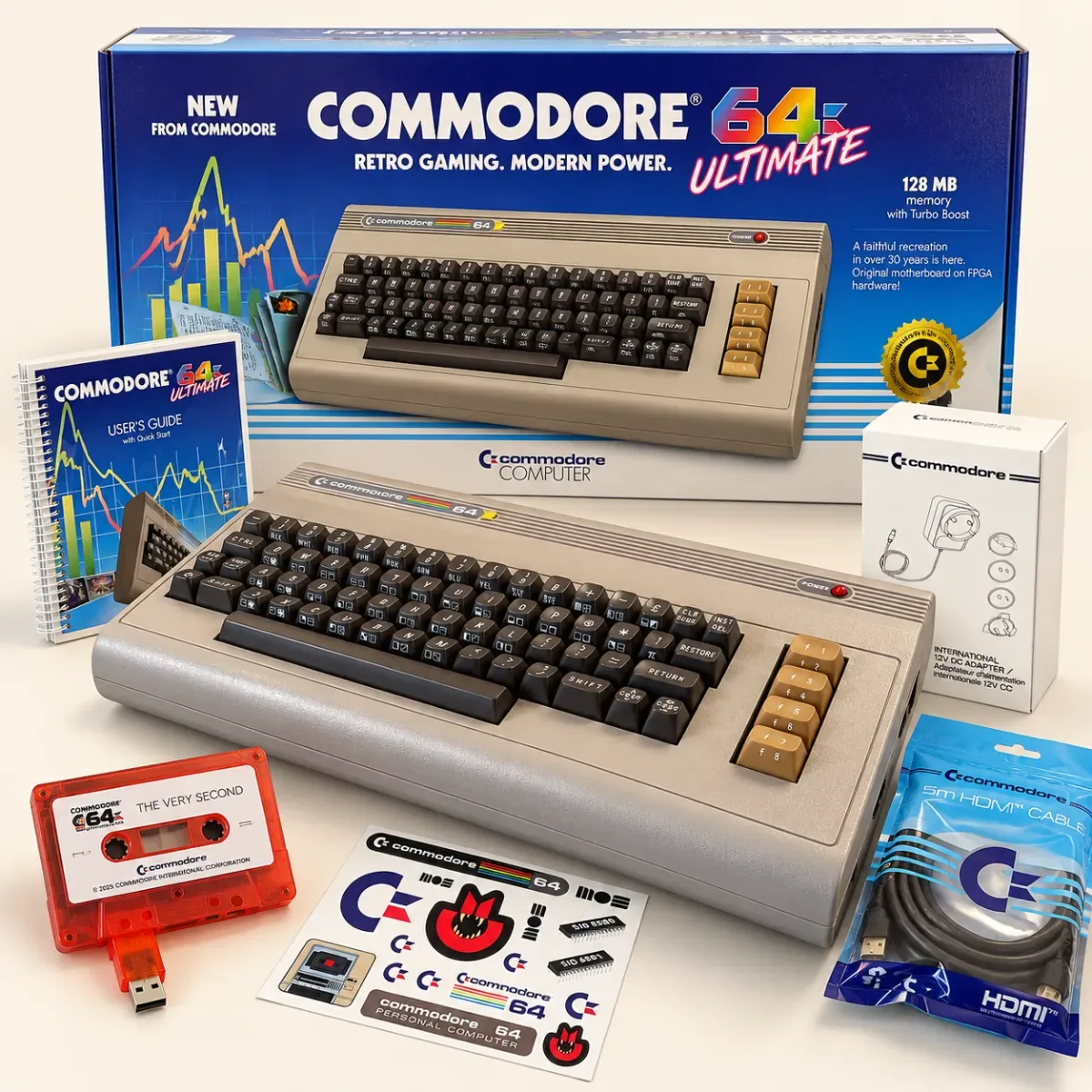
It was expensive, serious-looking and far less common in the bedroom than the Spectrum or Commodore 64. Yet the BBC Micro became one of the most influential machines Britain ever made. It shaped lessons, launched careers and gave a generation its first taste of programming, word processing, teletext-like information and gloriously noisy games loaded from cassette.
BBC Micro history starts with a television programme
In 1980, the BBC began planning its Computer Literacy Project. The idea was ambitious: television programmes, books, software and a purpose-built home computer would help ordinary households make sense of the technology that was beginning to reshape work, education and leisure.
The corporation needed a machine capable of supporting the project, and it wanted something dependable enough for schools. Several British companies were interested, including Sinclair and Newbury Laboratories. The contract eventually went to Acorn Computers, then a young Cambridge firm whose founders included Hermann Hauser and Chris Curry.
Acorn had already made the Atom, a compact, clever computer with a following among enthusiasts. But the BBC specification demanded more. The chosen machine needed proper graphics, sound, expansion options, a friendly version of BASIC and enough speed to feel convincing on television. Acorn's answer was developed at breakneck pace under the codename Proton.
When the BBC Microcomputer appeared in late 1981, it looked purposeful rather than playful. Its cream plastic case, red function keys and satisfyingly firm keyboard suggested office equipment. But beneath that sober exterior was a machine with real energy.
Why the BBC Micro felt so capable
At its heart sat a 2 MHz MOS 6502 processor, the same family of chip used in several landmark machines of the era. The Model A came with 16K of RAM, while the better-known Model B had 32K and significantly more room to grow. At around £399 for a Model B, it was a costly family purchase in the early 1980s. That price explains why so many people first met one at school rather than at home.
What justified the cost was not simply its specification. The BBC Micro was designed to expand. Ports lined the back, ready for printers, disc drives, joysticks, speech hardware, classroom networks and unfamiliar boxes with important-looking switches. Its Tube interface allowed a second processor to take on demanding work, an unusually forward-thinking feature for a home computer.
Then there was BBC BASIC. For beginners, the command prompt could feel daunting: a blinking cursor and a blank screen asking what you wanted to make of it. But BBC BASIC was fast, approachable and remarkably capable. A child could type 10 PRINT "HELLO", then quickly progress to loops, graphics, sound and small games. The machine did not pretend computing was magic. It invited you behind the curtain.
That invitation mattered. The BBC Micro's keyboard was not a rubbery compromise and its software did not treat users as passive consumers. It expected you to experiment, get syntax wrong, press Break, try again and learn why it had failed. Frustrating at times? Certainly. But that was part of its character.
The computer that took over the classroom
The BBC Micro's real cultural power came from education. Throughout the 1980s, it became a familiar sight in British schools: often one machine at the front of the room, later clusters of them in dedicated computer rooms. A teacher wheeled out a television on a trolley, someone was assigned to fetch the cassette recorder, and suddenly maths or geography had a faintly futuristic glow.
Educational software made the most of its place in the classroom. Programmes such as Granny's Garden, Logo and a vast range of subject-specific titles turned spelling, fractions and problem-solving into something more interactive than a worksheet. There were simulations, quizzes and programmes that asked pupils to guide a turtle around the screen with simple commands. For children used to pencils and exercise books, it was a different kind of authority.
Econet helped cement that role. Acorn's networking system could link machines across a school, letting staff manage software and share resources. It was not glamorous, and it could be temperamental, but it made the BBC Micro feel like part of a larger system rather than an expensive standalone novelty.
The classroom legacy has a funny side too. Plenty of people remember being told not to touch the disc drive. Others recall carefully typing a program from a magazine, only to discover that one missed comma had ruined the whole afternoon. Those small rituals are as much a part of the machine's story as its processor speed.
It played games too, brilliantly
The BBC Micro is sometimes remembered as the sensible one: the computer parents and teachers approved of while the Spectrum got on with the fun. That is only half true. Its games library was not as enormous or as cheap as Sinclair's, but it had gems with a distinct polish.
Elite is the obvious legend. Released in 1984 by David Braben and Ian Bell, it gave players a vast, wireframe universe of trading, combat and exploration. On a machine with 32K of memory, it felt impossible. There was also Repton, with its deceptively simple puzzle rooms; Chuckie Egg, whose frantic ladders and platforms became a school-break favourite; and Exile, a famously ambitious adventure full of physics, secrets and strange alien spaces.
The sound of BBC Micro gaming deserves its own little salute. That three-channel sound chip could produce crisp bleeps, rattling effects and surprisingly musical title tunes. Add a cassette deck's whirr, the occasional loading error and the distinctive click of a key being pressed with intent, and you have a complete 1980s soundscape.
Still, the trade-off was real. The BBC Micro's price put it beyond many families, and game buyers could often get more choice for less money on a Spectrum or Commodore 64. The Beeb was a superb games machine, but it was never primarily sold as one. Its identity was learning, making and getting on with serious work - even when that work involved guiding a chicken around a factory.
From Model B to the BBC Master
Acorn kept refining the range. The Model B+ arrived in 1985 with more memory, though it never displaced the original Model B in quite the same way. In 1986 came the BBC Master, a more powerful and tidier evolution with 128K of RAM, more built-in software and fewer of the expansion-related complications that had accumulated around earlier machines.
By then, however, the home-computing market had changed. Cheaper 8-bit rivals had built enormous audiences, while 16-bit machines such as the Atari ST and Commodore Amiga were making the old generation look increasingly dated. Acorn itself was heading towards something much bigger: the Acorn Archimedes and the ARM processor architecture that would eventually find its way into billions of devices.
That does not make the BBC Micro a stepping stone to be politely forgotten. Its influence ran deeper than sales charts. It established Acorn as a serious engineering company, put programming in front of schoolchildren and proved that a computer could be both a public educational tool and a source of genuine wonder.
Why the BBC Micro still matters
For collectors, the appeal is obvious. A BBC Micro has presence. The case is reassuringly chunky, the keyboard invites a proper press rather than a tap, and the machine seems built for an age when ports had names you could read. Original monitors, disc drives and manuals add to the charm, though they also require patience, space and sometimes a willingness to tackle old capacitors and unreliable media.
For everyone else, its importance is more emotional. The BBC Micro represents a moment when computers were new enough to be mysterious but accessible enough to be explored. We did not carry them in our pockets. We waited our turn, loaded the tape, read the manual and learned that the screen could respond to an idea.
If you find a BBC Micro in a loft, at a car boot sale or tucked beneath a school storeroom shelf, do not dismiss it as old beige plastic. Photograph it, keep its manuals and cables together, and record any story attached to it. The machine may be vintage technology, but the curiosity it taught still feels wonderfully current.