That faint click of the keys, the motor waking up and the soft whirr behind a favourite tape are all part of the magic. But cassette recorder maintenance is what stops a treasured TDK compilation, a school concert recording or an old ZX Spectrum game from becoming a warbly, muffled mess. These machines were built to be used, not sealed away like museum pieces - and a little careful attention can bring back a surprising amount of their old character.
The good news is that most everyday faults are not terminal. Dust, oxide build-up, tired belts and neglected batteries account for a huge number of cassette recorder woes. The trick is knowing what you can safely tackle at the kitchen table, and when a stubborn deck needs someone with proper servicing experience.
Start with the tape, not the screwdriver
Before blaming the recorder, inspect the cassette. Forty-year-old tapes can cause trouble even when the machine itself is healthy. Look for a cracked shell, a loose pressure pad, tangled tape ribbon or labels lifting into the mechanism. If the tape has been stored in a damp loft, garage or shed, be especially cautious.
Try a cassette you know has played well recently. If one tape sounds poor but another is clear, the cassette is the likely culprit. Never force a stiff tape through a player. Gently turn one reel hub with a finger or a pencil to check that it moves freely. If it resists badly, set it aside rather than risking the recorder's motor or chewing up the tape.
For treasured recordings, make a digital copy once the machine is running properly. That does not make the original less special. It simply means the voices, songs and home-made radio shows survive if the tape eventually reaches the end of its useful life.
Cassette recorder maintenance begins with clean heads
Every time a tape plays, tiny particles of magnetic oxide pass over the tape heads. Over years, that residue forms a brownish film that dulls high frequencies, weakens recordings and can make a tape sound as though it is playing from the bottom of a biscuit tin. It is one of the most common problems, and one of the easiest to improve.
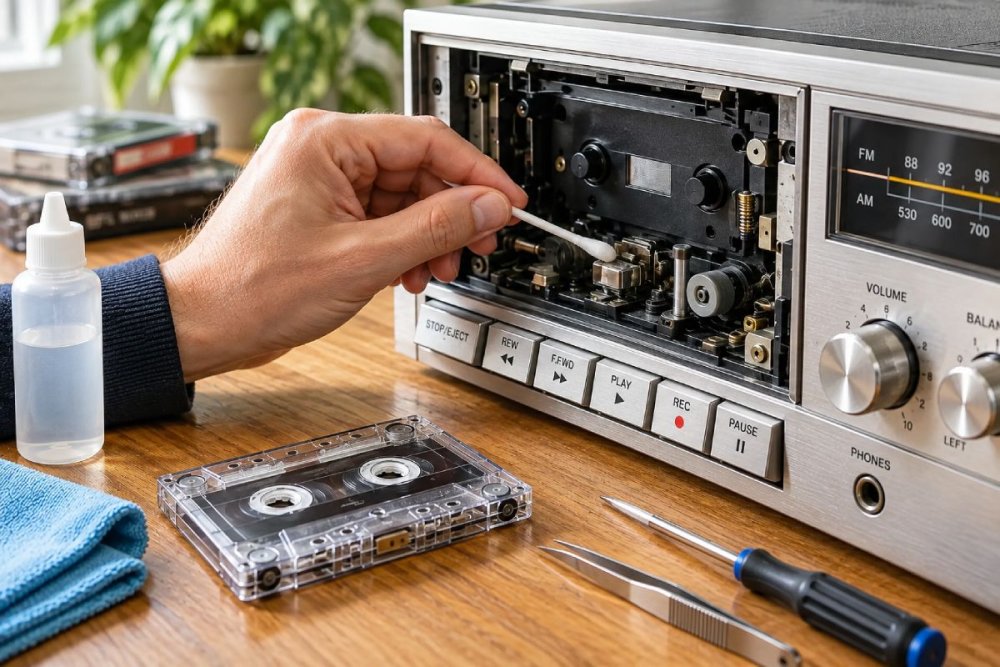
Unplug a mains-powered recorder or remove its batteries. Open the cassette compartment and find the shiny metal playback head, usually positioned in the centre where the tape passes. You may also see a smaller erase head and metal capstan spindle. Use a cotton bud lightly moistened with isopropyl alcohol, ideally 90% or higher, and gently wipe the surfaces. Do not soak anything. A damp bud is enough.
Clean the rubber pinch roller with care as well. This is the small rubber wheel that presses tape against the capstan. It should be clean and slightly matte, not glossy, sticky or cracked. Isopropyl alcohol works for many rollers, but use it sparingly and avoid harsh solvents, which can dry or damage old rubber. Let everything dry fully before inserting a cassette.
A recorder used regularly may benefit from this clean every 10 to 20 hours of playback. If that sounds fussy, remember how much punishment our childhood machines absorbed: dusty bedrooms, sticky fingers, piles of loose tapes and the occasional attempt to cure a loading error by thumping the cassette deck.
Demagnetising: useful, but not a cure-all
Demagnetisers were once standard kit for serious tape users. They can reduce stray magnetism on metal tape-path parts, which may contribute to lost clarity or noise over time. They are useful when employed correctly, but they are not a magical first response to every muffled cassette.
Clean the heads first. If you use a demagnetiser, follow its instructions precisely and keep it away from cassettes, credit cards and other magnetic media. A poorly used demagnetiser can do more harm than good. For the occasional listener with a portable player, careful cleaning and sensible storage usually matter far more.
When playback is slow, fast or wobbly
A tape that drags, races or develops a seasick wobble points towards the drive system. In a cassette recorder, a small motor turns belts, gears and flywheels. Those belts were never meant to last for decades. They stretch, harden, turn slack or, in particularly grim cases, dissolve into black sticky residue.
Start by checking fresh batteries or a suitable power supply. Weak batteries can make a portable recorder sound slow and strained, especially during recording. Battery contacts should be clean and free from white or green corrosion. A little isopropyl alcohol on a cotton bud can help with light grime, but serious leakage damage may need more involved repair.
If power is not the issue, a belt is a strong suspect. Replacing one can be straightforward on a simple 1980s mono cassette recorder, although compact Walkmans and later stereo decks can be fiddly. Take clear photographs at every stage before removing a case screw or lifting an old belt. Belts must follow the correct route, and a single misplaced loop can leave fast-forward working while playback refuses to move.
Do not guess belt size from appearance alone. Measure the old belt if it remains intact, or consult a reliable service source for the model. A replacement that is too tight adds strain; one that is too loose slips and causes speed fluctuations. This is one of those jobs where patience beats bravado.
Treat the mechanism gently
Cassette mechanisms depend on small levers, springs and plastic gears moving in sequence. Repeatedly hammering the stop, rewind and fast-forward keys can worsen a fault, particularly on cheaper portable units with ageing plastic parts. If a key jams, do not force it down harder in the hope that it will remember 1986.
Remove any cassette, disconnect power and inspect the compartment for obvious obstruction. A loose label, snapped tape leader or fragment of old foam can stop the mechanism from completing its cycle. If the deck has eaten a tape, resist the instinct to pull. Turn the take-up spool gently by hand to relieve tension, then ease the cassette free. A pencil remains a perfectly respectable recovery tool.
Lubrication is another area where restraint wins. Old grease can stiffen, but spraying general-purpose oil around the mechanism is likely to contaminate belts, rollers and switches. Specialist servicing calls for the correct lubricant in tiny amounts, placed only where needed. If you cannot identify the moving part and its purpose, leave it dry until you can.
Recording faults and crackly controls
If playback is clear but recordings are weak, intermittent or silent, clean the record/playback switch and check the microphone or line-in socket. On many recorders, the long slide switch behind the transport keys oxidises after years of sitting unused. Pressing record and stop repeatedly, with no tape inside, can sometimes improve a lightly oxidised switch through simple movement.
Crackling volume wheels are familiar to anyone who grew up with a portable radio-cassette player on the bedspread. Turn the control gently through its full range several times. If the noise persists, a suitable contact cleaner may help, but use only a product intended for electronics and apply it sparingly. Never spray blindly into a machine, especially near belts or rubber parts.
For mains-powered units, be sensible about safety. A frayed lead, loose plug, burnt smell or visible internal damage is not a nostalgic challenge. Stop using the recorder and have it examined by a qualified repairer. The same applies to valuable hi-fi decks, rare Walkmans and machines with sentimental importance. There is no prize for turning a modest fault into an irreplaceable loss.
Store the recorder as carefully as the tapes
A clean, working cassette recorder can quickly deteriorate in the wrong environment. Keep it somewhere dry, temperate and away from direct sunlight. Avoid lofts, sheds and damp garages, where temperature swings encourage corrosion, mould and brittle plastics. Remove batteries if the recorder will sit unused for months.
Store cassettes upright in cases, away from loudspeakers and strong magnets. Rewind them after listening, and avoid leaving a tape paused against the heads for long periods. It is a small ritual, but our old collections deserve it - from the homemade chart-toppers recorded off Radio 1 to the game tapes that once demanded ten minutes of loading-screen patience.
A well-maintained recorder does not need to look factory-fresh. A few scuffs, yellowed buttons and a slightly temperamental eject key are part of the story. What matters is preserving the moment it creates: pressing play, hearing that familiar hiss, and finding that the technology we grew up with still has another side to play.