A white cable snaking from a pocket is becoming a familiar sight again. The return of wired headphones may look like a small rebellion against wireless buds and endless charging cases, but it is really about something bigger: getting back to listening with intention. For anyone who remembers foam pads on a Walkman, the satisfying click of a 3.5mm plug, or untangling a lead before the bus arrived, that feeling is instantly recognisable.
Wireless listening is convenient, of course. Nobody misses catching a headphone lead on a kitchen drawer handle or discovering one side has gone silent after a cable finally gives up. Yet convenience has a habit of making technology disappear into the background. Wired headphones put the ritual back. You choose an album, plug in, press play and let the world carry on without demanding that your headphones pair, update or announce a low battery.
The return of wired headphones is about more than fashion
It would be easy to dismiss wired headphones as another youth-culture trend, alongside compact cameras and flip phones. There is certainly a visual appeal to them. A pair of familiar white earbuds has become a deliberate accessory rather than an accidental leftover from 2014. But the renewed affection has roots that make sense to anyone who grew up surrounded by physical media and technology with personality.
Our gadgets used to tell us what they were doing. A cassette deck clunked into life. A CD player whirred. The red light on a Walkman meant the batteries were working, at least for now. Headphones belonged to that same world of visible, touchable function. Their cable was not elegant, but it was honest. It connected you directly to the music.
That directness feels refreshing after years of tiny wireless buds hidden in charging cases, managed by apps and prone to vanishing down the side of the sofa. A wired pair does one job. Plug them in and sound arrives. There is a quiet pleasure in a bit of kit that does not ask for an account, a software update or a fresh charge before it will play the first track.
Why wired listening suits the way we remember music
Music in the 1980s and 1990s often came with a physical routine. You saved up for a cassette or CD, studied the sleeve, learned the order of the tracks and perhaps recorded a favourite song from the radio with a finger hovering over the pause button. Headphones gave that music a private space, whether you were sprawled on the bedroom carpet or staring out of a steamed-up coach window.
The sound itself was not always perfect. Those cheap foam headphones bundled with a personal stereo could make drums sound like somebody tapping a biscuit tin. The cable could crackle when bent at a certain angle. Still, the experience felt personal because it required a little effort. You carried the player. You chose the tape. You accepted that the batteries might expire halfway through side two.
Modern wired headphones are benefiting from that same appetite for a more deliberate relationship with entertainment. Streaming has made almost every song available immediately, which is brilliant, but it can also make listening feel disposable. A cable does not magically turn a shuffled playlist into a treasured mixtape. It can, however, encourage a pause. When you have physically connected yourself to the device, you are more likely to give the music a proper chance.
The practical case is stronger than nostalgia
The warm glow of Walkman culture is only part of the story. Wired headphones remain useful in ways that are easy to forget until a wireless pair lets you down at the wrong moment.
For a start, there is no battery inside the headphones to flatten. That matters on a long train journey, at a desk, on holiday or while rummaging through a drawer for something that simply works. A basic pair can live in a bag for months and still be ready when you need them.
They also avoid the occasional faff of Bluetooth. Most wireless headphones are much better than they once were, but pairing can still be temperamental when several devices are nearby. A wired connection is pleasingly blunt: if the plug fits and the socket works, you have sound. For gaming, video and old handhelds, it can also avoid the slight delay that sometimes puts dialogue and lip movements out of step.
Then there is repairability. A detachable cable on a decent pair of headphones can be replaced when it wears out, rather than turning the whole thing into e-waste. That is a particularly welcome idea for people who remember making a favourite gadget last through sheer optimism, electrical tape and one carefully positioned wiggle of the wire.
The compromise: cables can still be annoying
Let us not pretend the old frustrations have vanished. Cables tangle. They catch on coat zips. They can pull a phone off an armchair with shocking force. If you run, commute in crowded spaces or prefer to leave your phone in another room, wireless headphones still make a great deal of sense.
The bigger practical snag is the missing headphone socket. Many newer phones no longer have one, meaning a small adapter is required. That can feel absurd to anyone who grew up with radios, televisions, cassette decks and computers covered in ports, but it is manageable if you choose an adapter that suits your device and keep it with the headphones.
Sound quality also depends on the headphones, not simply on whether they are wired. A cheap wired pair is not automatically better than a well-made wireless one. Equally, you do not need a frighteningly expensive hi-fi setup to enjoy the benefits. Comfort, a secure plug, durable strain relief around the cable and a sound that suits your taste matter more than chasing technical specifications.
Choosing a pair without turning it into homework
If you fancy returning to wired listening, start with where and how you will use them. Earbuds are compact and familiar, ideal for keeping in a coat pocket. Over-ear headphones are better for long listening sessions at home, offering the comforting, enclosed feeling many of us remember from late-night radio and CD marathons. On-ear designs sit somewhere between the two, and can look wonderfully old-school without requiring a full 1980s personal stereo clipped to your belt.
For retro kit, check the connector before buying anything. Many personal cassette players, portable CD players, early MP3 players and older consoles use a standard 3.5mm socket. Some older hi-fi equipment uses a larger 6.35mm headphone jack, while certain vintage devices have their own quirks. A simple adapter may solve the problem, but checking first saves a disappointing moment at the dining table.
If your headphones are for a modern phone, make peace with the adapter rather than treating it as a defeat. Put one in your bag, another by the bedside and you will rarely think about it. The cable becomes part of the routine, much like carrying spare AA batteries once was.
A small antidote to disposable tech
There is something quietly satisfying about using technology that refuses to be mysterious. Wired headphones are not clever. They do not track your listening habits, try to sell you a subscription or blink urgently from a plastic case. They are a cable, two speakers and a route into whatever you want to hear.
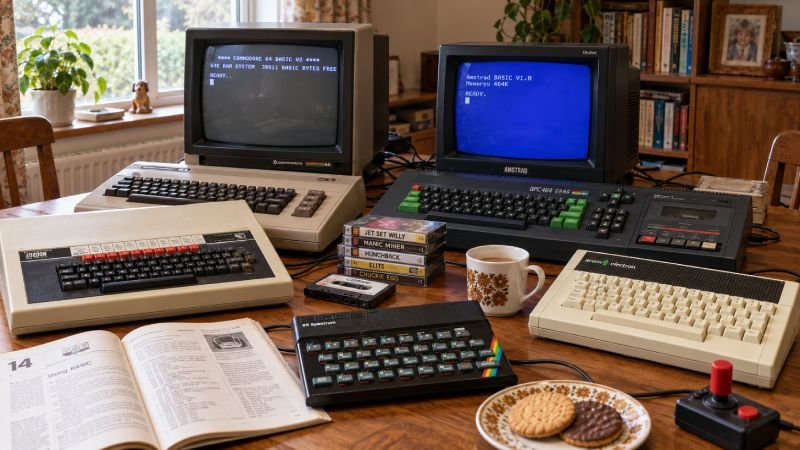
That simplicity connects them to the gadgets we grew up with: the chunky buttons of a cassette recorder, the rubber keys of a Spectrum, the reassuring weight of a remote control that needed two AA batteries. None were flawless. All had character. Their limitations often became part of the memory.
The return of wired headphones does not mean we must abandon wireless convenience or pretend the past had better sound in every respect. It is a reminder that the most enjoyable technology is often the technology that asks us to be present. Find a pair that feels comfortable, connect them to a favourite player or phone, and give an album the uninterrupted hour it deserves. You may be surprised how quickly that ordinary little click of a plug feels like coming home.