The first sound was often the clue: a cassette deck clicking into place, followed by a wavering electronic shriek that meant the afternoon might yet be saved. Computer nostalgia is not simply about old machines looking charmingly chunky on a shelf. It is the memory of waiting, trying, sharing, arguing, typing, repairing and occasionally staring at a television screen in disbelief because the loading process had failed at 98 per cent.
For many of us, the home computer was not a polished appliance. It was a slightly mysterious resident of the sitting room or bedroom, attached to the family telly and surrounded by leads nobody was meant to pull. It had rubber keys, warm vents, a stubborn cassette recorder and a personality all of its own.
Computer nostalgia is built from rituals
Modern devices remove friction with astonishing efficiency. A game appears in seconds, a document saves by itself and a whole library of information sits in a pocket. That convenience is brilliant, but it also explains why the old rituals remain so vivid. We had to do things before the fun could begin.
There was the hunt for the right cassette. There was rewinding to a pencilled mark, adjusting the volume, pressing PLAY, then hoping the screen would fill with coloured stripes rather than the dreaded error message. A ten-minute load felt less like a delay and more like a ceremony. You had committed to the game before the first pixel moved.
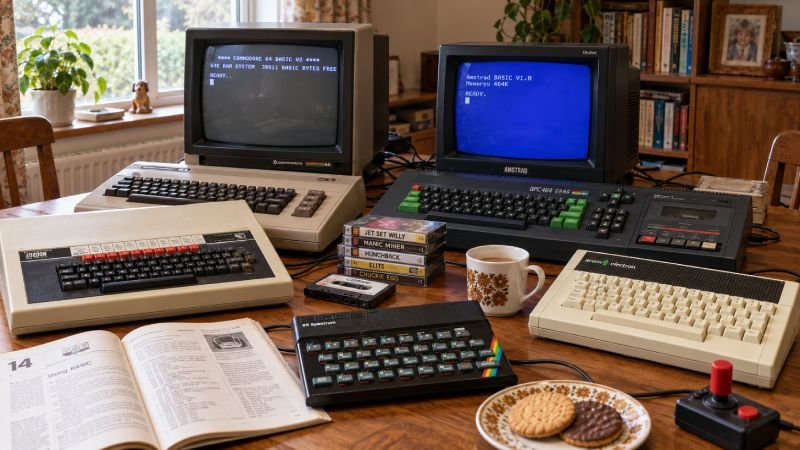
The same was true of the hardware itself. Switching on a ZX Spectrum meant seeing that familiar border and prompt. Sitting at a BBC Micro could feel like being admitted to a school laboratory after hours. An Amstrad CPC, with its built-in cassette deck or disc drive, had the reassuring seriousness of a proper machine, even when its main duty was helping you avoid homework.
Those actions lodged in the memory because they involved hands as well as eyes. We pushed physical buttons. We heard mechanisms turn. We knew the feel of a joystick that had been pulled too hard during a crucial final level. Technology had personality because it made its presence known.
The machine was only half the story
A cherished computer is rarely remembered in isolation. It brings back the room it lived in, the people nearby and the odd little rules of family life. Perhaps the Spectrum came out only after tea. Perhaps your parents needed the television for Coronation Street, abruptly ending an ambitious coding session. Perhaps an older sibling had first claim on the joystick, and you learned negotiation through the ancient art of taking turns.
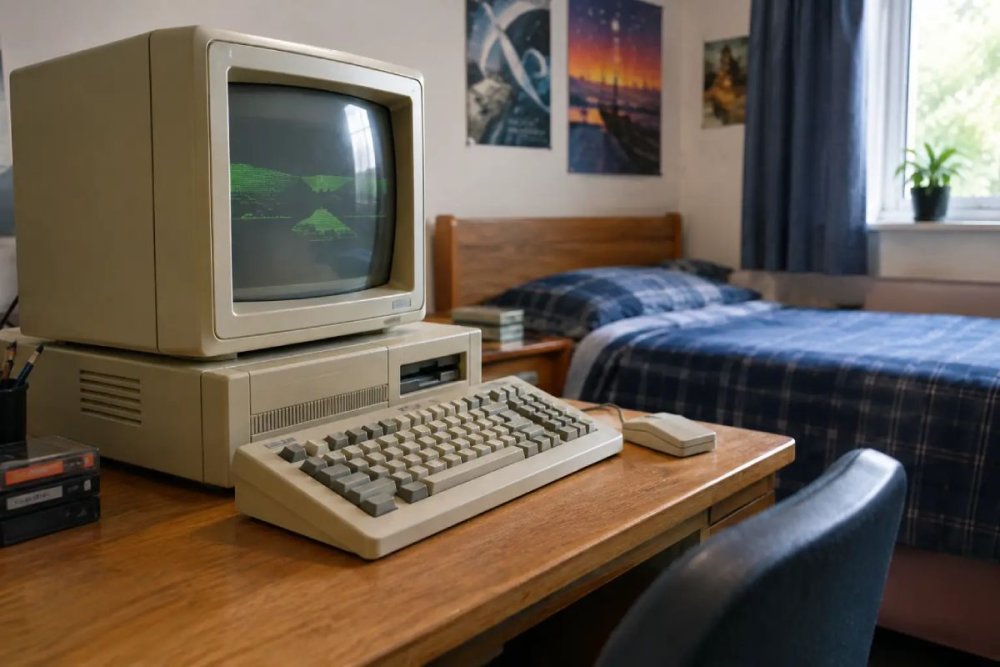
That is why a single photograph of a beige keyboard can carry more emotional weight than its specifications suggest. It may recall a birthday morning, a rainy school holiday or the mate down the road whose dad had a Commodore 64 with more games than any reasonable household should possess. Machines became landmarks in our social lives.
The playground debates were equally important. Spectrum or Commodore? Was the BBC Micro educational brilliance or simply what schools made you use? Did an Amstrad owner have better graphics, or merely a better line in boasting? These were not dry technical comparisons. They were tribal loyalties, defended with the confidence only a ten-year-old can possess.
Even the limitations became part of the tale. A game might be painfully difficult, its loading screen more polished than the action that followed. A joystick could fail at exactly the wrong moment. The keyboard might have required a small lesson before you could find a punctuation mark. Yet these shortcomings gave us problems to solve and stories to swap. Nobody remembers a perfectly functional update with quite the same affection.
Why the 1980s home computer still matters
Britain’s home-computing boom arrived with a remarkable promise: this was the future, and it could fit beneath the television. For a generation raised among three channels, catalogue wish lists and the faint plastic smell of a new toy, that promise was enormous. A computer was a games machine, a homework helper, a music-maker, a command centre and, potentially, a route to becoming the next big programmer.
That last idea mattered. Magazines printed pages of BASIC code for us to copy, line by painstaking line. Most of us did not emerge as software engineers. Plenty of us produced a wobbly block, a tune made of beeps or a text adventure with a spelling mistake in the opening sentence. But the computer encouraged experimentation in a way that many modern devices do not.
You could type something and make the machine respond. If it did not work, you changed it. If it crashed, you started again. The barrier between user and creator felt thinner. A child with a magazine, a few hours and a tolerance for syntax errors could believe they were making something from nothing.
This was also an era when British technology had distinct local flavour. Sinclair’s bold, clever, occasionally maddening designs felt unlike anything else. The BBC Micro carried the authority of the classroom. Amstrad sold the dream of a complete household system with unmistakable confidence. These were not just international products available on British shelves. They were woven into how Britain imagined computers at home.
Nostalgia is not pretending the past was perfect
It is tempting to polish every old computer into a flawless object of childhood wonder. But the truth is more interesting. Cassette loading was often infuriating. Cheap joysticks could be dreadful. Some games were nearly impossible because there was only so much memory, time and patience available to their creators. And not every family could afford the computer their children wanted.
That does not weaken the nostalgia. It gives it texture. We remember the wish as much as the ownership: circling a ZX Spectrum +2 in the Argos catalogue, reading reviews in WHSmith, or watching a demonstration in a shop window while knowing it was unlikely to come home with us that day.
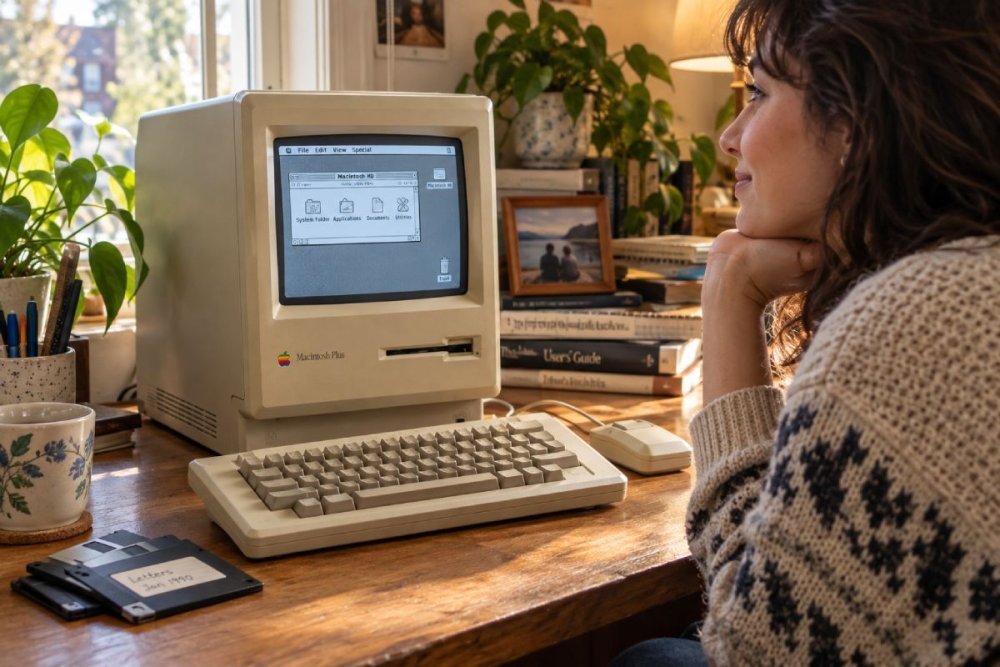
There is a difference, too, between remembering an object and wanting to use it every day. Few people genuinely want to return to saving work on a temperamental floppy disc or waiting for a game to load from tape before every session. But many of us miss the sense of occasion. We miss technology that asked for our attention rather than quietly demanding it all the time.
That distinction is useful for collectors and casual nostalgists alike. You do not need a house full of original hardware to value what it represented. One remembered loading screen, a familiar keyboard click or a battered game in its oversized cassette case can be enough to bring the period back into focus.
The joy of revisiting the machines we grew up with
Returning to old computers can be surprisingly revealing. The graphics may be simpler than memory allowed, but the imagination behind them still shines through. A handful of colours became alien worlds, football grounds, haunted houses and racing circuits. Limited sound chips produced theme tunes that somehow still live rent-free in our heads.
It also reminds us that progress is not the same as replacement. Today’s technology is faster, clearer and vastly more capable. Yet a ZX Spectrum’s rubber keys, a BBC Micro’s solid clack or the purposeful shape of an Amstrad keyboard can still feel more expressive than a sheet of black glass. These devices were designed in public, almost. Their compromises were visible, their ambitions easy to read.
That is why the best retro-tech memories are shared rather than merely displayed. Tell someone about the game you could never load. Ask which computer ruled their house. Compare the electronic toys, cassette cases and magazine cover tapes that filled a particular corner of childhood. At RetroWins, those small details are where the strongest recognition often lives.
The old machines cannot take us back, and perhaps that is for the best. What they can do is give us a moment to remember how exciting it felt when technology still seemed slightly magical, occasionally unreliable and entirely ours. Put on that loading sound, picture the family telly glowing in the corner, and allow yourself a few minutes with the future we thought we had brought home.