
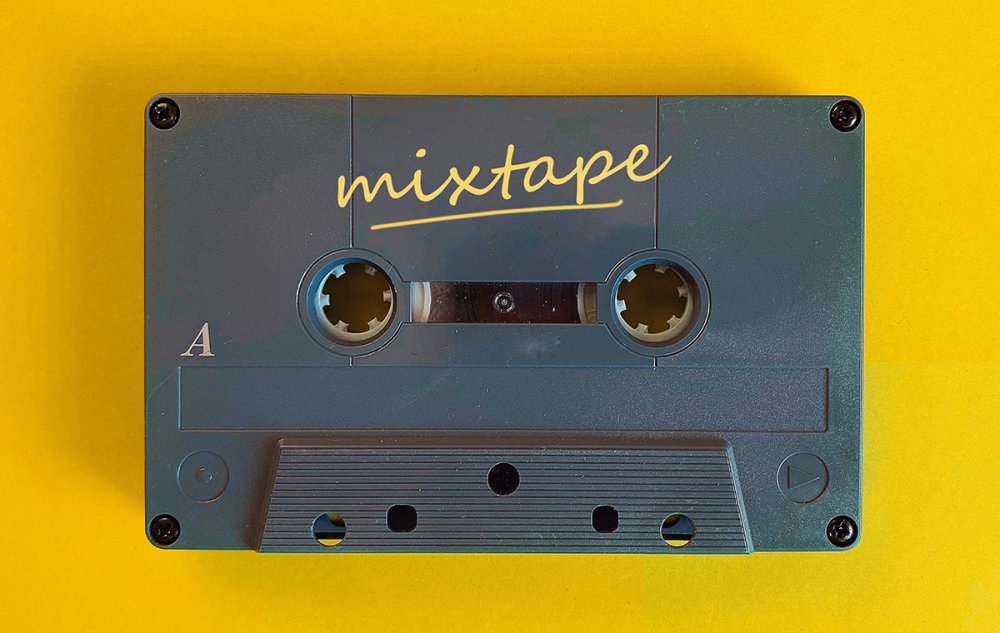
There was a special kind of bravery in handing somebody a cassette with your handwriting on it. Mixtape culture in 1980s Britain was never just about getting songs from one machine to another. It was about saying something when saying it out loud felt impossible, whether you were passing a C90 across a school desk, leaving one by the family hi-fi, or slipping it into the post with a carefully decorated inlay card.
A mixtape took time, equipment and a bit of nerve. That was exactly why it mattered. Long before playlists could be assembled in seconds, every track had to be found, recorded and placed in an order that made emotional sense. The faint hiss, the click of the pause button and the occasional radio DJ talking over the intro were not flaws to be scrubbed away. They were proof that someone had made it for you.
Why mixtape culture in the 1980s felt personal
The blank cassette was one of the most democratic bits of technology in the house. It was cheap enough to buy with pocket money, simple enough for most of us to understand, and capable of holding an astonishing amount of feeling. A TDK D90, Maxell UR or BASF cassette could become a chart roundup, a late-night radio capture, a heavy metal sermon, or a declaration of affection disguised as a collection of songs.
The format demanded decisions. A C60 gave you thirty minutes per side, which could be ideal for a sharp, focused set of favourites. A C90 offered room to stretch out, although the longer tape was thinner and more likely to tangle if your old recorder had a bad day. You learned to watch the counter, estimate song lengths and leave enough tape at the end for the final dramatic track.
That limitation gave the mixtape its shape. There was no infinite library and no easy reshuffle. If side one finished too early, you either lived with the awkward silence or went back to the beginning and tried again. The best tapes felt curated because they were. They had openings, mood changes and closers, just like a proper album or a Radio 1 show you wished you could preserve forever.
Recording from the radio was a sporting event
For many British households, the radio was the gateway. The Sunday chart, evening request shows and late-night specialist programmes offered songs that might not exist in your record collection. You waited with a finger hovering over the red Record button, often with the Pause button already pressed down for a cleaner start.
Then came the familiar frustration. The presenter talked over the opening bars. A parent called from another room. The aerial crackled. Or the station played an advert just as you thought you had struck gold. Still, when you caught a favourite cleanly, it felt like a small technical triumph.
Commercial-free recordings were prized, but imperfect ones had their own charm. A tape that opened with a clipped introduction from Simon Bates or a burst of static now places you in the moment more vividly than a spotless digital file ever could. You can almost see the wood-effect music centre, the glowing tuner scale and the cassette door swinging open after a successful capture.
The tools that made the mixtape possible
Mixtape culture depended on the technology we grew up with, from basic portable recorders to serious double-deck hi-fis. A single cassette deck and a radio were enough for most people. If you had a record player connected to the system, you could transfer singles and albums too, carefully lowering the needle and hoping nobody slammed the living-room door halfway through.
The double cassette deck changed the game. Suddenly, tape-to-tape copying became quick and relatively tidy, particularly if your mate had access to records you could only dream about owning. There were trade-offs. Each copied generation could add a little more hiss and soften the sound, while a wonky head or tired belt could make everything seem to wobble. But few of us were demanding studio quality. We wanted the songs, the sequence and the feeling of having our own version.
Portable players added another layer. A Walkman, or one of the many less glamorous personal stereos that followed it, made a mixtape private. Foam headphones, a jacket pocket and a bus journey could turn familiar streets into the backdrop for your chosen soundtrack. The anti-social reputation of headphones missed the point. Sometimes a tape was made precisely because its maker wanted to create a little world for one person.
Car stereos, ghetto blasters and bedroom cassette recorders all gave the format different lives. A tape made for a party needed big choruses and little dead space. One made for a long coach trip might begin brightly, settle into slower tracks and save a few singalongs for the journey home. The cassette was adaptable in a way that felt wonderfully human.
More than a playlist: a message in track order
A great 1980s mixtape did not simply contain good songs. It had a point of view. The first track was an invitation. The middle of side one established trust. The flip to side two could change the mood completely, perhaps moving from New Romantic gloss to a melancholy ballad, or from chart pop into something discovered on John Peel.
Romantic tapes were the most dangerous form. Putting a song on a cassette was safer than admitting why you had chosen it, which made the order carry the message. A familiar love song might be obvious. A less obvious B-side could be even more revealing. The recipient was expected to listen properly, perhaps reading between the tracks and the handwritten notes on the J-card.
Friendship tapes mattered just as much. They were how music travelled between bedrooms, schools, youth clubs and Saturday afternoons spent round somebody else's house. One person might introduce another to The Smiths, Madonna, Duran Duran, The Cure, Wham!, Iron Maiden or a dozen tracks taped from a cousin's records. Taste was shared physically, with a little plastic case acting as a passport to another person's world.
The presentation counted. Some labels were written in biro in a hurry. Others had bubble lettering, band logos copied from magazines, collages cut from Smash Hits, or a track list so tiny it required a magnifying glass. The cassette inlay was a small canvas. A labelled tape announced care, while an unmarked one carried mystery and the mild panic of not knowing what you were about to hear.
Home taping had a rebellious edge
The 1980s also brought the famous warning that home taping was killing music. The slogan appeared on posters and record sleeves, putting ordinary cassette users at the centre of a wider argument about copyright, record sales and copying. It was a serious debate, but it did not always match how teenagers and families saw their own tapes.
For plenty of people, copying was not a substitute for loving music. It was how you tried an artist before buying an album, kept a borrowed record close, or made a compilation from songs scattered across different releases. Equally, there is no need to pretend every copy was harmless. Taping could mean artists and labels lost control of how their work travelled, and widespread copying raised real questions about payment.
That tension is part of the era's story. The cassette made music more shareable, but it also made it easier to copy without permission. What cannot be denied is how the format shifted power towards listeners. We were no longer only buying whatever sequence a record company placed on an album. We could edit, combine, dedicate and respond.
Why the cassette still means more than convenience
Modern playlists do the practical job better. They are clearer, cheaper to distribute and far less likely to be eaten by a machine just before your favourite track. Yet convenience is not the same as ceremony. A cassette asks for attention from both maker and listener.
You had to turn it over. You had to rewind to find a song. You remembered where a favourite chorus sat by the counter number, not by tapping a screen. Even the mechanical rituals had personality: pressing Stop/Eject, seeing the reels turn, repairing a mangled ribbon with a pencil and a level of patience rarely expected from technology now.
That is why an old mixtape can still feel startlingly alive. It contains songs, certainly, but it also contains decisions, interruptions and the exact texture of somebody's time. If you find one in a loft box, resist the urge to judge the handwriting or the questionable track choices too quickly. Find a working deck, press play and let the clunk, hiss and first uncertain notes bring the room back.






