
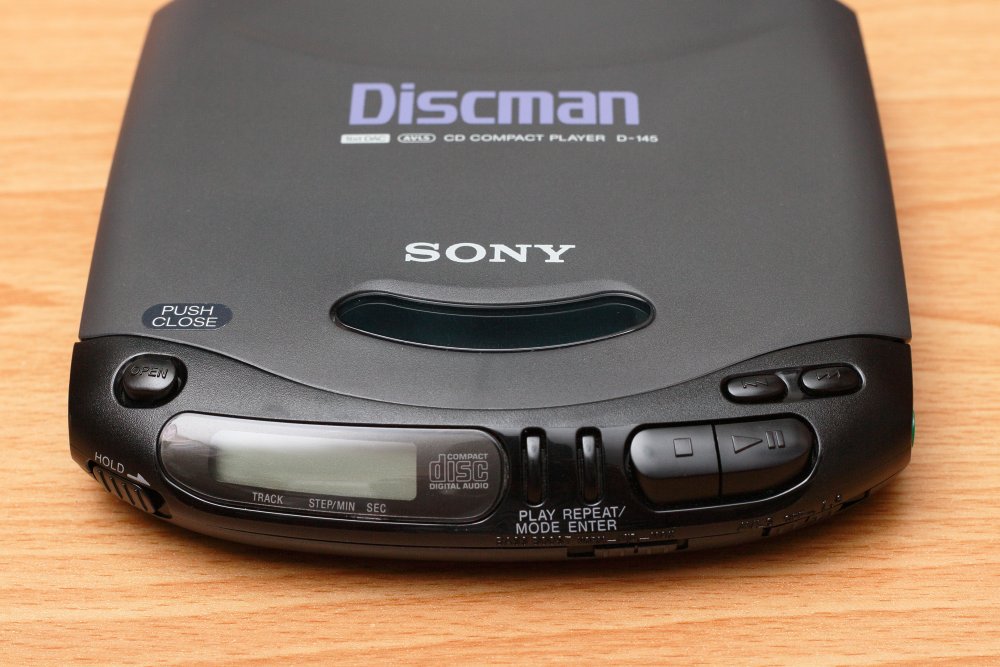
The portable CD player history begins with a wonderfully impractical promise: CD-quality sound in your hands, wherever you happened to be. For those of us who had spent years rewinding cassettes with a biro, cleaning tape heads and praying the Walkman would not eat our favourite album, the idea felt almost futuristic. A shiny silver disc, a pair of foam headphones and no hiss between tracks - this was proper hi-fi for the bus, the bedroom and the back seat on the way to a soggy British holiday.
Yet portable CD players were never quite as carefree as the adverts suggested. They skipped when you ran for the train, drained batteries with alarming confidence and made you carry a small library of discs in plastic wallets. That was precisely part of their character. They were the gadgets we handled carefully, showed off proudly and packed with the CD we wanted everyone to know we owned.
Portable CD Player History Starts with the Discman
Compact discs arrived in Britain in the early 1980s as a premium format. Early players belonged beside the hi-fi separates, looking serious and expensive beneath the television or next to a cassette deck. The disc itself seemed miraculous: no visible grooves, no tangled tape and a promise that it would sound the same after the hundredth play as it did on day one.
Sony changed the mood in 1984 with the D-50, widely known as the first Discman. It was not pocket-sized in any sensible modern meaning of the phrase. Roughly the footprint of a CD case but much thicker, it was a solid little slab with a lid, chunky controls and a strap-friendly design. Still, compared with a full-size CD player, it looked like technology from tomorrow.
The name mattered as much as the machine. Sony had already made the Walkman a cultural force, and Discman suggested that the compact disc could join that same personal listening revolution. Suddenly, CDs were not only for Dad's careful hi-fi collection. They could come to school, on the coach, into your bedroom and, theoretically at least, on a walk.
The catch was cost. The first machines were expensive, and CDs themselves were dearer than tapes. Through much of the 1980s, a portable CD player was more likely to be a dream Christmas present than something casually bought with Saturday-job wages. It sat in catalogues and electronics shop windows, gleaming beside early camcorders, midi systems and those enormous remote controls that always vanished down the side of the sofa.
From Luxury Gadget to 1990s Essential
By the late 1980s and early 1990s, portable CD players had become far more attainable. Sony remained a major name, but Philips, Panasonic, Aiwa, Sharp, Technics and later Goodmans, Bush and other familiar high-street brands gave shoppers plenty of choice. The player became a recognisable object of its own: circular or oval, often black, sometimes silver, with a clear window or logo on the lid and a row of buttons that clicked with satisfying purpose.
This was also the era when the CD collection became part of your identity. A cassette mixtape had its own romance, but a portable CD player encouraged a different ritual. You chose one album, opened the jewel case, lifted the disc by its edges and listened to it as an album. There was no infinite shuffle, no algorithm nudging you elsewhere. If you brought Definitely Maybe, Jagged Little Pill, Parklife or a compilation packed with chart favourites, that was your soundtrack until you reached home or dared carry a second disc.
For British teenagers, the practical accessories were almost as memorable as the player. There were flimsy headphones with orange foam pads, padded carrying cases, car adaptor kits and CD wallets that held 24 discs in sleeves. Anyone who has ever tried to locate a particular track while the 73 bus juddered along will remember the tiny crisis of keeping fingerprints off the underside.
The skip that tested everyone’s patience
The biggest weakness of early portable players was movement. A CD player reads information with a laser while the disc spins at high speed. Knock the player, hit a pothole or walk with too much enthusiasm and the laser could lose its place. The result was that familiar hiccup: a tiny repeated fragment, a jump forward, or a complete pause at exactly the least welcome moment.
Manufacturers worked hard to solve it. During the 1990s, electronic skip protection systems became a major selling point. The player briefly stored music in memory, giving it a small reserve while the disc mechanism recovered from a bump. Sony used names such as ESP, while rival brands had their own claims and badges plastered across the lid.
It was a genuine improvement, but it came with trade-offs. Early anti-skip memory could use more battery power, and some listeners felt certain systems affected sound quality, particularly when they relied on data compression to stretch the buffer. For most people, though, being able to walk down the street without turning a chorus into a stutter was worth it.
Battery life was another constant battleground. Many players used two AA batteries, though some took rechargeable gumstick cells or came with bulky external battery packs. A player could accompany you for hours, but a fresh pair of batteries was often tucked into a bag just in case. The arrival of rechargeable models felt civilised, even if finding the right charging lead months later was another matter entirely.
The Portable CD Player’s Design Peak
The late 1990s produced some of the most distinctive machines in portable CD player history. Manufacturers chased slimness with magnesium-look finishes, translucent plastics, bright colour accents and ever more compact controls. The practical clamshell shape remained, but it became sleeker and more fashion-conscious. A portable CD player could be clipped to a belt, slipped into a coat pocket or carried in a purpose-made pouch that suggested its owner had plans beyond the living room.
Some models included an FM radio, a wired remote control on the headphone lead, extra bass settings and programmed playback. The remote was especially useful when the player was buried in a school bag. Its tiny screen and buttons offered a strangely grown-up level of control, even if it took a few attempts to press the right one with cold fingers.
Then there was the sound. Portable players could deliver clean, detailed audio, especially through better headphones, but the experience depended on the model and the batteries. Cheap units could sound thin, while bass-boost buttons sometimes turned a drumbeat into a woolly thump. Still, compared with a worn cassette played through a battered Walkman, the clarity could feel startling. You heard the opening crackle, the studio effects and the sharp edges of a guitar solo with new confidence.
Why MP3 Players Changed Everything
At the turn of the millennium, CD players received one more clever lease of life: MP3-CD playback. Instead of fitting one conventional album on a disc, you could burn hundreds of compressed tracks to a CD-R. For a while, it seemed like the best of both worlds - a familiar physical disc with far more music on it.
But it also exposed the limitations of the format. Finding a specific track through folders on a tiny display was fiddly, and the player still needed to spin a disc. Meanwhile, flash-based MP3 players and hard-drive models such as the iPod offered something portable CD players could not: a large music collection in a much smaller, skip-free device.
By the mid-2000s, the shift was clear. CDs remained in cars, kitchens and shelves of beloved albums, but the portable player was retreating. Smartphones finished the job for most listeners. They made music instantly available, though they also removed some of the small ceremonies that made portable CD players feel special.
Why We Still Remember Them
A portable CD player asked more of us than a streaming app ever will. You had to choose your disc before leaving the house. You had to protect it from scratches, ration batteries and accept that a badly timed pavement crack might interrupt track seven. In return, it made music feel deliberate.
That is why these players remain more than obsolete electronics. They belong to bedrooms with posters on the wall, long coach journeys, Woolworths CD racks and the thrill of finally owning the album you had heard on the radio all week. They were technology with personality - temperamental, shiny and unmistakably ours.
If you still have one in a drawer, give it a gentle clean, fit fresh batteries and try a disc you know by heart. The first click of the lid and faint whirr of the mechanism may be enough to bring back the whole journey.






