That renewed interest in physical media is not simply a case of grown adults buying back the things they once had. It is the sound of a cassette door clicking shut, the tiny resistance of a VHS case sleeve, the weight of a record in its cardboard cover. For many of us, these objects were part of the furniture of childhood: stacked beside the telly, shoved in a schoolbag, or carefully kept away from a younger sibling with sticky fingers.
The strange thing is that physical media was once sold as convenience. A C90 tape meant you could make your own chart compilation. A new VHS meant Friday night did not depend on what the BBC or ITV happened to show. A Spectrum cassette could contain an entire new world, provided you were prepared to wait through the loading screech. Now that nearly every song, film, game and programme is available at the tap of a screen, the old formats feel valuable for a different reason. They ask something of us, and they give something back.
The renewed interest in physical media is about ownership
Streaming has made entertainment astonishingly easy to reach, but it has also made it feel oddly temporary. A favourite album can disappear from a service. A film can be edited, reclassified or shifted behind another subscription. A game can require an update, an account or a server that may not be there forever. We have access to more than ever, while owning rather less.
A cassette, CD, record, cartridge or disc is reassuringly uncomplicated. It may need a player, and the player may need a clean head, a replacement belt or a firm thump on the side, but the item is yours. It can sit on a shelf for twenty years and still announce its presence. You can lend it, trade it, display it, or rediscover it by accident while looking for something else.
That last part matters. Digital libraries are excellent at finding precisely what we ask for. Physical collections are better at reminding us what we forgot. You spot the battered case for Ghostbusters II, the compilation tape with your own biro scrawl, or a stack of Amstrad CPC games whose cover art promised far more than eight-bit memory could possibly deliver. Suddenly, the past is not an algorithmic recommendation. It is in your hands.
Ritual is part of the appeal
Modern technology often tries to remove every pause. No waiting, no fiddling, no instruction manual, no chance to put something in the wrong way round. That is useful when you need to send a message or pay a bill. It is less satisfying when leisure is supposed to feel like an occasion.
Physical media creates a small ceremony. You choose an album rather than letting an endless playlist run. You turn a record over. You rewind a tape with a pencil because the mechanism has chewed it again. You take a game from its plastic case, read the back, study the screenshots and slot it into the machine. Even the slight inconvenience becomes part of the memory.
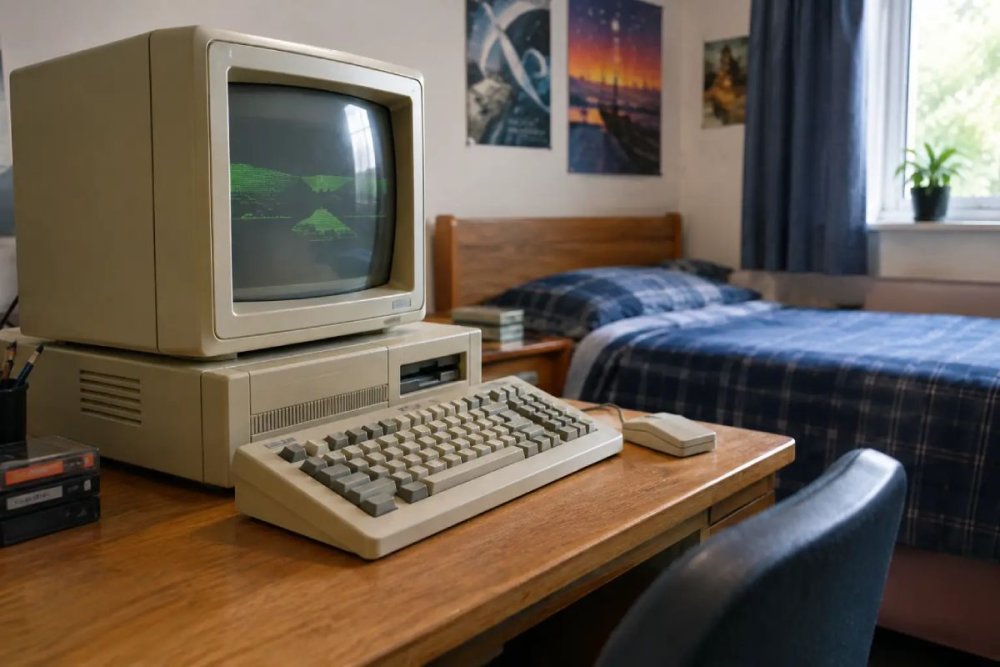
Anyone who grew up with home computers will understand this instinctively. Loading a game on the ZX Spectrum was not merely a delay before play. It was anticipation made audible: the whine, the crackle, the coloured loading stripes, and the hope that the cassette recorder's volume was set just right. A modern game can be installed in minutes, yet it rarely gives us that feeling of having summoned something from a mysterious little tape.
Of course, ritual can become faff. Nobody needs to pretend a tangled cassette, a scratched CD or a VCR tracking problem was a joy at the time. But there is a difference between friction that prevents enjoyment and friction that makes us pay attention. Physical formats have just enough of the latter to feel alive.
Technology with personality beats perfect convenience
The gadgets we grew up with had limits, but they also had character. A Walkman had chunky buttons you could operate by touch in a coat pocket. A portable cassette player ate AA batteries with alarming confidence. A record player needed care. A Discman skipped if you so much as looked at it sternly while walking to the bus stop.
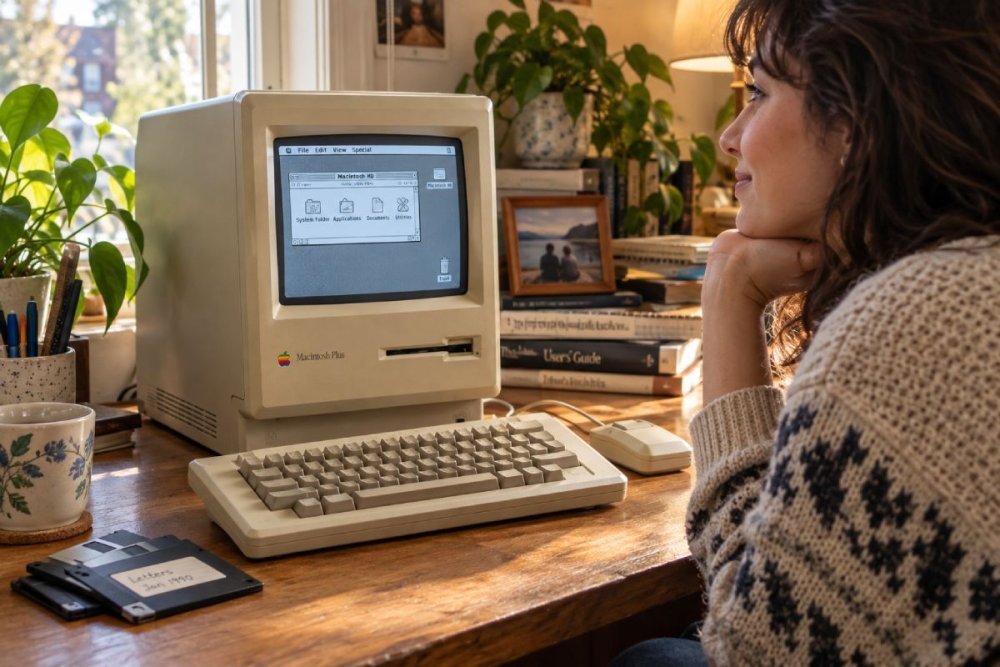
Those limitations gave each device a distinct identity. You learned its moods. You knew which tape deck recorded a little too quietly, which controller had a dodgy fire button, and which family member had somehow lost the remote control's battery cover. Beige computers, foam headphones, clicky switches and cassette mechanisms were not just functional details. They were the texture of everyday life with technology.
That is why the revival is wider than vinyl alone. People are returning to CDs, film cameras, old consoles, magazines, printed manuals and even seemingly humble formats such as MiniDisc. Some are collectors seeking pristine boxed examples. Others simply want an affordable way to enjoy an album or game without relying on a subscription. A well-used copy with a cracked jewel case can be more evocative than a mint item sealed behind glass.
Physical media makes culture visible
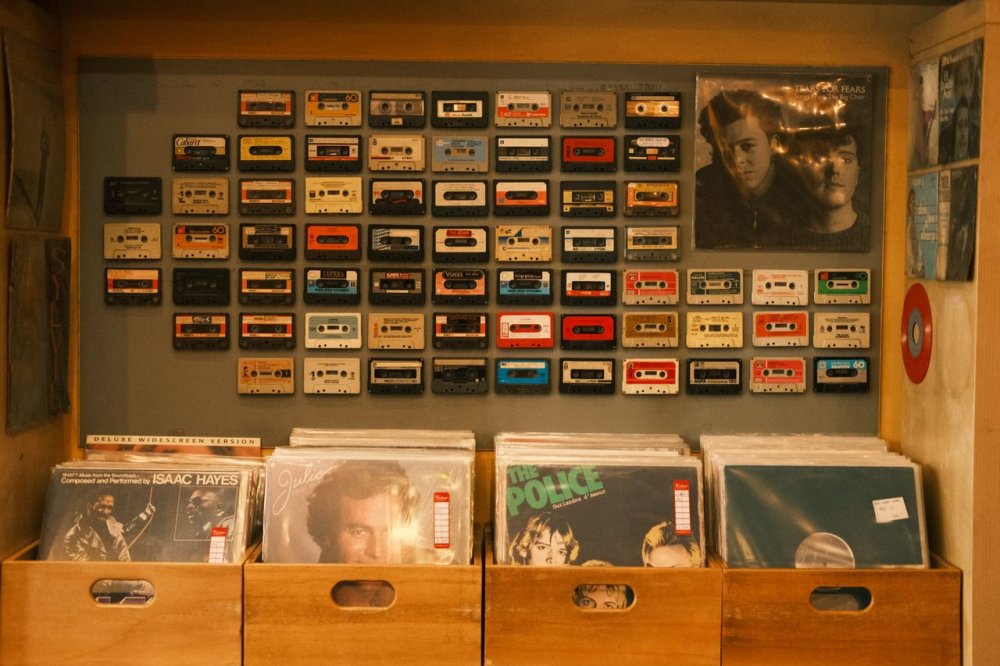
There is another reason shelves are returning: physical media shows what we care about. A row of records tells a story differently from a list hidden inside an app. A pile of old computer magazines reveals the dreams we were sold - home automation, virtual reality, robots, laser guns and a future that seemed to require an awful lot of grey plastic.
Packaging also carried culture. Album sleeves gave musicians space for artwork, lyrics and odd little thank-yous. Game boxes came with maps, code wheels, instruction booklets and, occasionally, a plot ambitious enough to make up for the fact that the game itself was mostly coloured blocks. Video rental cases had lurid covers that could convince you a film was thrilling before you had even pressed play.
In Britain, these details are tied to particular places and habits. Saturday trips to Woolworths. Browsing the racks at Our Price. Saving pocket money for a budget game at WHSmith. Taping Top of the Pops, then yelling at everyone to stop talking when your favourite song began. The medium was never separate from the moment around it.
It is not only nostalgia, and it is not for everyone
Nostalgia is plainly part of the appeal, and there is nothing embarrassing about that. The toys we begged for and the gadgets we obsessed over can transport us faster than almost anything else. But reducing the renewed interest in physical media to rose-tinted remembering misses why younger people are joining in too.
For someone who has only known instant streaming, choosing a record or a cartridge can feel fresh. It offers a finite collection, a visible object and a break from screens designed to keep demanding attention. For parents, sharing an old game or album can also be a rare way to pass on a memory without turning it into a lecture about how things were better in our day.
Still, physical formats are not automatically superior. They take space, prices can become silly, and older equipment needs care. Vinyl is not the cheapest route to music. Original games may be expensive, fragile or attached to ageing hardware. If all you want is to hear a song on the train, streaming is hard to beat.
The healthier approach is not to treat digital and physical as enemies. Digital access is brilliant for discovery and convenience. Physical media is brilliant for keeping, choosing and remembering. One gives us breadth; the other gives us a sense of place.
The shelf is a time machine, not a museum
The best physical collections are not sterile displays built to impress strangers. They are used, personal and occasionally untidy. They contain the album bought after a bad week, the game played every Christmas, the tape recorded from the radio with half a presenter talking over the intro. They make room for imperfect favourites.
That is why an old format can still feel so modern in its own way. It asks us to slow down, make a choice and live with that choice for an hour or two. Put one cherished item within reach this week, whether it is a cassette, a cartridge, a CD or a record. Give it your full attention, quirks and all, and let the technology we grew up with do what it has always done best: make an ordinary evening feel like an event.