The best retro gadgets did not arrive quietly. They beeped from the Argos catalogue page, flashed behind the glass at Dixons, or appeared in a mate's bedroom with an almost mythical status. Before you had even touched one, you knew exactly where it would sit on your desk, which friends you would show first and how unbearable the wait until Christmas morning would be.
They were not always useful. Plenty ate batteries at an alarming rate, demanded patience, or did one rather silly thing brilliantly. That was precisely the point. The gadgets we obsessed over had character: chunky buttons, smoked plastic, silver trim, little LCD screens and sounds that still live somewhere in the back of the brain. They made ordinary bedrooms, school playgrounds and family living rooms feel a step closer to the future.
Why retro gadgets still feel so personal
Modern technology tends to disappear into the background. Our phones are cameras, maps, music players, games machines and a hundred other things in one smooth black rectangle. Clever, certainly, but not always memorable. A calculator watch was memorable because it was gloriously specific. It let you add up numbers on your wrist, usually with keys too small for any sensible human finger, and that was enough.
The tech we grew up with asked us to take part. You snapped a cassette into a Walkman, untangled the headphones and turned the volume wheel until the tape hiss gave way to music. You pushed a cartridge into a console with more force than was probably necessary. You waited through a loading screen, hoping the tape recorder’s volume was set just right and praying that the dreaded error message would not spoil the afternoon.
Those rituals mattered. They gave each machine a sense of occasion. A gadget was not merely something you owned; it was something you operated, carried, protected and occasionally thumped on the side in the hope it would start behaving itself.
The retro gadgets that ruled the bedroom floor
Some devices earned their place through sheer usefulness. Others became legends because they were strange, noisy or just wonderfully overconfident. The best of them sat somewhere in between.
The cassette player and the Walkman dream
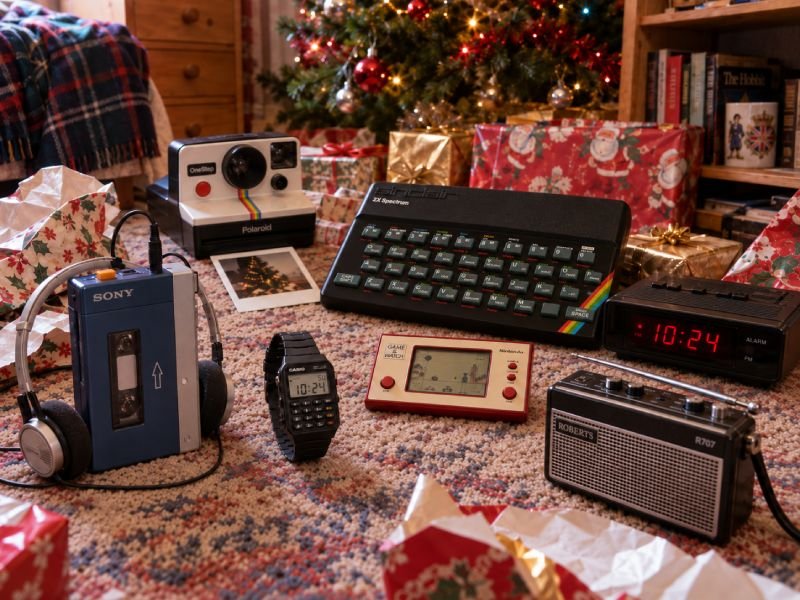
For a generation raised on mixtapes, the portable cassette player was freedom with foam headphones. Whether it was a genuine Sony Walkman, a budget lookalike or something picked up from Boots, it turned the bus journey and the walk to school into your own music video.
There was a trade-off, of course. Fast-winding a tape was a battery-draining business, and a chewed cassette could ruin your day. Yet the physicality was the magic. You made the tape, wrote the track list in cramped biro and knew every tiny dropout in your favourite song. Music felt owned in a way that a streaming queue rarely does.
Electronic games with one perfect idea
Before a handheld console could offer whole worlds, electronic games usually offered one obsession. Grandstand and Casio-style handhelds put football, racing, space battles or egg-catching into a pocket-sized slab of plastic and LCD shadows. The action was simple, fast and frequently unforgiving.
Then there were the games that colonised the kitchen table: Merlin with its rows of red buttons, Simon with its escalating lights and sounds, and the many tabletop machines that promised arcade excitement in a form slightly too large for a school bag. Their rules could be explained in seconds. Beating your previous score could occupy an entire rainy Sunday.
Calculator watches and digital status
The calculator watch was the ultimate playground contradiction. It was partly practical, mostly ridiculous and absolutely essential. Wearing one suggested you had a timetable to manage, important sums to calculate and perhaps a meeting with NASA later that afternoon.
Casio made everyday technology look like spy equipment. Alarm watches, databanks and digital displays gave us a glimpse of a future filled with tiny buttons and incomprehensible functions. Few of us used every feature, but that did not matter. The pleasure was in having them there.
The home computers that made us feel clever
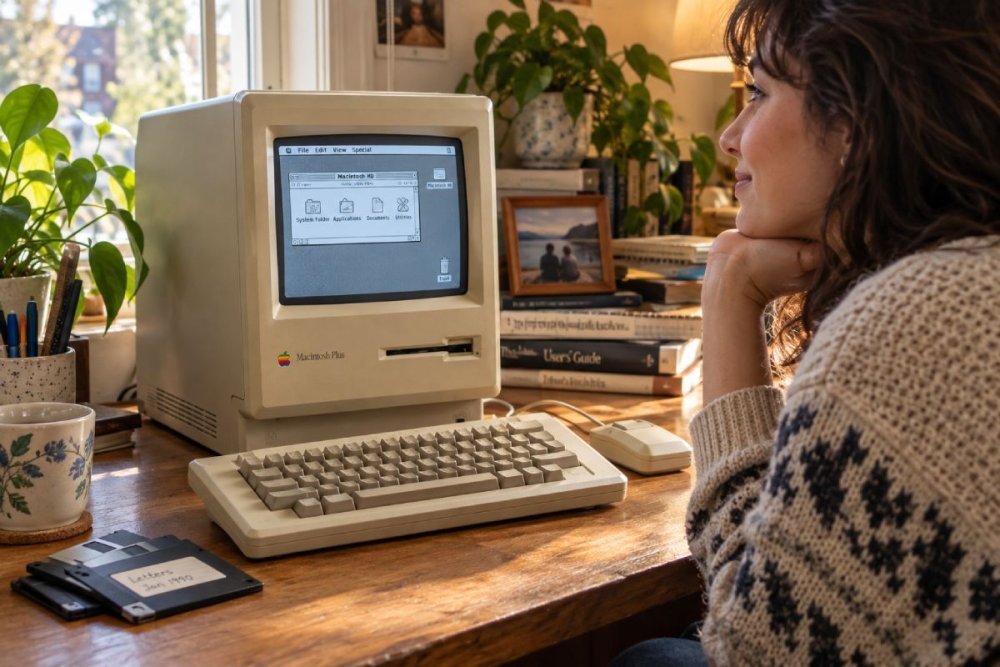
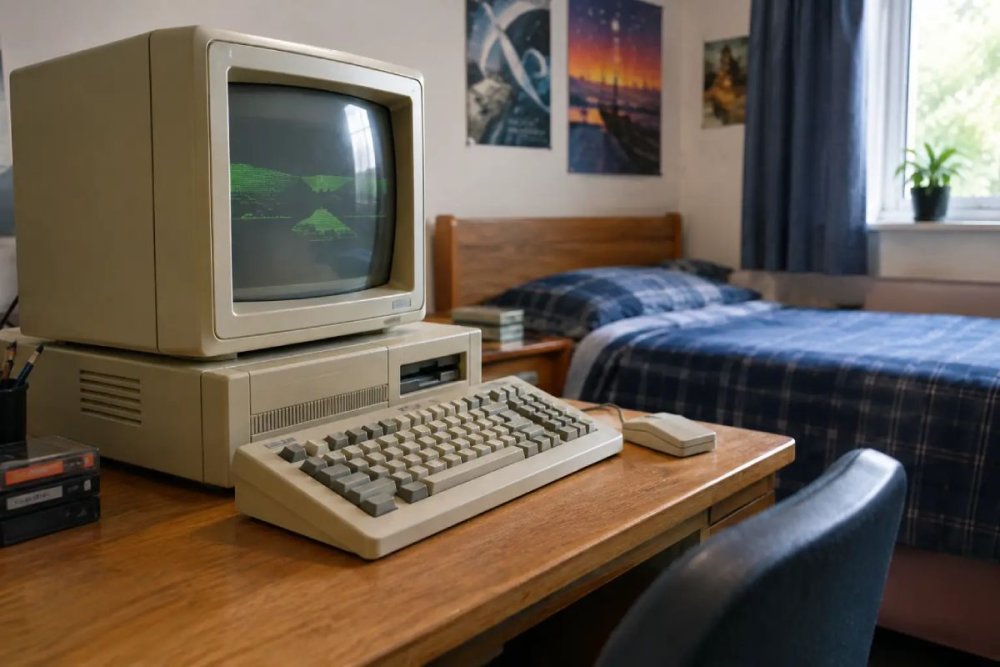
British retro technology has a particular glow because so much of it was waiting at home, connected to the family telly. The ZX Spectrum, BBC Micro, Commodore 64 and Amstrad CPC were games machines, yes, but they were also invitations. Their keyboards made it seem entirely possible that we might write a game, compose a tune or become a programmer after tea.
The Spectrum’s rubber keys divided opinion even then, yet they remain instantly recognisable. The BBC Micro had classroom authority and a reassuringly serious name. The Amstrad CPC brought bold colours and, for many households, the thrilling sight of a proper monitor. Each had limitations, but limitations encouraged imagination. A game loading from cassette felt like an event because you had invested the time to get there.
That is why the old machines prompt such fierce loyalties. The question of which was best is less about processor speed than where you were when you first saw it. A Spectrum owner remembers the colour clash and the cassette squeal. A Commodore owner remembers the sound. A BBC Micro owner remembers being trusted to type something into the school computer. We all remember thinking the future had arrived in beige.
The joy of gadgets that did one thing
A surprising number of beloved gadgets existed to perform a single modest task. Pocket radios found their way under duvets for late-night listening. Digital alarm clocks glowed red or green across dark bedrooms. Polaroid cameras delivered a photograph with the drama of a magic trick. Answering machines made a house feel unexpectedly grown-up.
Their narrow purpose is part of their appeal now. A clock radio did not ask for an account, an update or a password. A portable telly did not recommend programmes based on last week’s viewing. It simply had an aerial that needed adjusting and a picture that dissolved into snow at exactly the wrong moment.
That does not mean everything old was better. Batteries leaked, screens were dim, plastic yellowed and replacement parts could be a nuisance. Nostalgia works best when it leaves room for the truth. Nobody genuinely misses trying to retrieve a cassette tape from a hungry mechanism with a pencil. But we do miss the small triumph of fixing it.
What made a gadget a must-have?
The gadgets we begged for usually offered one of four things: independence, bragging rights, a new way to play or a glimpse of adult life. A Walkman gave you private music. A remote-control car put speed in your hands. A home computer made you the person on the street with games nobody else had seen. A digital diary implied an extremely busy social calendar, whether you had one or not.
Advertising understood this beautifully. Christmas catalogues were not simply shopping tools; they were fantasy books. We folded corners, circled pictures and returned to the same pages repeatedly. The photo of a gadget often did as much work as the gadget itself. A glowing display, a child wearing headphones, a robot with a tray on its chest - that was enough to set the imagination running.
There was also an element of scarcity. You could not instantly watch ten reviews or compare prices on a phone. You heard about things at school, saw them on television, spotted them in catalogues and waited. When a gadget finally appeared, it had already become part of a story.
Bring back the ritual, not the inconvenience
The affection we feel for retro gadgets is not really a rejection of modern tech. It is a longing for technology that announced itself, demanded a little patience and gave us something to talk about. We remember the click of a switch, the smell of a newly opened box, the first batteries going in and that brief silence before the screen lit up.
That is why an old electronic toy or home computer can still stop us in our tracks. It is not just plastic and circuitry. It is a Saturday morning, a birthday pile of wrapping paper, a favourite tape, a bedroom floor covered in leads, and the unmistakable feeling that something brilliant was about to happen.
If one of these machines still makes you smile, follow that feeling. Revisit the gadgets you owned, the ones you only borrowed and, especially, the ones you stared at in the catalogue until the page went soft. At RetroWins, those little details are where the real memories tend to be hiding.