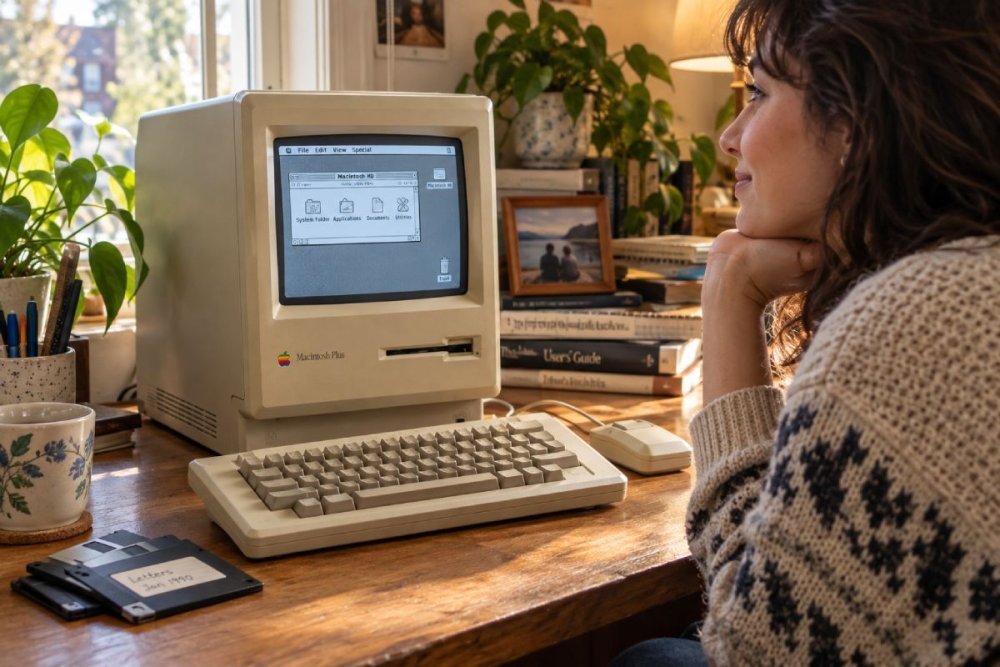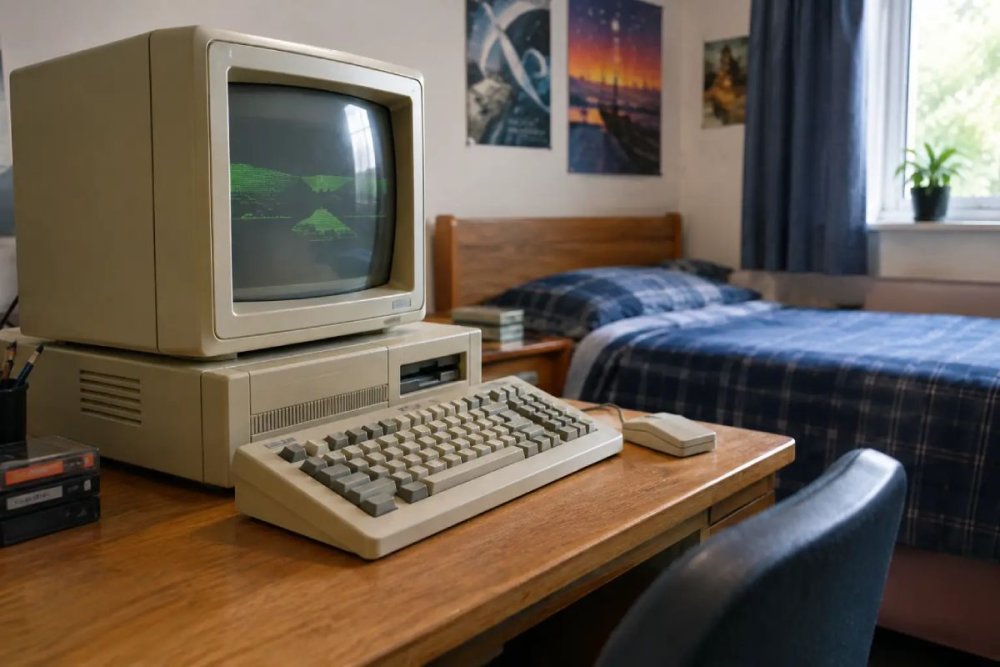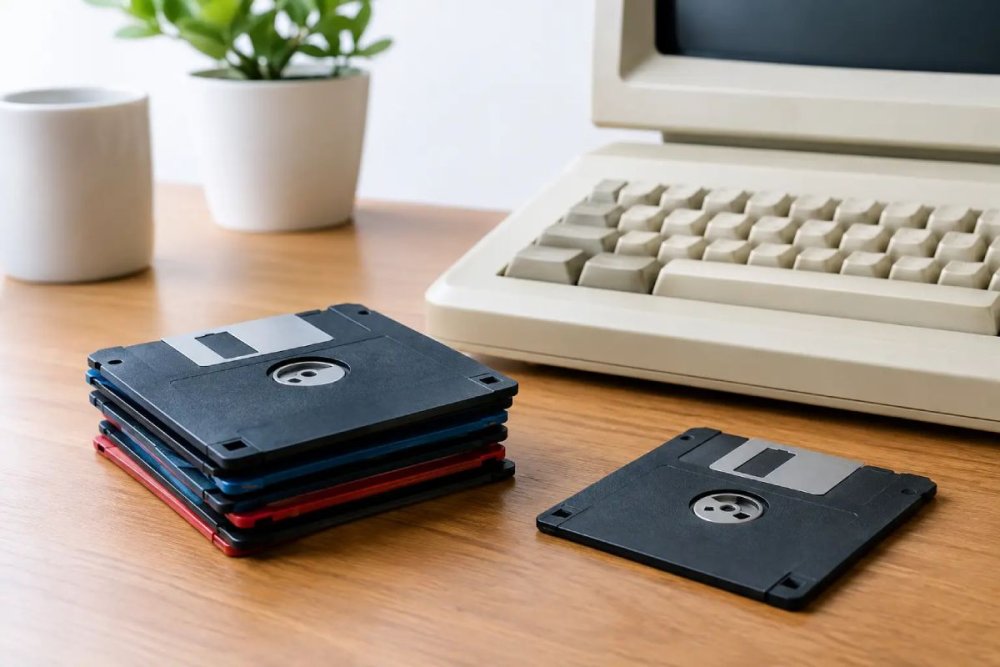
That little square of plastic was never just storage. Whether it was a 3.5-inch disk sliding into an Amiga, an Atari ST or an early PC, or one of those earlier, genuinely floppy 5.25-inch discs arriving in a paper sleeve, it carried possibility. Why floppy disks mattered comes down to a feeling many of us remember: software had a physical presence, and your work, games and carefully saved creations could travel with you.
For a generation raised on beige computers, chunky buttons and the suspense of cassette loading, the floppy disk felt startlingly capable. It was a pocket-sized library, a schoolbag full of games, a makeshift backup plan and, occasionally, the source of an afternoon's heartbreak when it refused to read.
Why floppy disks mattered beyond their capacity
By modern standards, floppy disks stored almost nothing. A common 3.5-inch high-density disk held 1.44MB - less space than a single phone photograph can require now. Yet capacity only tells part of the story. In the 1980s and 1990s, that small amount of space was enough for word processors, database programs, pixel art, music trackers, utilities and games that swallowed whole weekends.
More importantly, the disk made computing feel personal. A machine could be shared by everyone in the house, but the disk labelled in your own handwriting belonged to you. It might contain a school essay, a saved championship season, a BASIC program you were quietly proud of, or a collection of files whose names had to fit into a very small space.
There was a pleasing ritual to it all. You opened the drive, inserted the disk with the label facing the right way, listened for the click, and waited for the mechanical whirr. On a 3.5-inch disk, the sliding metal shutter made the act feel oddly official. On a 5.25-inch disk, the flexible black surface and cardboard sleeve seemed more fragile, more mysterious, like a record for a computer.
They made software feel like a possession
Cassette-based home computing had already taught Britain patience. Spectrum and Amstrad owners knew the shriek of data loading, the coloured stripes, and the dreadful possibility that a tape might fail just before the finish. Floppy disks did not remove every frustration, but they brought a substantial step forward: faster access, random access to files, and a format that seemed purpose-built for getting on with things.
A disk-based game also felt like an event. The packaging was often bigger, the manuals thicker, and the technology somehow more grown-up. On systems such as the Amiga and Atari ST, disks enabled richer sound, sharper artwork and worlds that felt far larger than the single-screen games many of us had known before. Swapping disks halfway through a game could be inconvenient, certainly, but it also added a sense that you were handling a serious bit of kit.
That tangibility changed how we valued software. You did not simply select an icon from an endless digital catalogue. You took a box from the shelf, found the correct disk, checked it was not already in the drive, and hoped that somebody had not left it next to a magnet, a cup of tea or a sunlit windowsill. A game collection was visible proof of your tastes. So was the row of labels: Work, Games, Back Up, Do Not Use, and the ever-optimistic Important.
The schoolbag network
Floppy disks also made home computing social in a wonderfully informal way. Long before cloud folders and instant messages, files moved at walking pace. A disk passed from one person to another could contain an assignment, a public-domain utility, a shareware game, a collection of MOD music files or a program copied from somebody who always seemed to know more than everyone else.
At school, in offices and between mates, the floppy was the original hand-to-hand transfer system. It encouraged sharing, swapping and experimenting. That included software piracy, which was widespread and damaging to creators, but it also included an energetic culture of amateur programming, demos, home-made magazines and user groups. The same humble medium that carried a copied game could carry somebody's first program to a friend for feedback.
Its limitations shaped behaviour. You learned to compress files, delete older versions, keep spare disks, and make backups because a single failed disk could take a term's work with it. Those habits were not glamorous, but they taught a practical truth about digital life: data is only as safe as the care you take with it.
Labels were part of the interface
Before folders became invisible hierarchies on a screen, the handwritten label did a lot of work. It told you what was on the disk, roughly when you last used it, and sometimes who was forbidden from touching it. A label in biro, fading felt-tip or a parent's impossibly neat handwriting is part of the memory.
There was no universal system. Some people numbered every disk with military precision. Others relied on piles, guesswork and the belief that they would definitely remember which one contained that important file. We all know how that went.
The flaws are part of the affection
Nostalgia should not pretend floppy disks were faultless. They were slow compared with later storage, vulnerable to physical damage and famously prone to errors at the worst possible moment. Dust, bent shutters, worn media and bad sectors could turn a perfectly good afternoon into an exercise in grim persistence.
The write-protect tab could save you from overwriting a disk, though it was another tiny component to lose. Disk drives could be noisy, temperamental and fussy. And there was always that moment when a computer appeared to be thinking for far too long, its drive clicking away while everyone in the room became suddenly silent.
But those flaws gave the format character. Modern storage is extraordinarily convenient because it hides its workings. A floppy disk did the opposite. You could see it, label it, lend it, misplace it, and hear it being read. It reminded us that digital information lived somewhere physical, on an object that deserved a little respect.
A bridge between hobbyists and everyday users
Floppy disks helped move computers from fascinating household novelties towards useful everyday tools. They made it practical to save documents, load applications and keep separate projects without relying on a long cassette tape. For many families, they were part of the transition from typing in programs from magazines to using ready-made software for school, work and play.
They also suited the era's machines. The BBC Micro, Amstrad CPC, Commodore 64 and Spectrum each had their own cassette-led identities, yet disk drives offered an upgrade path for people who wanted more speed and flexibility. Later, PCs, Amigas and STs made the disk feel central rather than optional. That progression mirrored a wider change: computers were becoming less like electronic curiosities and more like places where people created things.
For collectors, the format still tells stories. Original labels, cracked cases, photocopied instructions and even old backup disks can reveal how a machine was actually used. A pristine boxed game is lovely, but a battered disk marked Dad's accounts 1992 may be the more human artefact.
The small object that made digital life real
Floppy disks disappeared because better storage arrived. CDs offered more room, hard drives became commonplace, USB sticks were quicker and tougher, and online storage removed the need to carry files in your coat pocket. That is progress, and few of us genuinely miss discovering a corrupted disk on deadline day.
Still, the floppy disk matters because it made digital ownership understandable. It gave us something to hold when a saved game, a school project or a newly copied program suddenly mattered. It turned computing into a ritual of inserting, loading, saving and carefully putting something away.
If you still have a box of old disks in the loft, do not rush to bin it. Even if the data has long gone, those labelled squares may hold a sharper memory than any modern storage device: the sound of a drive spinning up, the glow of a bedroom monitor, and the thrilling sense that the machine on the desk could do almost anything.